


Single-phase transformers and three-phase transformers are the two main types of transformers. This article helps electrical engineers and system integrators understand the differences between single-phase transformers and three-phase transformers in power capacity, efficiency and reliability, and provides some tips for you to choose the right transformer.
What Is a Single-Phase Transformer?
A single-phase transformer is used to transfer electrical energy between two circuits through electromagnetic induction when operating on a single-phase alternating current(AC) power supply. The main function of a single-phase transformer is to step up or step down the voltage through the primary winding and the secondary winding, so that the power can be transmitted safely and effectively.
The primary winding is responsible for connecting to the input power supply, while the secondary winding is connected to the load or output circuit. The initial voltage of a single-phase circuit is 230V and the frequency is approximately 50Hz. Therefore, it can be used for residential and small commercial applications.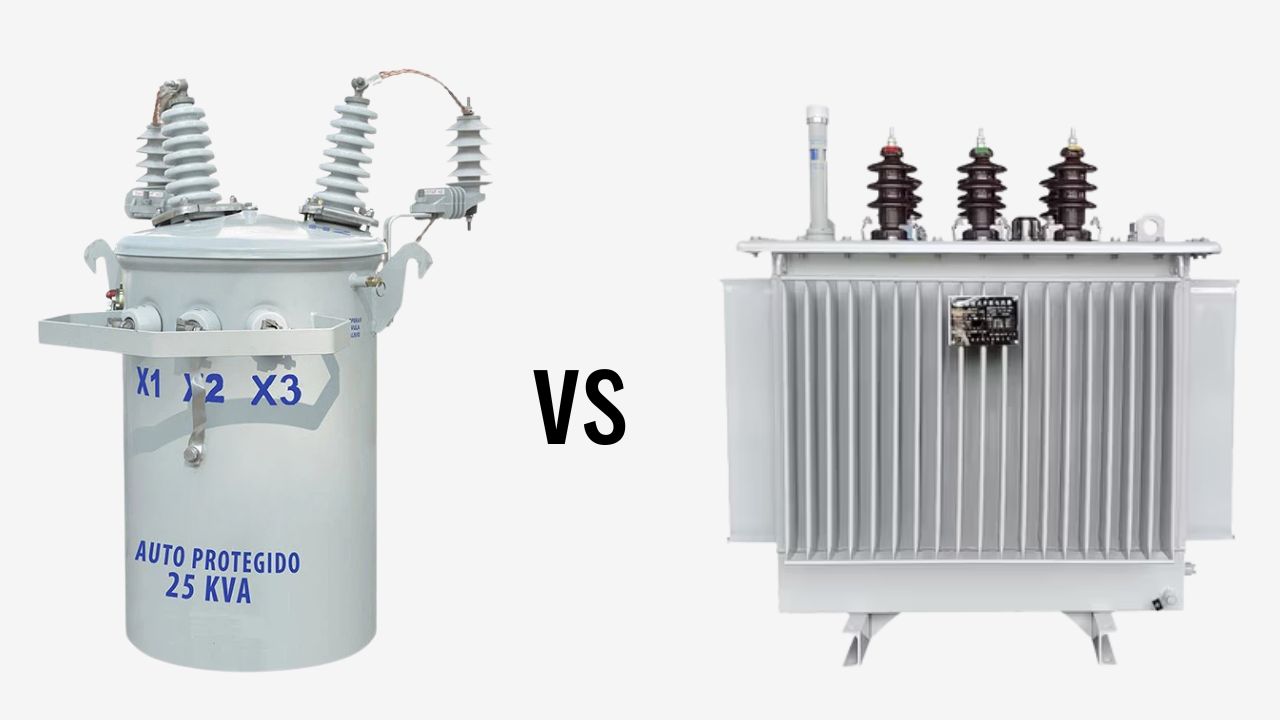
What Is a Three-Phase Transformer?
A three-phase transformer is an electrical device designed to transfer electrical energy between circuits in a three-phase power system through electromagnetic induction. Its main function is to increase and decrease voltage levels in systems that use three alternating current(AC) phases, which are separated by 120 degrees in phase angle.
A three-phase transformer has three primary windings connected to the incoming three-phase power supply and three secondary windings connected to the load. It can be connected in either wye(Y) or delta(Δ) configuration and can handle three alternating waveforms simultaneously. It is commonly used in industrial and commercial settings.
Single-Phase vs Three-Phase Transformer: What’s the Key Difference?
Transformer Structure and Design
In the magnetic circuit system, the magnetic circuit of single-phase transformers is independent and single, and its core is a closed magnetic loop. The magnetic circuit of a three-phase transformer is interrelated. The iron core columns and the yoke connect the three-phase magnetic circuits into a whole.
In the core structure, single-phase transformers usually use a shell type core. While three-phase transformers typically use three-phase three-column or three-phase five-column cores.
In the winding layout, the single-phase transformer only has a set of windings on the primary side and the secondary side, which are wound on the same core column. While a three-phase transformer has three sets of windings, each wound on a separate iron core column.
Power Capacity
There are also large differences in the amount of electrical load that can be handled by single-phase and three-phase transformers.
Single-phase transformers are typically designed for lower power capacities. It mainly supplies single-phase 220V or 110V loads and is used in applications with relatively smaller power demands.
The three-phase transformer distributes the load across three stages, and can simultaneously provide three-phase power and single-phase lighting loads. They can support larger electrical systems, such as industrial equipment and large commercial facilities.
In practical applications, a single-phase transformer can be used for kilowatt-level loads, while a three-phase transformer can support large-scale megawatt-level systems in the distribution network.
Efficiency
Generally speaking, three-phase transformers are more efficient than single-phase transformers, especially when supplying power to large loads.
The power transmission of a single-phase system fluctuates during each cycle of the AC waveform. This also means that your power output keeps rising and falling. In contrast, a three-phase system can provide you with a more consistent and balanced power flow. In a three-phase system, one phase decreases while another phase increases, resulting in almost constant power transmission.
Therefore, the stable power transmission provided by three-phase transformers is more suitable for your application in heavy machinery, motors and industrial processes.
Reliability and Performance
Three-phase transformers have greater operational stability than single-phase ones. Power distribution in three phases, the system can keep more stable power transmission and handle heavy loads efficiently.
If you use three single-phase transformers to construct a three-phase system, when one unit needs maintenance, the other two units can operate at a reduced capacity. This configuration improves your system reliability.
Conversely, while a single-phase transformer is reliable when you are running smaller loads, it does not provide the same level of load balancing and stability as a three-phase system.
Installation
A single-phase circuit only requires two separate wires, one for the phase line and one for the neutral line. These two wires form a complete circuit. A three-phase power supply circuit, on the other hand, requires one neutral line and three phase lines. Besides, you need to add protective equipment and complex installation and monitoring.
However, in industrial facilities that already have three-phase power supplies, using a three-phase transformer is a more practical solution for you.
Cost
The cost difference between single-phase and three-phase transformers depends heavily on the size and power requirements of the system.
From the initial cost, single-phase transformers have lower initial cost. Three-phase transformers have larger capacity and more complex design, so you should pay higher initial investment.
However, in the long run, the no-load and load losses of single-phase transformers are relatively higher. Three-phase transformers have a higher overall efficiency and lower operating losses. Therefore, three-phase transformers may be more economical for you.
Applications
Single-phase transformers have a simple and compact structure, smaller size, lower installation cost and maintenance cost. And single-phase is more suitable for small loads. Therefore, you can apply single-phase transformers in residential power distribution, lighting systems, and small offices.
Three-phase transformers have high power capacity, high efficiency for heavy loads, more stable and continuous power transmission, and are more suitable for large-scale power distribution. Therefore, you can apply it in industrial manufacturing plants, substations, large commercial buildings or data centers.
How to Choose Between Single Phase and Three Phase Transformers?
Evaluate the Power Supply
You need to consider the type of power supply available for installation. If the electrical system provides single-phase power, a single-phase transformer would be more suitable for you. If your facility operates on a three-phase power system, then a three-phase transformer is required.
Determined Load Requirements
Single-phase transformers are suitable for small to medium-sized electrical loads. While three-phase transformers are suitable for handling large electrical loads and are also an ideal choice for heavy equipment, large motors and industry.
Analyse Efficiency and Energy Consumption
Choose the appropriate type of transformer based on the application environment. Additionally, you need to consider power demand and efficiency. Single-phase transformers can operate efficiently under small loads. For high-power applications, three-phase transformers are more energy-efficient. If you operate a large electrical system, three-phase transformers can help you reduce energy costs over the long term.
Installation and Infrastructure Requirements
Single-phase transformers have simpler installation and maintenance and are suitable for systems with limited infrastructure. Three-phase transformers require more advanced electrical infrastructure and complex installation planning. However, in industrial facilities that already have three-phase power supply, the three-phase installation is simpler.
Evaluate Budget and Lifecycle Cost
The single-phase transformer has low initial investment. You can use it in a limited power demand and budget. A three-phase transformer requires a higher initial investment. However, it can provide better long-term value for large electrical systems.
If your facility expects increased power demand or equipment expansion, installing a three-phase transformer may provide greater flexibility and scalability and can avoid infrastructure changes and additional costs.
FAQ
Can Three Single-Phase Transformers Be Used to Form A Three-Phase Transformer Bank?
Yes. Three single-phase transformers can be connected to form a three-phase transformer. This method is adopted when a single three-phase transformer is unavailable or when greater flexibility in maintenance and replacement is required. For most applications, using a three-phase transformer is more efficient and cost-effective.
Are Three-Phase Transformers Always Larger Than Single-Phase Transformers?
No. For the same rated power, an integrated three-phase transformer is more compact than three separate single-phase transformers. However, when used in low-power applications, a single single-phase transformer is usually smaller.
What’s the Advantages of Three Phase Motor?
Compared with single-phase motors, three-phase motors have higher efficiency, greater power output, more stable and continuous torque, thus are more suitable for heavy equipment. Besides, three-phase motors have simpler design, higher reliability, and lower maintenance requirements.
How to Convert Single Phase to Three Phase?
You can use specialized electrical equipment to convert single-phase power to three-phase power. Common methods include using phase converters and variable frequency drives(VFDs). You can use these solutions when three-phase power supply is unavailable but three-phase equipment needs to be operated.
Final Thought
As a professional manufacturer of electrical enclosures, KDM can provide you high-quality single-phase transformers and three-phase transformers. Our products are made from premium materials and processed using advanced production techniques. If you have any requirements for customizing electrical enclosures, please feel free to contact us.
 English
  Arabic
  French
  Spanish
  Russian
  Japanese
  Korean
  Portuguese
  Indonesian
  Chinese