


Knowing the difference between a meter box and a fuse box helps you identify which part of an electrical installation needs attention. The meter records energy use; the fuse box distributes power and houses circuit protection. This guide explains their functions and the practical differences between them.
What Is a Meter Box?
A meter box, also called an electrical meter box, is the enclosure or metering compartment that houses an electricity meter. The meter measures energy consumption; the box provides a suitable location and protection for it. Depending on the installation, related supply equipment may be nearby or within the same cabinet.
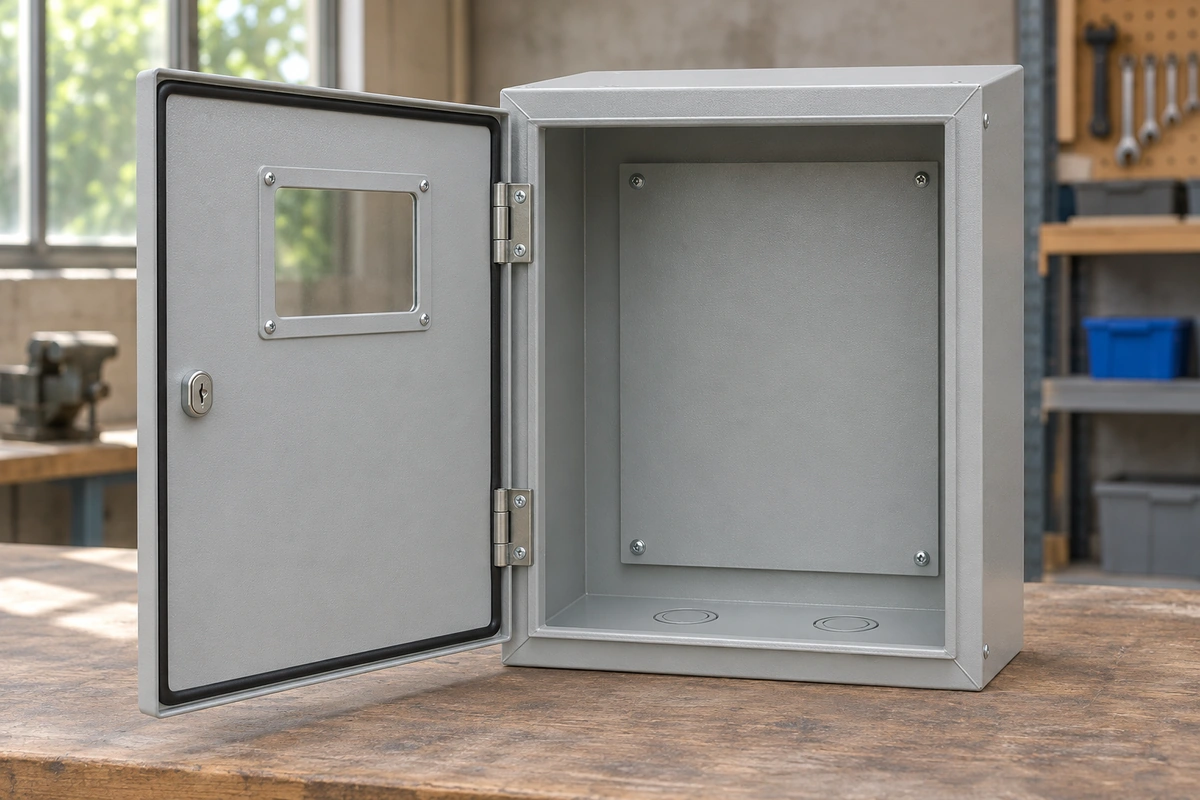
What Is a Fuse Box?
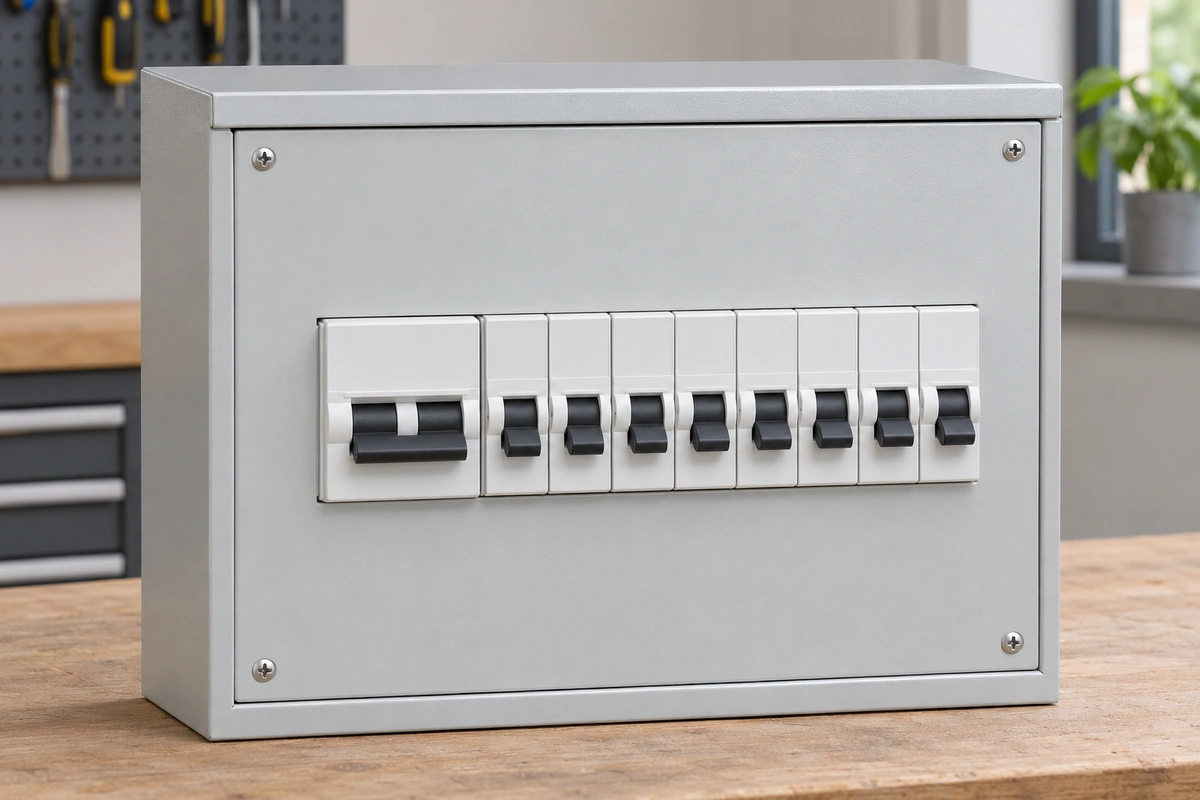
A traditional fuse box, also called a fuse panel, distributes electricity to outgoing circuits and contains their protective fuses. In everyday UK usage, “fuse box” also commonly refers to a modern consumer unit fitted with circuit breakers and other protective devices. The installed devices matter more than the informal name.
Meter Box vs Fuse Box: Key Differences
|
Comparison |
Meter box or metering section |
Fuse box or circuit-distribution section |
|---|---|---|
|
Main purpose |
Houses equipment that measures electricity use |
Distributes electricity and houses circuit protection |
|
Main equipment |
Electricity meter; associated equipment depends on the supply arrangement |
Circuit fuses or breakers; other devices depend on the board design |
|
Position in a simple installation |
At the metering point on the incoming supply |
Distributes the metered supply to outgoing circuits |
|
Normal interaction |
Reading or communicating consumption information |
Identifying circuits and operating permitted switches |
|
Location |
Set by the metering arrangement and local requirements |
Set by the building's distribution layout and access requirements |
|
Responsibility |
Meter, supply equipment and enclosure can have different responsible parties |
Commonly part of the customer's installation; local arrangements still apply |
|
Replacement objective |
Restore the enclosure or change the metering equipment |
Repair or change the circuit-distribution and protection arrangement |
Function: Electricity Metering vs Circuit Protection
The central difference is measurement versus distribution and protection. An electricity meter records energy use for billing. Inside a fuse box, the supply is divided into outgoing circuits, with fuses or circuit breakers providing protection against excessive current.
How the Two Functions Work Together
Consider a building with one electricity meter supplying separate lighting and socket circuits. The meter records the energy used across those circuits. Their individual fuses or circuit breakers provide circuit protection. Installing another meter would change how consumption is measured; it would not replace the protective devices those circuits need.
Some installations also have a main service fuse beside the meter. In the UK arrangement described by UK Power Networks, this fuse is housed in the service cut-out at the incoming supply connection. It is different from the individual circuit fuses in the building's fuse box. Finding a fuse near a meter therefore does not make the two parts of the installation interchangeable.
What This Means During a Replacement or Upgrade
Changing an electricity meter does not, by itself, upgrade the building's circuit protection. Likewise, a new fuse box does not remove the need for metering. When you are reviewing proposed work, distinguish a change to energy measurement from a change to circuit protection; replacing one does not automatically deal with the other.
Internal Components: Meters, Main Fuses and Circuit Fuses
What You May Find Around the Meter
The meter has an identification label and a way of registering consumption. A digital display is common, while a smart meter can also communicate readings remotely.
A separate supply fuse or isolating device may be associated with the metering position. Their exact arrangement varies.
What You May Find in the Fuse Box
In a traditional board, separate fuseways serve the outgoing circuits. A fuse interrupts excessive current through its fuse element; once that element has operated, it is not reset like a circuit breaker.
A modern consumer unit may contain several kinds of protective device. Circuit breakers provide overcurrent protection. Residual-current devices detect an imbalance associated with current taking an unintended path; an RCD does not necessarily provide overcurrent protection as well. Some devices combine these functions.
This is why identifying every switch as a “fuse” can cause confusion. For your installation, the circuit labels and device markings tell you more than the age or appearance of the outer box. Electrical Safety First's consumer-unit guidance describes boards containing fuses and/or circuit breakers and explains the role of RCDs.
Installation Location and Electrical Connections
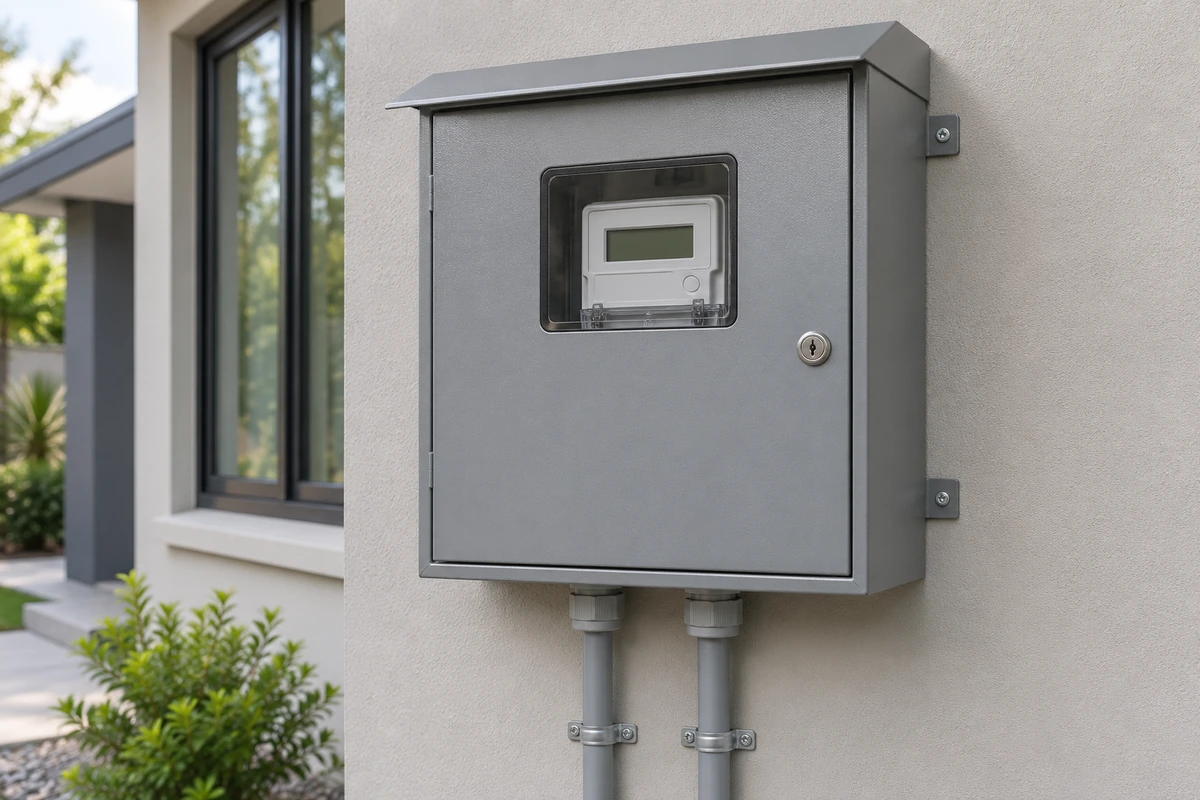
A meter box is located to suit metering and supply-access requirements. The fuse box is positioned to serve the building's circuits and provide appropriate access to their controls. “Outside versus inside” is therefore a useful observation in some installations, not a reliable definition of the two devices.
Their Position in the Supply
In a straightforward installation with one utility meter, electricity passes through the metering point before being distributed to the final circuits. The fuse box or consumer unit provides that downstream distribution. A service fuse at the intake and the individual protective devices downstream occupy different points in this arrangement.
Larger buildings can have a more complex layout. The equipment may be grouped into compartments, and distribution can occur at more than one level. A simple domestic sequence should not be used as a wiring diagram for every commercial building.
Why Physical Location Can Be Misleading
An accessible external metering position can allow meter work without entering occupied rooms. In other installations, meters are grouped in a shared area. The circuit-distribution equipment may be in the same overall cabinet or in a separate location.
If you are identifying equipment for maintenance, use its labels and the installation information. Proximity to the front door or an outside wall does not establish what a box contains. A cabinet with several doors may contain both functions, while two neighbouring boxes may remain separate assemblies.
Enclosure Materials, Access and Protection
Both types need an enclosure appropriate to their location. Material alone does not identify the function: neither “plastic means meter box” nor “metal means fuse box” is a dependable rule.
Different Access Needs
Metering equipment must remain accessible to the people authorised to read, inspect or replace it. A viewing arrangement can permit a reading without opening the enclosure. Utility seals can identify areas where access is restricted, but their presence does not establish ownership of every surrounding part.
On a fuse box or consumer unit, normal access is to circuit identification and the controls intended for operation. Opening an outer door is different from removing a cover that exposes wiring. A readily accessible switchboard should still prevent ordinary access to live parts.
The useful distinction is the purpose of access. Reading a display does not require the same action as servicing a terminal, and an enclosure door is not an invitation to carry out either kind of electrical work.
Environmental Protection
An enclosure exposed to rain needs a suitable weather-protection arrangement. One inside a dry room faces different conditions. That applies to metering and circuit-distribution equipment alike; the equipment name does not establish a particular IP rating.
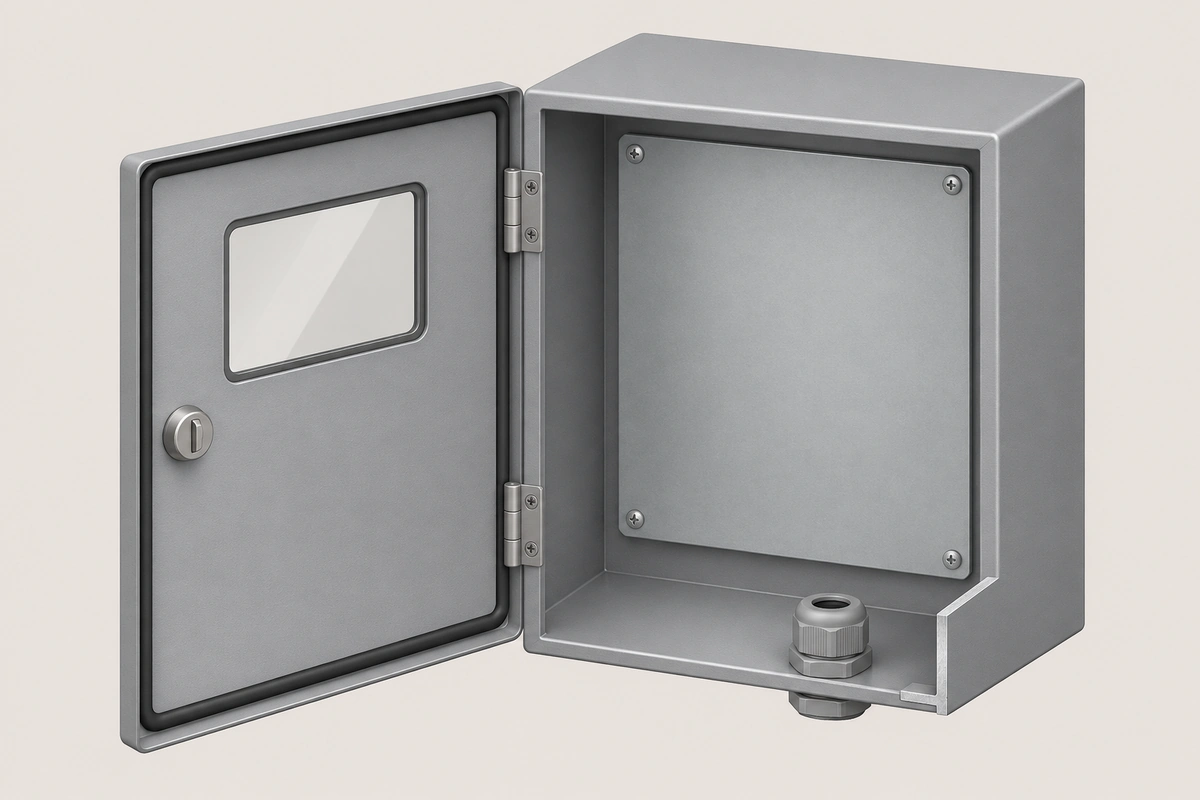
For a damaged door or cover, the immediate issue is whether the intended protection and access control remain intact. A replacement must fit the original enclosure properly. A cosmetic repair that leaves a gap or an insecure cover does not restore the original arrangement.
Ownership and Maintenance Responsibilities
Responsibility follows the particular equipment and the local supply arrangement. It should not be assigned to “the utility” or “the property owner” simply because everything is inside a meter box.
A UK Example
UK Power Networks distinguishes three separate responsibilities: its incoming service cable and main fuse, the electricity supplier's meter, and the customer's fuse box. A request concerning one item may therefore need a different organisation from a request concerning the next.
The metering enclosure is another item to identify. The fact that an electricity supplier owns the meter does not, by itself, establish who must repair its surrounding cabinet. Jackson Energy Authority likewise notes in its meter-responsibility guidance that not everything at the meter is its responsibility.
What to Identify Before Arranging Work
Describe the affected item rather than reporting only a “meter box problem.” A broken outer door, a problem with the meter reading and damage to the service fuse are different faults. A photograph taken from a safe position can help the responsible organisation identify the equipment without anyone removing a cover.
For fuse-box problems, the relevant electrical contractor needs to establish whether the issue concerns a circuit, a protective device or the board itself. Repeated operation of a fuse or breaker calls for investigation; it should not be treated as proof that the device is merely inconvenient or too sensitive.
In rented or shared premises, responsibility for arranging customer-side work may rest with a landlord or building manager. Check that arrangement alongside the equipment responsibilities. The person occupying the space is not necessarily the person authorised to commission changes.
Replacement and Upgrade Requirements
Meter-box work and fuse-box work can have different objectives. Separate the physical enclosure, the installed equipment and any proposed increase in electricity demand before comparing the work involved.
Repairing an Enclosure or Replacing a Meter
A damaged cabinet may need a door, frame or complete enclosure replacement. That does not automatically mean the electricity meter itself needs replacing. Conversely, a change to metering technology does not always mean the surrounding cabinet must be renewed.
The deciding issue is whether the existing arrangement remains suitable for the work proposed. Moving a metering position can also affect the incoming supply equipment. It should not be described as simply moving a box along a wall.
Replacing or Upgrading the Fuse Box
Fuse-box work concerns the condition and suitability of the distribution and protective arrangement. A new board may change the available circuit layout or the protection provided. It is not simply an enclosure exchange: the existing installation must be assessed as part of the work.
Frequent tripping alone does not show that a larger protective-device rating is needed. The cause may lie in the connected equipment or circuit. Increasing the rating without establishing that cause can defeat the protection the circuit needs.
Why an Upgrade May Involve More Than One Party
Adding a substantial new load can raise questions beyond either box. The distribution equipment and the incoming supply must both be suitable. A new fuse box does not automatically increase the capacity available from the network.
UK Power Networks' fuse-upgrade guidance explains that associated equipment must be suitable before its service fuse is upgraded. This illustrates why a meter change, a board upgrade and a supply upgrade should not be treated as three names for the same work.
Costs should therefore be compared against a defined scope. A quotation for a replacement cabinet is not comparable with one covering a new distribution board and electrical testing. There is no useful universal price ranking between “meter box” and “fuse box” without knowing what is being replaced.
Do You Need a Meter Box, a Fuse Box, or Both?
A utility-metered building normally needs metering and circuit-distribution protection. Those functions can occupy separate boxes or designated sections of a larger assembly. The practical question is how they are provided in the installation, rather than which function can be omitted.
When reviewing an existing arrangement, first identify the meter and the board serving the circuits. Then identify the particular item affected by the proposed work. This avoids specifying a new outer cabinet when the issue concerns a protective device, or assuming a meter replacement will resolve a circuit fault.
Where equipment shares a cabinet, the separation and access arrangements still matter. Sharing a housing does not make metering and protection interchangeable or give every person the same authority to work on both sections.
FAQs
Does Switching Off the Fuse Box Also Switch Off the Electricity Meter?
Normally, no. Switching off a downstream main switch does not disconnect the upstream meter or incoming supply. The incoming connections can remain live even when the outgoing circuits are off. An off switch is therefore not proof that the meter or the whole board is safe to work on; proper isolation must be established by the authorised person.
Can One Building Have More Than One Meter Box or Fuse Box?
Yes. A building containing separate premises may have several metering points, and circuit distribution can involve more than one board. UK Power Networks' additional-meter guidance describes arrangements for providing individually metered supplies. The number of boxes alone does not tell you which meter serves which premises or which board controls a particular circuit; labels and installation records must establish that relationship.
Final Thoughts
A meter box provides the metering position; a fuse box provides circuit distribution and protection. Understanding their relationship helps you identify equipment correctly and define maintenance or upgrade work. Their functions remain distinct even when they share a cabinet.
 English
 Arabic
 French
 Spanish
 Russian
 Japanese
 Korean
 Portuguese
 Indonesian
 Chinese