


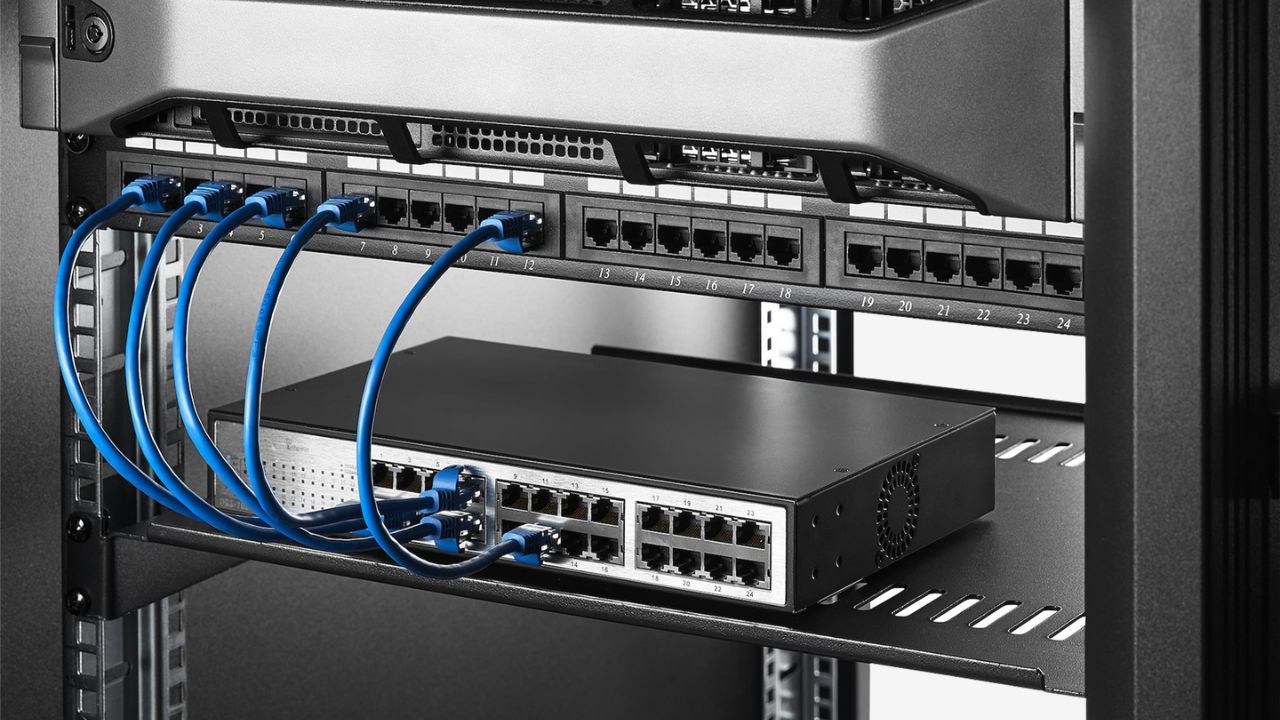
The sliding shelf rack is a necessary accessory for modern IT and telecom. It aims to improve the accessibility, security and efficiency of devices. This article discusses the advantages of the sliding shelf rack about space optimization, security improvement and load capacity. Hope this article can help you understand the necessity of choosing a sliding shelf rack for your data centers or IT infrastructure construction.
What Are Sliding Shelf Racks?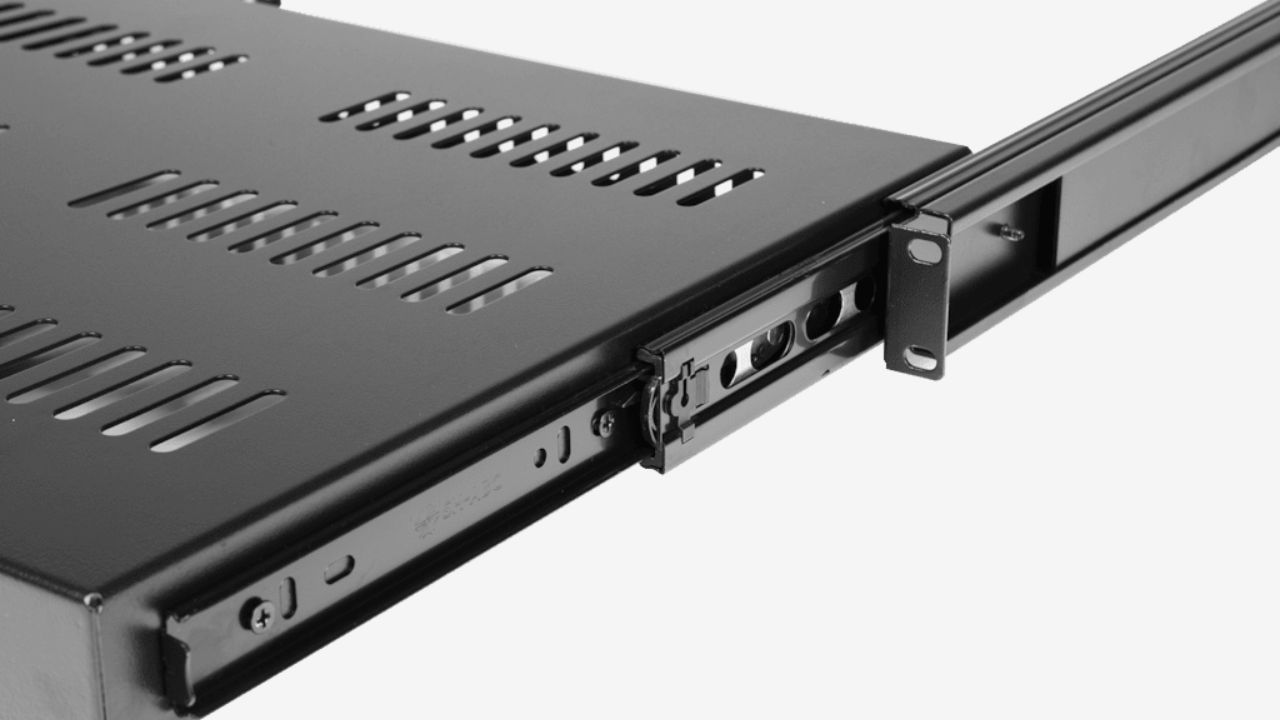
In data centers or network computer rooms, sliding shelf racks are equipment support platforms specifically designed for standard 19-inch or 23-inch racks. It features an integrated precision sliding guide rail system. It can be implemented to slide servers, switches or other heavy rack mounted equipment out of the rack in a smooth and controlled manner. Besides, it can provide safe and reliable support when fully extended.
Key Advantages of Sliding Shelf Racks
Space Optimization
The sliding shelf rack maximizes equipment installation density within the available physical space. And it also guarantees that each device can be effectively serviced.
The sliding shelf rack uses a three-stage full-extension slide system, which allows you to make the most of the available space in the cabinet. You don’t need to reserve a lot of operating space in front and back of the equipment for maintenance when planning the cabinet layout. Closely arranging the equipment can help you maximize the utilization of the depth space of the cabinet.
High-density deployment allows you to deploy more cabinets and IT equipment in the same room area. This directly elevates the space capacity of the data center.
Improved Accessibility and Efficiency
The sliding shelf rack with full-extension slides can realize full access to equipment, which is convenient for your maintenance and operation from all angles. You can clearly and easily reach the front and rear panels of the equipment. This makes fault diagnosis, cable replacement and label inspection much simpler. Furthermore, it also shortens your maintenance time and reduces operational complexity. The high operational efficiency can also reduce downtime and minimize unnecessary losses.
Pivot-hinged Cable Management Arm (CMA) is a flexible channel that stretches and contracts synchronously with the track. When the equipment slides out, the CMA will automatically extend to provide a support and path with a fixed bending radius for the cable group at the rear of the equipment.
It prevents the cables from being pulled, squeezed, or overly bent during the movement of the equipment. This helps you reduce cable failures and improve the safety and reliability of your system connections. Neat cable layout helps you identify and track.
The modern professional sliding shelf rack installation can be locked with a snap. If you need to disassemble it, you can unlock and remove the equipment by turning the release lever. This increases the speed of your equipment loading and unloading. When you deploy in batches or replace equipment, it saves a lot of installation procedures and improves the agility of your IT infrastructure.
Enhanced Safety
The rack sliding shelf is equipped with multi-position safety locks and front/rear safety stops. It verifies that the device can be firmly locked in any position. This effectively prevents the valuable equipment from being damaged due to physical collisions and guarantees the safety of the maintenance personnel.
What’s more, the high-end rack shelf sliding integrates the buffering damping function. This guarantees that heavy equipment can be smoothly and gently closed when pushed back into the cabinet, preventing violent collisions between the interface and the plug.
High-strength cold-rolled steel or aluminum sliding shelf rack provides a stable support platform for the equipment. This reduces cabinet vibrations or the shaking of the equipment caused by your touch. A stable physical environment can lower the probability of faults caused by vibrations.
Flexibility and Customization
The cabinet mounting flanges of the sliding rack can usually be adjusted forward and backward. The rails also have adjustment functions. Modular accessories such as U/1U/2U vertical mounting columns support the fixation of standard sliding shelves for non-standard equipment or various small devices. The height adjustment in 1U intervals can easily handle the space reallocation after equipment replacement.
Besides, the universal mounting holes and open platform of sliding shelf rack provide a unified and manageable physical bearer solution for numerous network devices. It can also accelerate the speed of architectural adjustments to respond to your business needs more quickly.
Cooling Efficiency and Better Airflow
High-density deployment can lead to local overheating, which will increase cooling energy consumption and operational risks.The sliding shelf rack adopts high perforation ventilated panels and open frame design which are the physical structures that can maximize ventilation. This can substantially reduce the obstruction of air flow in the front-back or side directions, and prevent the formation of areas that impede the air flow.
Besides, CMA does more than just protect cables. The cable layout is also optimized. This effectively prevents the cables from being randomly piled up at the back of the equipment, guaranteeing smooth air circulation at the heat exchange interface.
Improved airflow structure increases utilization of cold air. The return air temperature of the air conditioning system is closer to the set value, which reduces your cooling energy consumption and your operating cost.
A stable operating temperature can also extend the lifespan of your equipment and reduce the failure rate of the hardware. Keeping the temperature within the safe threshold allows you to deploy denser computer devices within the sliding shelf rack.
Better Organization and Inventory Management
The equipment in the sliding shelves is densely packed, which increases the difficulty of asset management. You can use labels, color coding or zoning for standardized identification. The sliding of the equipment from the shelf rack also facilitates your quick inventory of assets and verification of configuration information. The cabinet numbers and U positions of the sliding shelf racks are also clear identifiers that help you quickly locate the physical location.
These methods can help you improve the accuracy and efficiency of asset management, and reduce human errors in record-keeping. What’s more, clear identification and accessibility can also reduce operational risks. When a malfunction occurs, you can quickly locate and access the relevant equipment. These also provide a solid physical foundation for the accuracy of change management.
Durability and Load Capacity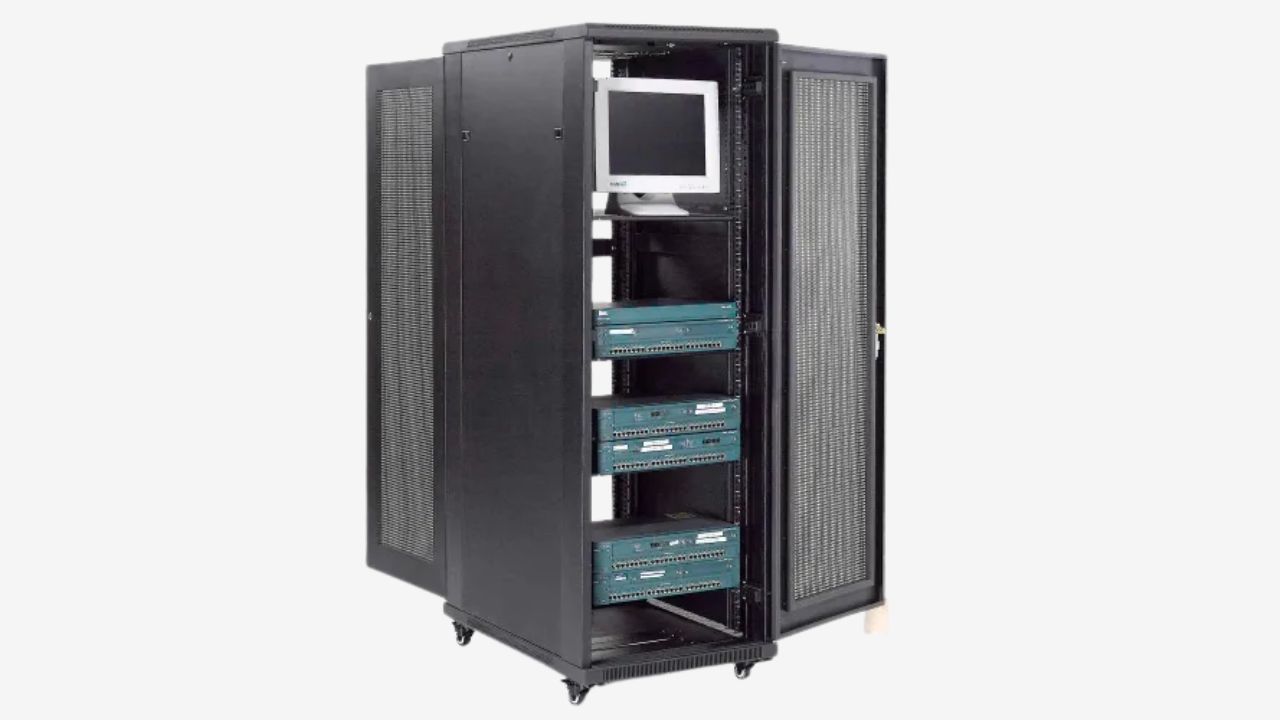
Durability
The sliding shelves use steel slide rails (usually ball-bearing rails). It can distribute the weight across multiple mounting points and also reduce wear and tear. This reduces the risk of metal fatigue, track bending or cracking of the mounting holes. Therefore, the lifespan of the sliding shelf and rack is extended.
Besides, most sliding shelf racks are constructed using materials such as cold-rolled steel and aluminum alloy. These materials have high yield strength and tensile strength. They can resist deformation under load. And they are also coated with corrosion-resistant coatings, such as powder coating and galvanization. These coatings have excellent rust prevention and corrosion resistance capabilities.
Load Capability
The load capacity of a sliding shelf rack is deeply related to the design of load-bearing structure, the extension mode of rail(full-extension or partial-extension rails), the type of rail(ball-bearing or friction), the depth of rack and other factors. Generally speaking, the standard sliding shelf rack has a load capacity of approximately 30 kg to 60 kg. Heavy-duty sliding shelf racks have a load capacity of more than 90 kg.
The static load capacity of the 1U sliding shelf rack is between 20 and 40 kg. The dynamic load capacity of the 1U sliding shelf rack is between 15 and 30 kg. The static load capacity of the 2U sliding shelf rack is between 40 and 90 kg. Its dynamic load capacity is between 30 and 70 kg.
Based on the design of the load transmission path and structural stability, the load capacity of the 2-post sliding shelf rack is relatively weak. It is typically used for light to medium-sized loads, such as 1U or 2U lightweight servers, network switches, etc. Its maximum load capacity is around 50-80 kg. Its structure is simple, the cost is low, and it has good ventilation.
The support frame of the 4-post sliding shelf rack is more stable. It has high stability and resistance to deformation, which effectively prevents the middle part of the shelf plate from sagging and the overall distortion. The load-bearing capacity of the 4-post sliding shelf rack is extremely high. If you want to support heavy servers, high-end storage devices, or want to deploy GPU servers densely, the 4-post shelf rack is your standard choice. Its load capacity is over 100 kg. Correspondingly, its cost and weight are also higher.
Cost-Effectiveness in the Long Run
Although the unit price of high-quality sliding shelf rack is higher, it can bring you long-term economic benefits.
As mentioned in the previous advantages, the sliding design can elevate your maintenance efficiency and reduce the time for troubleshooting and repairs. This directly translates into lower repair times and higher labor efficiency. It also reduces your labor costs.
The excellent hardware design and the optimization of the operating environment have directly reduced the failure rate. The extension of the hardware replacement cycle also lowers your large-scale expenditures. Furthermore, the high ventilation rate design and the optimized airflow management can save you a considerable amount of electricity costs.
Besides, the rack sliding shelf is an extremely cost-effective risk-aversion solution. It can prevent catastrophic failures and reduce your business losses and data recovery costs. And faster fault recovery and more stable operational efficiency directly translate into the availability of your system. It has tremendous commercial value for your key business.
Not only that, the modular, adjustable rack design is flexible to accommodate your future equipment needs. Its high-density deployment feature can also reduce or avoid the cost of expanding the data center.
Integration with Other Rack Accessories
Inside the cabinets of the data center, the sliding shelf rack must be precisely integrated with a series of key components and work together to form an efficient and reliable complete infrastructure unit.
The rack rail needs to be directly fixed onto the standard 19-inch rack rails. It is compatible with 2-post or 4-post shelf racks. And it requires the same U space as other rack devices. Sliding shelf racks can be used in conjunction with cable rings, lacing bars and CMA. This enables your cables to move freely and achieve a reasonable layout of the cables. It can also be integrated with PDU or power strips. The sliding rack can improve the accessibility of power connections.
The integration of the sliding rack and the accessories can create a more orderly and efficient server room or data center. It reduces your maintenance time and costs. Your overall operational efficiency and reliability will be greatly improved.
Application Scenario
Data Centers
Server and storage equipment maintenance: Supporting rack-mounted servers and storage arrays. It allows for the complete sliding out of heavy equipment for diagnosis, replacement or upgrade without interrupting adjacent devices.
Critical infrastructure maintenance: Used for maintaining and installing rack-mounted UPS, PDU and other critical power equipment to achieve safe and convenient access.
IT Asset Rooms
Centralized Management of Network Equipment: It accommodates devices such as switches, routers, firewalls, etc. The sliding design greatly simplifies tasks such as cable alterations and port troubleshooting.
Cabling Racks and Modular System Installation: Used for installing fiber optic cabling racks, etc. It is convenient for making connections and management from the front or back, keeping the cleanliness and orderliness of the cabling area.
Financial Institutions
Trading System and Core Database Server: Carry high-frequency trading, real-time settlement and other key business servers. They can help achieve faster fault recovery.
Monitoring Equipment: Install physical security control servers, video recording storage devices, etc. The sliding shelf rack provides controlled access methods.
Factors to Consider When You Choosing A Sliding Shelf Rack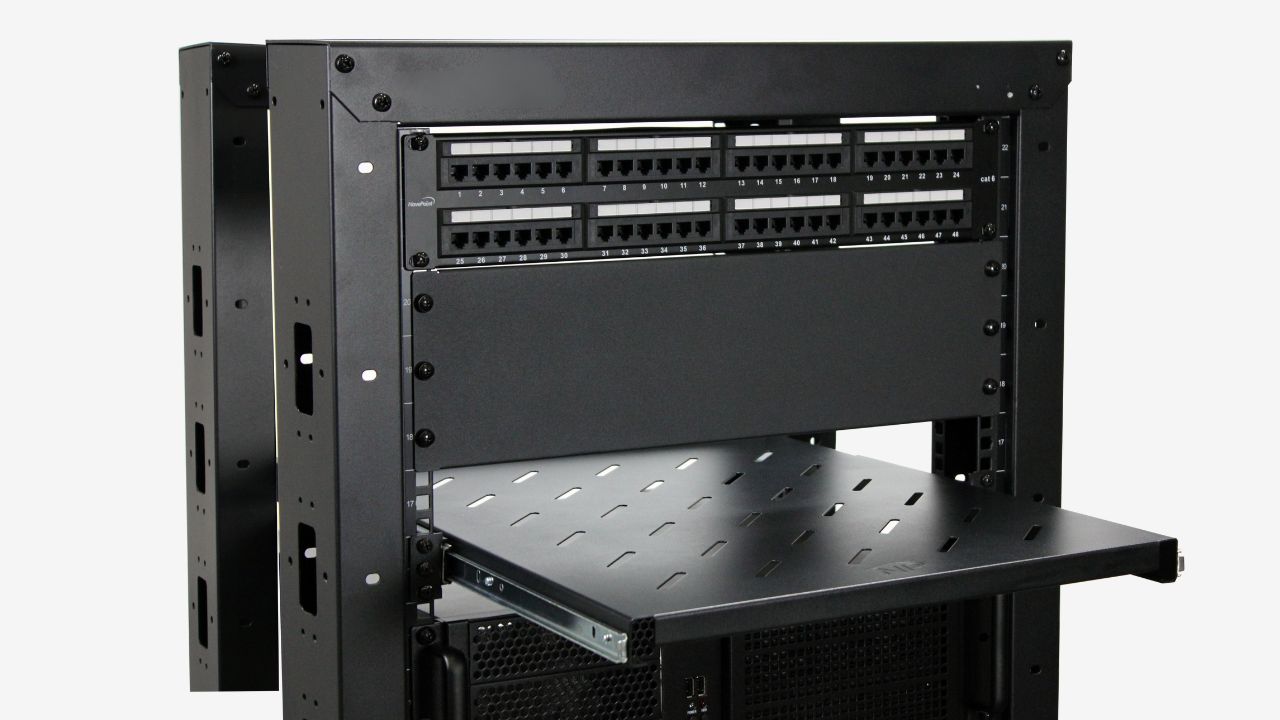
Space and Layout
You need to accurately measure the net height (U), net width (usually 19 inches) and depth of the cabinet. You also need to consider choosing the plate type. If the shelf rack is carrying high-power equipment, a perforated shelf plate is your preferred option. You also need to plan the cable layout to guarantee smooth movement.
Load Requirements
You need to calculate the maximum total weight of all the equipment and leave sufficient margin. For heavy or deep equipment, you must choose 4-post sliding shelf racks. When considering the load-bearing capacity, the dynamic load must also be considered.
Manual vs Electric System
The manual system is cost-effective and has a simple structure, making it suitable for scenarios with low maintenance frequency, moderate load, and limited budget.
The electric system has a low operating intensity, but it is costly, requires an electrical connection, has high system complexity and more potential faults. It is suitable for situations where the equipment is heavy and requires frequent maintenance.
Safety Features
For safety features, you mainly consider whether the sliding shelf racks are equipped with locking devices, buffer closing and anti-roll designs. Besides, CMA is also a key safety accessory.
Budget and Long-term Needs
For cost, you can’t just compare the initial cost. You also need to consider the installation cost and the value of operational efficiency. The flexibility of the shelf rack and the compatibility with future equipment should also be considered. If you have plans for future expansion, you should choose a rack with higher load capacity and better heat dissipation.
FAQ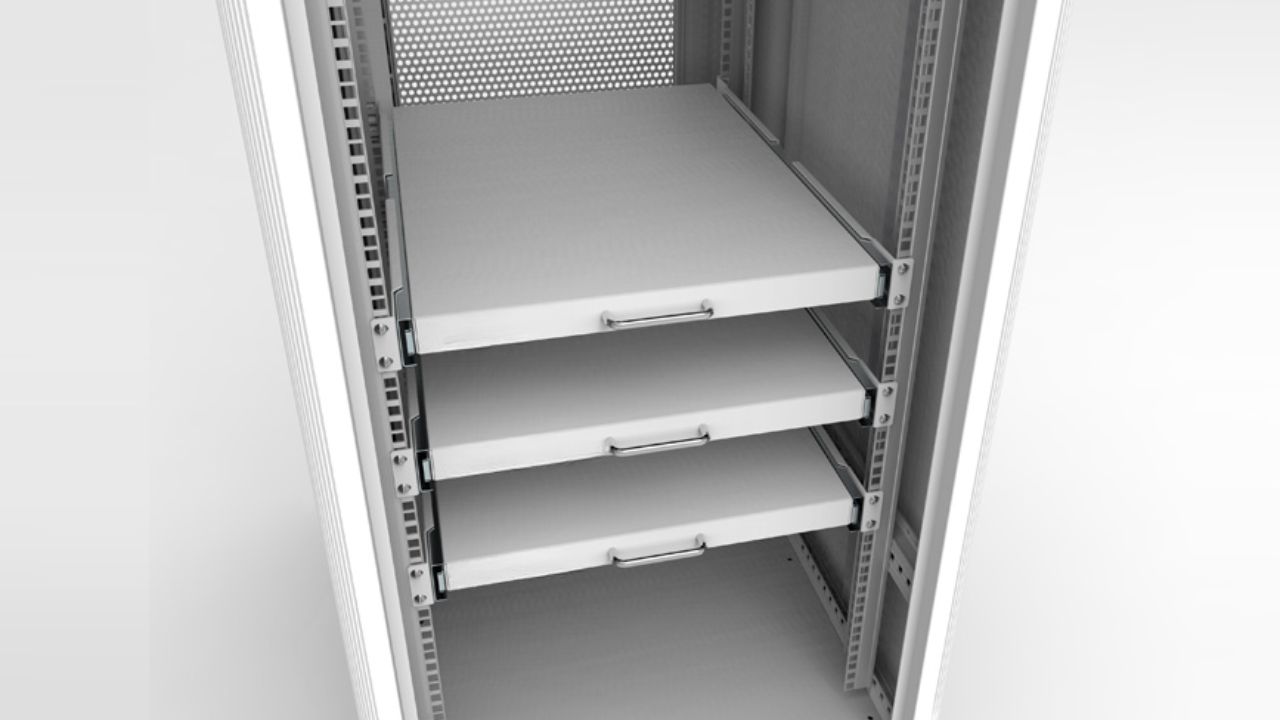
Can An Irregularly-Shaped Cabinet be Equipped With Sliding Shelf Racks?
It can be installed, but the installation has certain conditions. The two vertical mounting surfaces inside the cabinet used for installing shelves must be flat, regular and parallel. You need to precisely measure the width, hole spacing and depth of the installation surface. If these surfaces are also irregular, you will need a customized solution.
Will the Slide Rail Rust, Become Rough or Make Noise after Long-Term Use?
Under professional product conditions and normal usage, such problems will not occur. The professional slide rail material has strong corrosion resistance. The sealed steel ball bearings can keep smoothness for a long time and effectively prevent dust. If your application environment is extremely humid and dusty, rust and noise may occur.
Is It Easy to Clean the Sliding Shelf Rack?
Easy. You can full-extension slide the device out. All regional exposures do not create sanitary dead ends. You can clean it directly using a vacuum cleaner, but avoid using corrosive cleaners to prevent the rails from corroding.
Final Thought
With the increasing demand for high density and more frequent access in rack environments, sliding shelf rack offers a practical solution that balances performance, security and long-term reliability. As a professional custom manufacturer of electrical enclosures, KDM can meet all your rack usage needs. We use high-quality raw materials and advanced production processes. Please contact us and we will promptly respond to your needs and provide you with a practical customized solution.
 English
  Arabic
  French
  Spanish
  Russian
  Japanese
  Korean
  Portuguese
  Indonesian
  Chinese