


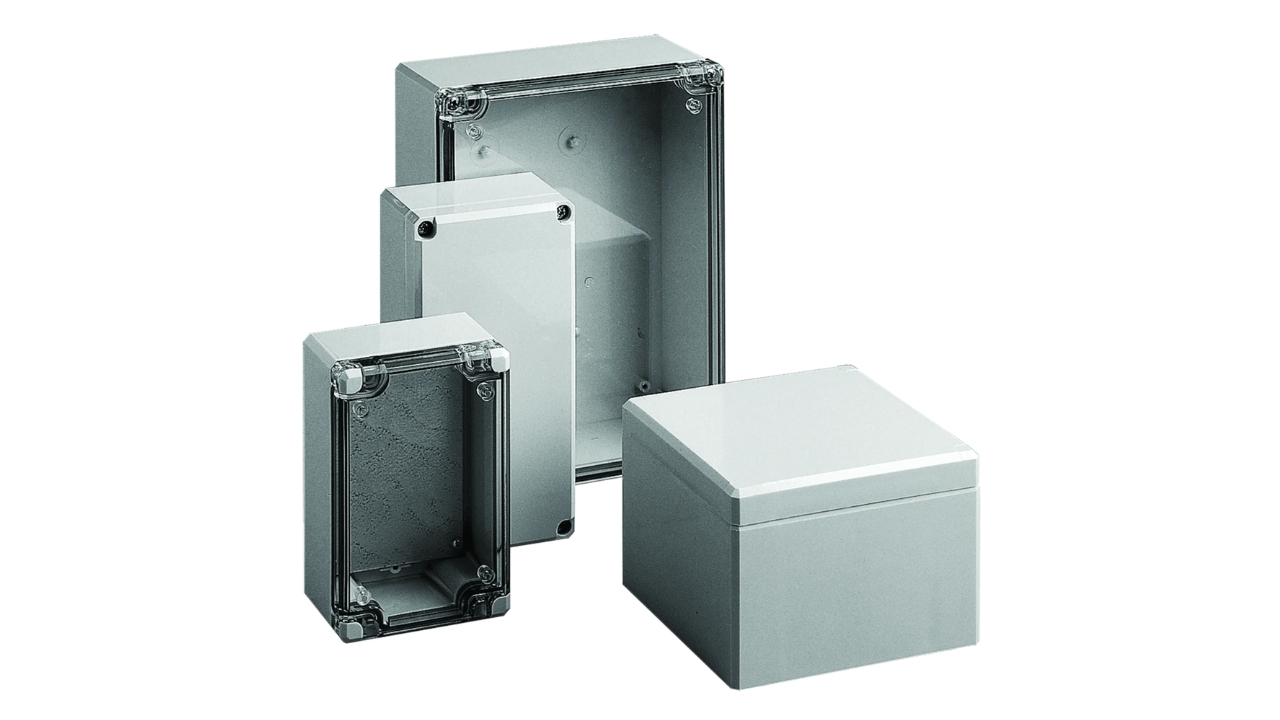
Fiberglass and polycarbonate are the most commonly used non-metallic electrical enclosure materials. However, there are differences between these two materials in weather resistance and impact resistance. This article explains the differences between fiberglass and polycarbonate enclosures to help electrical engineers and system integrators choose the right material for their project.
What Are Fiberglass(FRP) Electrical Enclosures?

Fiberglass electrical enclosures are protective enclosures made of fiberglass-reinforced polyester. This composite material is made of plastic and glass. It has high specific strength.
The fiberglass electrical enclosures have excellent corrosion resistance and a strong, rigid structure. Besides, it also has excellent weather resistance and temperature resistance. It is widely used in outdoor electrical installations, marine and coastal environments, and power distribution systems.
What Are Polycarbonate(PC) Electrical Enclosures?

The polycarbonate electrical enclosure is a protective enclosure made of polycarbonate (PC), a high-performance thermoplastic. Polycarbonate is also one of the most widely used plastics. It is a kind of amorphous, transparent engineering plastic with high impact resistance and electrical insulation.
Polycarbonate electrical enclosures protect electronic components from dust, moisture, shock and accidental contact. They are widely used in indoor distribution boards, light industrial environments, telecommunications, and data installation.
Fiberglass vs. Polycarbonate Enclosures: Knowing the Key Differences

Fiberglass and polycarbonate are both plastics. But the two materials are different in many aspects, including chemical resistance, physical properties and weather resistance. Here’s a detailed explanation of the differences between fiberglass and polycarbonate:
Material and Composition
Fiberglass is a thermosetting plastic made of glass fiber embedded in polyester/epoxy resin. Its structural strength and stiffness are provided by the fibers. Polycarbonate is a thermoplastic made from bisphenol A and phosgene. It is flexible and impact-resistant.
Mechanical Strength & Impact Resistance
Polycarbonate is better than fiberglass in impact resistance. Fiberglass electrical enclosures have high compressive and structural strength. It can keep its shape under heavy loads. But fiberglass has poor toughness. If fiberglass is subjected to a strong impact, it may produce cracks, white marks, or even break.
As a material for bulletproof glass, polycarbonate has excellent impact resistance and toughness. The polycarbonate can absorb the impact without cracking. However, its rigidity performance under heavy load is poor.
Chemical Resistance
Both materials can be used for corrosive environments. But fiberglass has better chemical resistance.
Polycarbonate enclosures can be used in marine or mildly corrosive environments. But they are not as durable as fiberglass in such conditions. Polycarbonate is susceptible to erosion by solvents, acids, and oils. If you expose a polycarbonate enclosure to a corrosive substance, it may crack or discolor.
The fiberglass enclosure is more resistant to chemicals than polycarbonate. If your installation environment has high chemical concentrations, fiberglass is a preferred choice.
Weather and UV Resistance
If you expose polycarbonate to UV light for a long time, its surface will yellow or become brittle. Currently, most polycarbonate enclosures are treated with UV inhibitors. This can increase their outdoor service life.
Fiberglass has excellent UV tolerance. But fiberglass enclosures exposed to direct sunlight for a long time will develop a phenomenon called fiber bloom. Fiber bloom does not affect the structural integrity and electrical insulation of the enclosure. Its surface tends to accumulate oil and stains, which may affect your conductive pathways. You can conduct occasional cleaning to avoid this trouble.
Temperature Performance
Fiberglass has better temperature performance than polycarbonate. The maximum operating temperature of polycarbonate is 115℃. However, the maximum operating temperature of fiberglass is 150℃. These are typical maximum continuous operating temperatures. Short-term excursions may be higher.
The polycarbonate enclosure has a moderate temperature tolerance. And the box may soften or deform at high temperatures. Fiberglass can handle higher temperatures and thermal stresses. So, fiberglass boxes have greater thermal dimensional stability.
Weight
In weight, polycarbonate electrical enclosures are lighter than fiberglass ones. The lightweight polycarbonate electrical enclosure is more convenient for you to transport and install. This will also lower your shipping costs. And the heavier fiberglass electrical boxes will make your installation more difficult.
Transparency
The polycarbonate itself is transparent. Therefore, you can choose a polycarbonate enclosure with a transparent cover. This facilitates visual inspection without you opening the enclosure. The fiberglass enclosure is usually opaque. But it can also be equipped with a polycarbonate transparent window.
Electrical Insulation
Both fiberglass and polycarbonate enclosures have good electrical insulation. But in general, fiberglass enclosures are better insulated in demanding environmental conditions.
Customization & Machining
Polycarbonate enclosures are easier to drill, cut and modify on site when customizing production or processing. You can quickly customize polycarbonate enclosures. The fiberglass material is harder. When machining, you need to use professional tools. And, cutting fiberglass produces harmful fine dust.
Cost
In general, polycarbonate enclosures are cheaper than fiberglass ones. Polycarbonate enclosures have a lower initial cost. It also lowers your shipping and installation costs. Fiberglass lasts longer in harsh environments. But you should pay more for the material and shipping.
Applications
You can apply the polycarbonate enclosure to outdoor fixtures, impact-resistant items, or frequently modified areas. For example, temporary power distribution boxes on construction sites, mobile power boxes, and building automation control boxes.
Fiberglass enclosures are typically used in chemical environments or for long-term outdoor installations. For example, photovoltaic combiner boxes, sewage treatment plants, oil drilling platforms, and chemical plants.
Fiberglass/Polycarbonate Electrical Enclosure Pros and Cons Summary

| Fiberglass Enclosure | Polycarbonate Enclosure | |
| Pros | ● Excellent corrosion resistance
● Strong and structurally rigid ● UV and weather resistance ● High temperature tolerance ● Long service life in a demanding environment |
● Lightweight
● Good impact resistance ● Easy to modify ● cost-effective |
| Cons | ● Heavier
● Difficult to modify ● Higher cost ● Opaque ● Surface may develop fiber bloom over time(need cleaning) |
● Lower UV resistance
● Lower chemical/corrosion resistance ● Lower temperature tolerance ● Shorter service life in a demanding environment |
What Factors Should Be Considered When Choosing the Right Enclosure?

Installation Environment
Is your installation environment indoor or outdoor? The outdoor environment needs to consider the effects of UV rays, rain, and temperature changes on the electrical enclosure. Evaluate whether there are any chemicals, seawater or dust in the installation environment. If the environment is harsh, you should choose a more durable material.
IP/NEMA Protection Rating
Choose an IP/NEMA-rated enclosure that matches your environment. For example, you can choose IP65/IP66 for dust and water protection, or you can use NEMA4/4x for corrosion protection and flushing.
Size and Internal Space
You need to guarantee that the electrical enclosure has enough space for components and cable management. Besides, you can reserve some space for your future expansion. A slightly larger size also prevents overheating.
Installation & Maintenance
Is the enclosure easy to install? And do you need frequent access or modifications? Typically, lightweight and easily machined enclosures can reduce labor time and costs.
Apart from the above factors, you also need to consider the mechanical strength, corrosion resistance and functional requirements of the enclosure. Assess these factors and combine them with your actual application needs to choose the right electrical enclosure for your project.
FAQ

How Long Do Fiberglass and Polycarbonate Enclosures Typically Last?
Fiberglass enclosures usually last 15-25 years or more. It lasts longer in harsh environments. Polycarbonate enclosures typically last 5-15 years. If you expose it to the sun for a long time, it will age faster.
What Is the Difference Between Fiberglass and Thermoplastic Materials?
Fiberglass (FRP) is a composite material made of glass fibers and resin. It is rigid and very strong. And it’s also resistant to chemicals and UV rays. But it is more difficult to modify on-site compared to thermoplastics.
Thermoplastics are moldable plastics that soften when heated. It is lightweight, flexible, and easy to shape or process. But it is poor in heat resistance and corrosion resistance.
Can I Use Both Materials in the Same Installation?
Yes. You can use both materials in the same installation. You can combine the two materials depending on your application. For example, use fiberglass enclosures in outdoor areas. Use a polycarbonate enclosure in indoor or other low-demand areas. You need to make sure that all cabinets meet the required IP/NEMA ratings. And the enclosure should be compatible with your overall system design.
Can Polycarbonate Enclosures Be Used in Chemical Processing Plants?
Yes. The polycarbonate enclosure can be applied in chemical plants. But you can only apply it to areas of mild or controlled exposure. It has general chemical resistance. It may degrade if exposed to strong acids, solvents, or corrosive chemicals.
Final Thought

At KDM, we can provide you with a wide variety of electrical enclosures and related accessories, including stainless steel, galvanized steel, and mild steel enclosures. What’s more, we also provide you with custom enclosure services to meet your diverse application needs. Our professional team looks forward to serving you.
 English
  Arabic
  French
  Spanish
  Russian
  Japanese
  Korean
  Portuguese
  Indonesian
  Chinese