


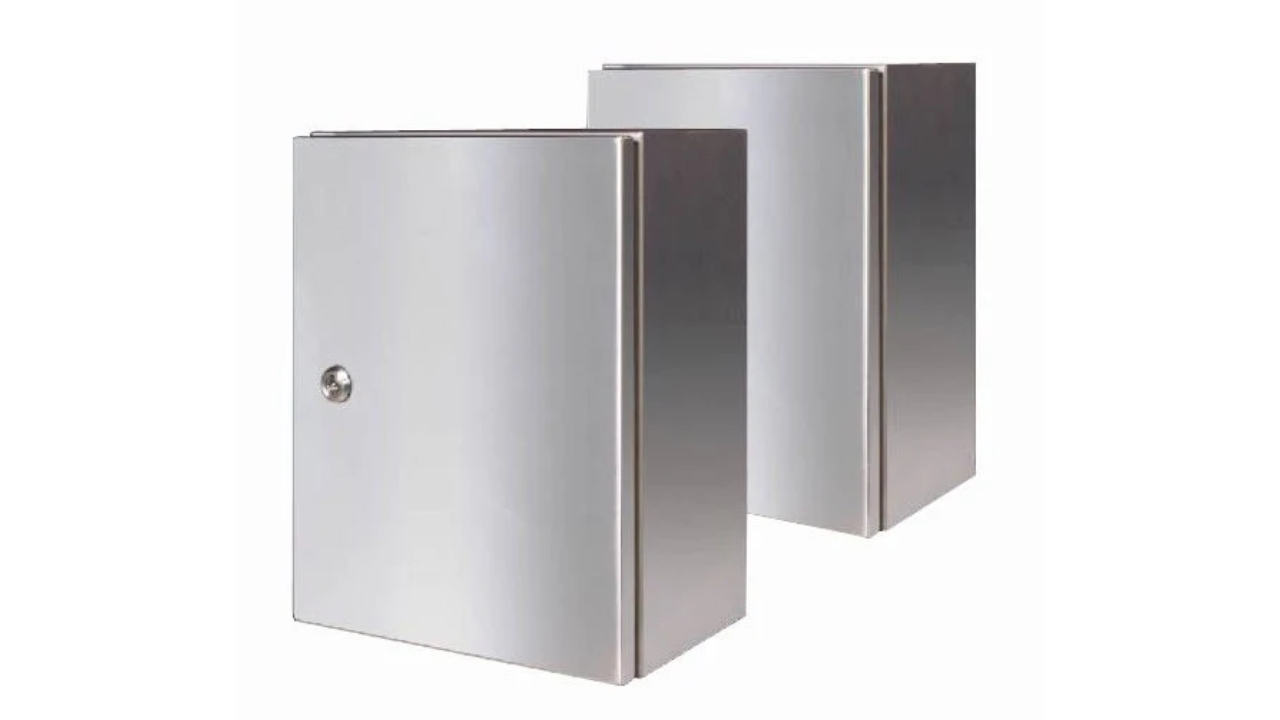
In selecting enclosures where aggressive industry is involved, the type of enclosure material you select can be the difference between the longevity of your equipment and its failure. Stainless steel casings are preferred in many important applications. In this article, we will examine their advantages and disadvantages in the real world so that you can make a decision on whether they can be used in your next task.
What Is a Stainless Steel Enclosure?
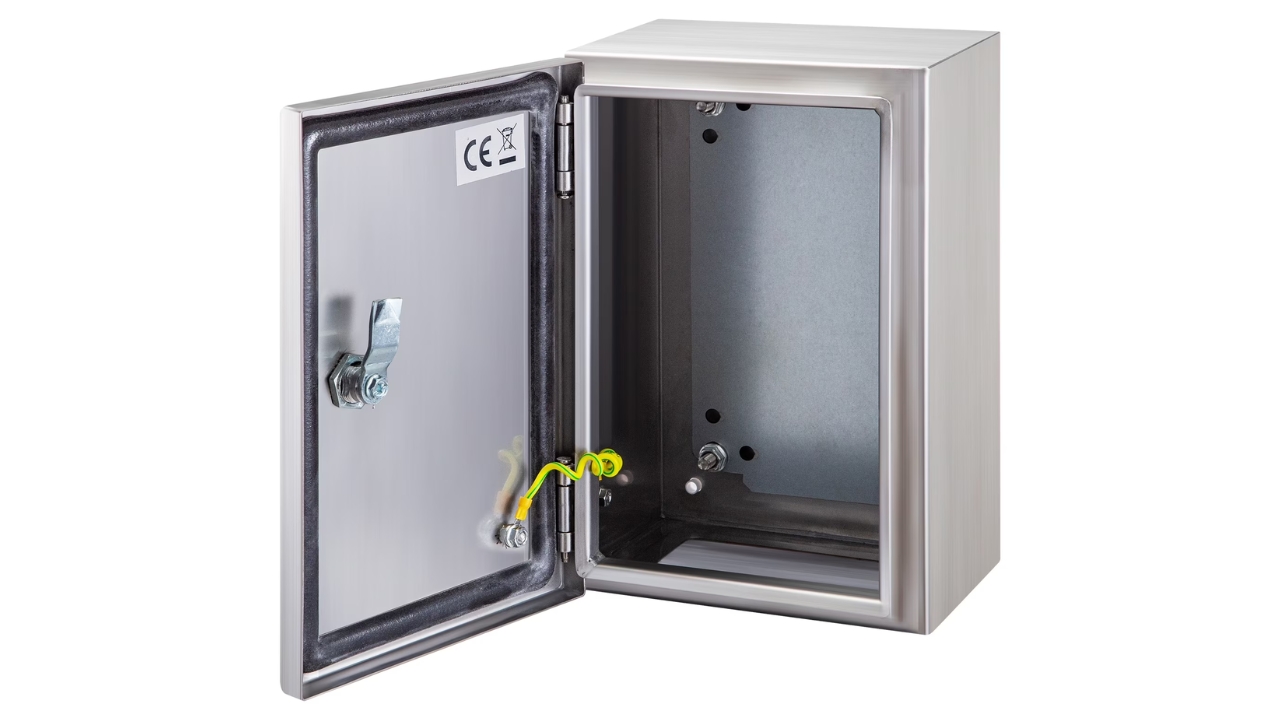
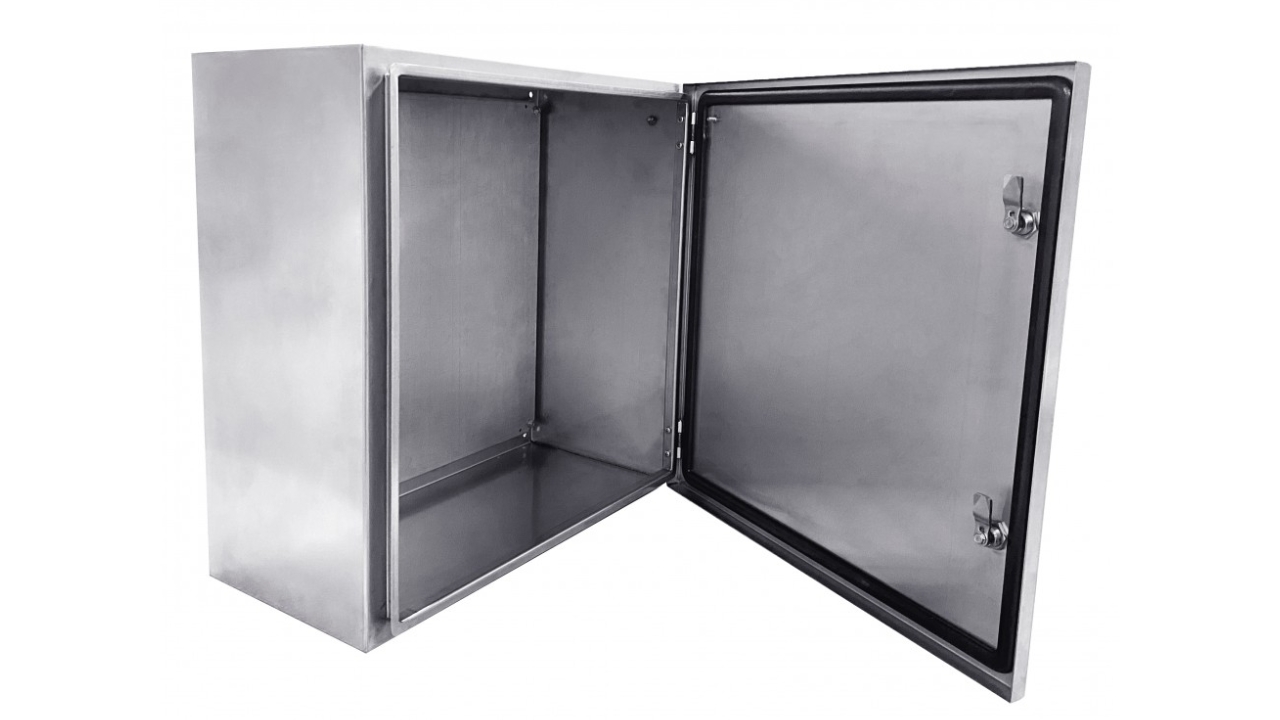
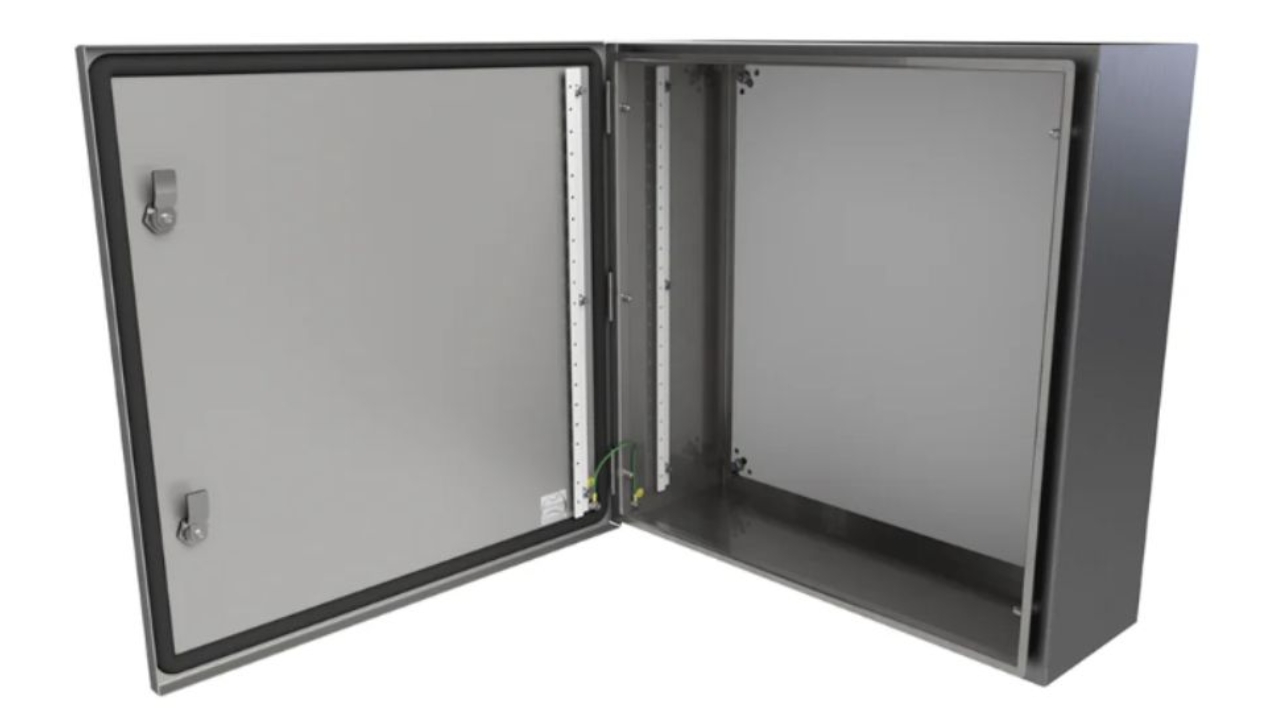
A stainless steel enclosure is a secure case produced of steel alloys that do not rust, typically grades 304 and 316. These cases shield delicate computer and electrical components against water, dust, chemicals, impacts and large alterations in temperature. They can be found in austere industrial places guarding control panels, instruments and automation equipment.
Key Properties of Stainless Steel Enclosures
Corrosion Resistance
The self-healing inactive layer is what makes stainless steel unique. Its chromium mixes with oxygen to make a film that covers the surface and keeps it safe. If this layer gets scratched, it heals itself right away, protecting against rust and chemical attack all the time.
Mechanical Strength & Durability
With a tensile strength of up to 590 MPa, stainless steel is very resistant to pressure. Heavy mechanical stress, vibration, and accidental hits do not hurt these enclosures. Many setups can get IK10 ratings, which protect your sensitive parts even in harsh industrial settings.
Hygiene & Cleanability
Stainless steel’s smooth, non-porous surface makes it hard for germs to grow and form biofilm. You can use harsh cleaners, steam, or pressure tools to clean it, and it will not damage the material. Because of this, it is the normal choice for use in medicine, pharmaceuticals, and food processing.
Thermal & Environmental Resistance
Stainless steel enclosures work effectively in a wide range of temperatures, from -196°C (cryogenic) to 870°C (continuous service). They do not break down when exposed to UV light or corrosive chemicals, and they keep their shape in seaside, offshore, and outdoor settings where other materials would fail quickly.
Advantages of Stainless Steel Enclosures
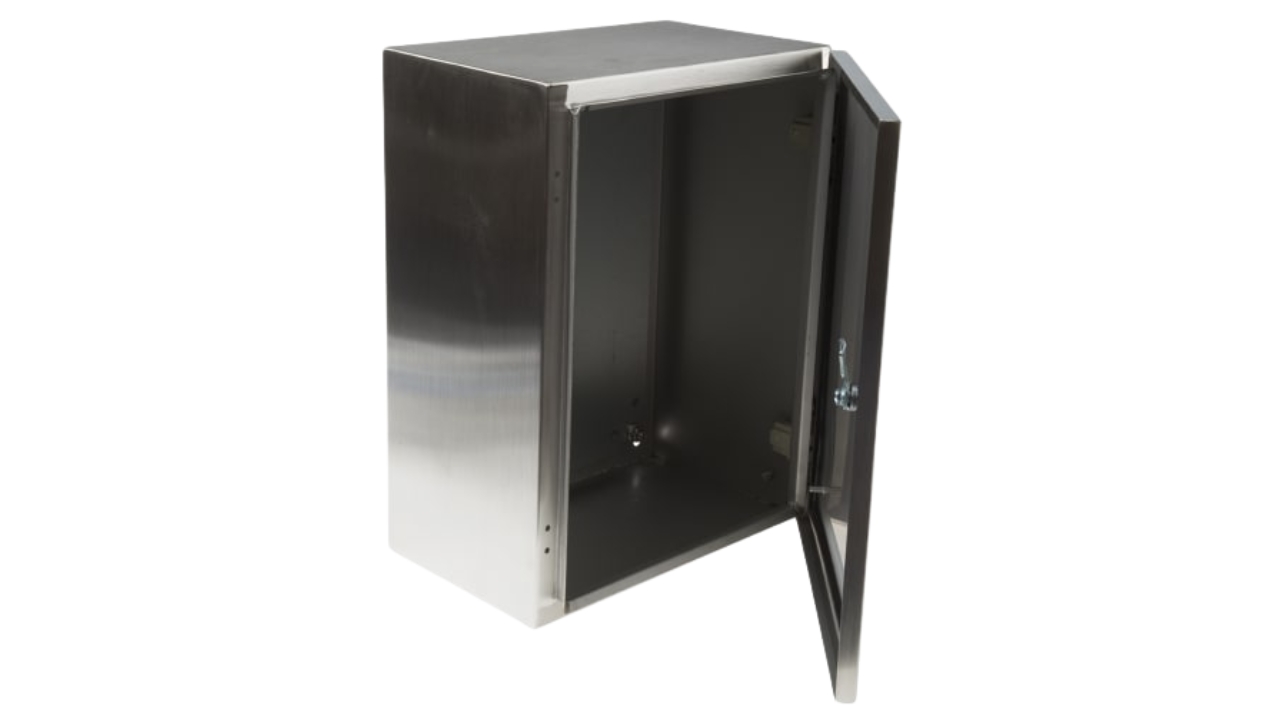
Superior Corrosion Resistance
Stainless steel naturally resists rust, while painted mild steel relies on a coating that can be scratched. The chromium oxide layer keeps fixing itself, so you do not have to rely on surface treatments that can wear off over time to protect you from rust, water, chemicals, and salt spray.
Long Lifespan & Low Maintenance
Once they are set up, stainless steel enclosures usually last longer than the tools they hold. You will not have to pay much for cleaning, rust removal, or putting on new coatings. This means that the total cost of ownership is lower than with alternatives that need to be fixed up often or replaced too soon.
High Strength and Impact Resistance
These enclosures give your important parts strong physical protection. They can handle being hit by a truck, falling objects, and vibrations without breaking or deforming. For industrial settings with a lot of foot traffic, knowing that your sensitive electronics are stored in a building that is almost impossible to damage gives you peace of mind.
Hygienic and Easy to Clean
Stainless steel is used in the food, drink, and medicine businesses because it meets high standards for cleanliness. Its smooth, uniform surfaces do not have any cracks where germs could hide. You can clean the cage many times with caustic cleaners, steam, or high-pressure washdowns without damaging it or making it look bad.
Aesthetic & Professional Appearance
The shiny metal finish looks high-end and expert. It does not fade, yellow, or show unsightly rust spots on stainless steel over the course of decades. Stainless steel enclosures show that you know what you are doing and care about quality when your building is open for tours or checks by the government.
Fire and Heat Resistance
Stainless steel helps keep buildings safe from fire because it does not catch on fire. Even when heated up, it does not give off any harmful fumes. You get rid of the fire risks that come with plastic covers that can melt or spread flames in places where heat sources are present or where fire ratings are important.
Sustainability & Recyclability
Stainless steel can be recycled repeatedly without losing any of its qualities. When cages reach the end of their useful life, they are still worth a lot as scrap, so the material is used again in other projects. If your company keeps track of sustainability data or wants to get LEED certification, choosing stainless steel will help you reach your environmental goals.
Wide Application Flexibility
Stainless steel electrical enclosures can be used in a lot of different places, from oil rigs at sea that need 316-grade marine safety to food plants that need designs that can be cleaned with water. You can get sizes, cutouts, and accents that are made just for you. Stainless steel enclosures can be used in almost any business, whether you need simple junction boxes or configurations that cannot explode.
Disadvantages of Stainless Steel Enclosures
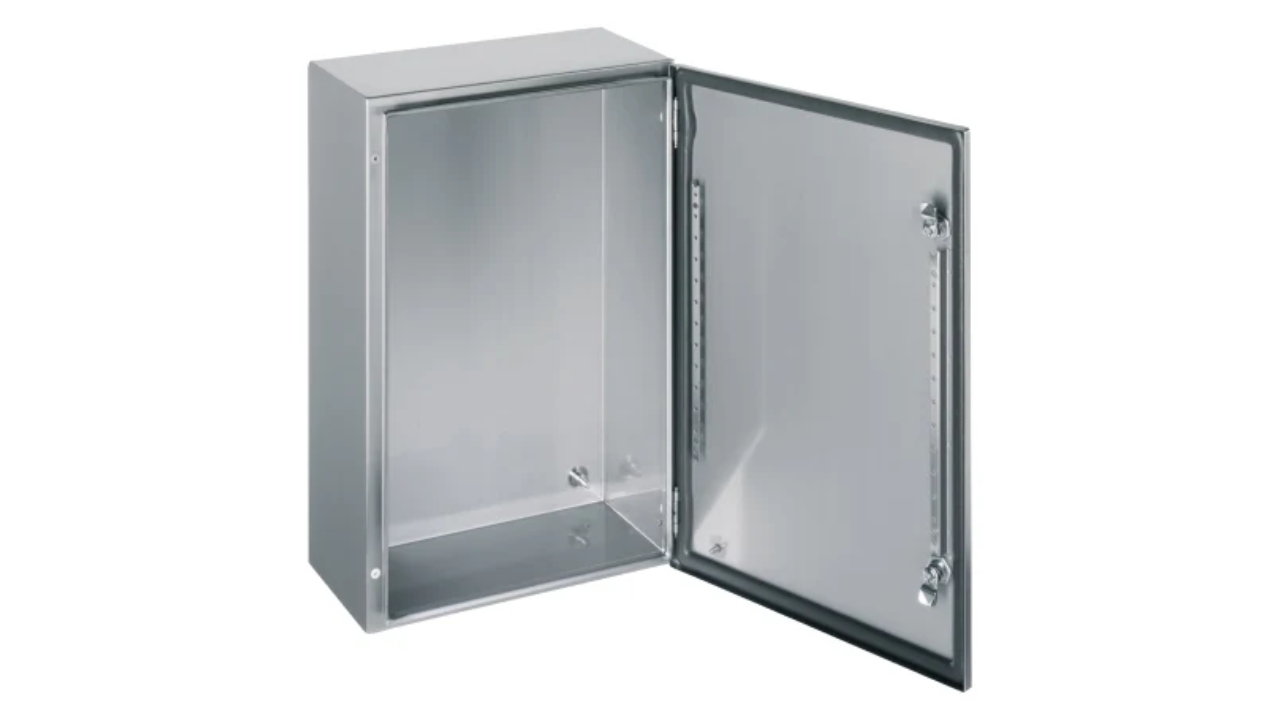
High Initial Cost
Stainless steel containers cost more than painted mild steel, usually 60 to 100 percent more. The 316 grade costs about twice as much as the 304 grade. For big projects with many units, this upfront investment needs to be carefully thought out in terms of the budget.
Heavier Weight
Stainless steel is about three times heavier than aluminum and a lot denser than plastic. Its density is about eight grams per cubic centimeter. This means that mounting surfaces need more structural support, and it also costs more to ship your enclosures.
Difficult Fabrication & Machining
To work with stainless steel, you need special tools and knowledge. Standard drill bits get dull quickly, cutting processes produce a lot of heat, and welding needs skilled work. If you need to make custom changes, it will take longer and cost more than aluminum or plastic options.
Lower Thermal Conductivity
Aluminum is better at getting rid of heat than stainless steel. For cases that hold a lot of electronics or variable frequency drives, you might need to add cooling systems like fans, heat exchanges, or air conditioners. This can make your installation more complicated and cost more in energy over time.
Not Always Necessary for Simple Applications
For indoor uses where there are no harmful chemicals or mechanical stress, stainless steel is too complicated. If your equipment is kept in a climate-controlled panel room that does not need to be cleaned, you can protect it with cheaper materials that do not affect how well they work.
Risk of Surface Damage (Cosmetic Issues)
Even though stainless steel does not rust, it can still get scratches on the surface. It can look bad if it has fingerprints, water spots, or small scratches. In coastal areas, tea staining—a brown discoloration on the surface—may appear on 304 grade. This can make it look bad without affecting its structural stability.
Stainless Steel vs Other Enclosure Materials
| Feature | Stainless Steel (304/316) | Mild Steel (Powder-Coated) | Aluminum | Plastic (Polycarbonate/FRP) |
| Corrosion Resistance | Excellent—inherent protection with self-healing passive layer | Limited—coating-dependent; rust develops rapidly once the coating is compromised | Good—forms a natural oxide layer but is susceptible in harsh marine environments | Excellent—chemically inert; no rust concerns |
| Mechanical Strength | Superior—high impact resistance; achieves IK10 ratings | Excellent—strong but prone to rust at cut edges or scratches | Moderate—softer surface; can dent or gouge under heavy impact | High—polycarbonate offers excellent impact strength; FRP provides structural rigidity |
| Weight | Heavy—approximately 8.0 g/cm³ density | Heavy—comparable to stainless steel | Light—approximately 2.7 g/cm³; one-third the weight of steel | Very light—easiest for handling and installation |
| Thermal Management | Moderate conductivity—may require auxiliary cooling for high-heat applications | Similar to stainless steel | Excellent conductivity—naturally dissipates heat; ideal for power electronics | Poor conductivity—traps heat; unsuitable for high-wattage components without ventilation |
| Hygiene & Cleanability | Excellent—non-porous; withstands harsh chemicals and steam | Poor—coatings degrade with aggressive cleaning; rust risk | Good—cleanable but softer surface can scratch | Good—smooth surfaces clean easily but may degrade with chemical exposure |
| Aesthetic Longevity | Excellent—maintains appearance for decades; professional metallic finish | Fair—coating fades, chips, and rusts over time | Good—natural finish holds up well but shows scratches | Good—color-fast but may yellow with UV exposure unless UV-stabilized |
| Typical Cost | High—premium material with premium price point | Low—most economical option | Medium—moderate cost with good value | Low to Medium—affordable with a strong value proposition |
| Best Applications | Food processing, pharmaceutical, marine, chemical, outdoor, and washdown environments | Indoor dry locations, general industrial, where corrosion exposure is minimal | Heat-sensitive electronics, weight-sensitive installations, indoor/outdoor with mild exposure | Light industrial, outdoor, non-corrosive environments, applications requiring electrical insulation |
How to Choose the Right Stainless Steel Enclosure
Environment (Indoor/Outdoor, Chemical Exposure)
Carefully look over the installation surroundings. 304 grade stainless steel can be used in dry, indoor areas, but a 316L stainless steel tank with molybdenum is needed for outdoor installs, coastal areas, or chemical processing facilities because it is better at resisting chloride and lasts longer.
Grade Selection (304 Vs 316)
For most indoor uses, food processing, normal industrial uses, and food processing, choose 304 stainless steel. Choose 316 stainless steel if your site will be exposed to saltwater, de-icing salts, acidic chemicals, or is close to the ocean (about 20 kilometers).
IP/NEMA Rating
Match the rating of the enclosure to the area you will be in. The NEMA 4X or IP66 standards make something waterproof, dustproof, and resistant to corrosion. For washdown tasks that need water resistance when water is guided through a hose, make sure the rating you choose meets the needs of high-pressure cleaning.
Size and Customization
When choosing the size of the enclosure, you should think about both the current parts and any possible additions. Think about whether you need custom cutouts, viewing windows, mounting plates, or locking methods that are unique to your needs. Modular designs often give you the freedom to change how the system works as your needs do.
Thermal Management Needs
Before making your choice, figure out how much heat the internal parts are putting out. When designing enclosures for variable frequency drives, programmable logic controllers, or dense electrical assemblies, you should think about whether they need ventilation, air conditioning, or heat exchangers to keep the parts from overheating and breaking down too soon.
Get Your Customized Stainless Steel Enclosure by KDM Steel
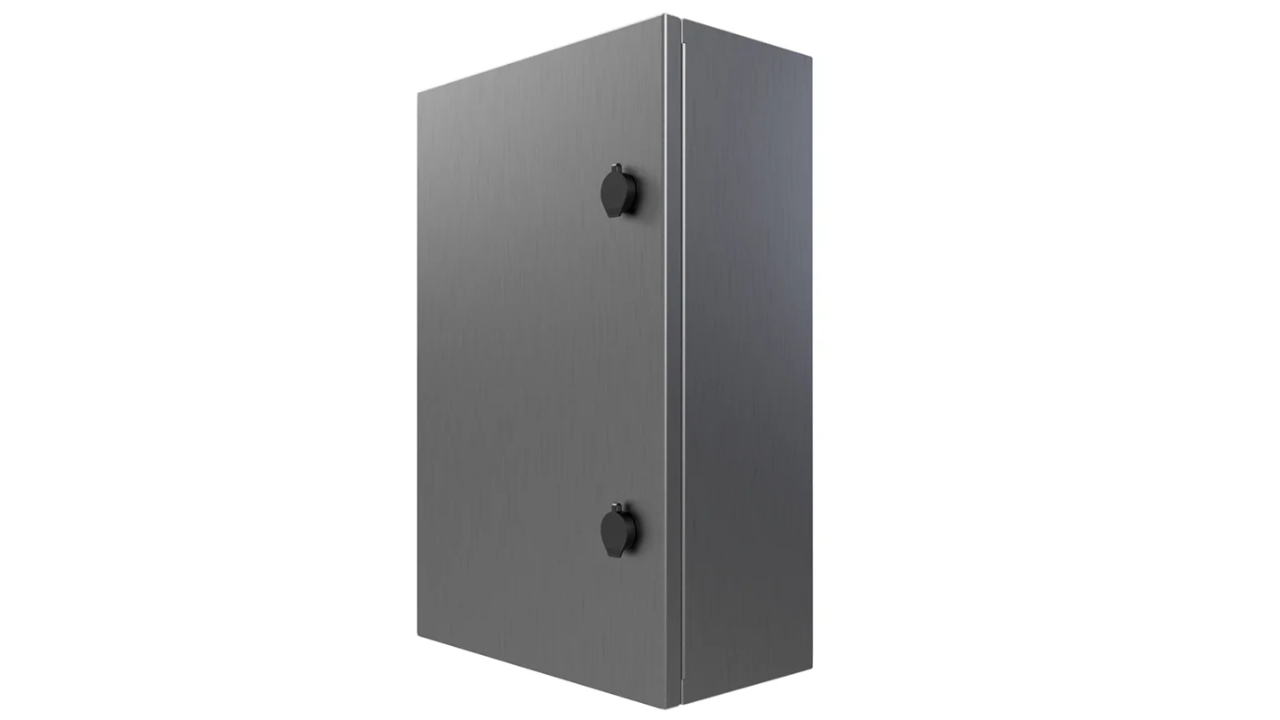
We at KDM Steel know that the enclosures that come off the shelf do not always meet your needs. We are experts at making stainless steel containers that are exactly what you want. We can do everything from choosing the right material grade and changing the dimensions to making precise cuts, applying special finishes, and putting the whole thing together. Our team makes enclosures that are designed to fit your needs, whether you need 304 for food processing or 316 for marine environments. Get in touch with us to talk about the needs of your project.
FAQs
Are stainless steel enclosures worth the cost?
Yes, for places that are acidic or wet. The longer lifespan and cheaper maintenance costs over time make up for the higher cost at first.
Do stainless steel enclosures rust?
Normal steel rusts, but stainless steel doesn’t. Choosing the wrong grade, however, can lead to pitting or discoloration after long-term chloride contact.
Do stainless steel enclosures require maintenance?
Minimal maintenance is needed. Periodic cleaning with a mild cleanser is all that is needed to keep the corrosion resistance up.
Are stainless steel enclosures hygienic?
Yes, because the outer layer is not porous, bacteria cannot grow on it. They do not break down when exposed to strong cleaners or high temperatures.
Do stainless steel enclosures support customization?
Yes, they do offer a lot of customization choices. To make it fit your needs perfectly, you can choose the exact sizes, cuts, locking systems, and styles.
What is the difference between 304 and 316 enclosures?
Grade 304 is very resistant to corrosion and can be used in most industry settings. Molybdenum is added to Grade 316 to make it more resistant to saltwater and strong chemicals.
Are stainless steel enclosures waterproof?
When properly ordered with NEMA 4X or IP66 grades, they keep water out. It is important to put things correctly, using the right gaskets and cable entries.
Which industries require stainless steel enclosures?
They are usually needed in the chemical, pharmaceutical, food processing, and marine businesses. Stainless steel is useful for any job that needs to fight corrosion, keep things clean, or last a long time.
 English
  Arabic
  French
  Spanish
  Russian
  Japanese
  Korean
  Portuguese
  Indonesian
  Chinese