


Choosing the right switchgear configuration is a big choice that can affect the safety, uptime, and budget of your facility. Knowing the differences between Single Bus, MV switchgear, and Double Busbar Switchgear is important whether you’re planning a new center or making improvements to an old one. This guide disaggregates their distinct functions, so that you can choose an ideal fit for their electrical installations.
What Is Single Busbar Switchgear?
All of the circuits that come in and go out of a single busbar switchgear are linked to its main busbar. It works like a single electrical highway and is the simplest and most frequent setup. This is the only path for power to move, so it is clear and simple to use. In industries and buildings with normal service conditions, this design is most often used.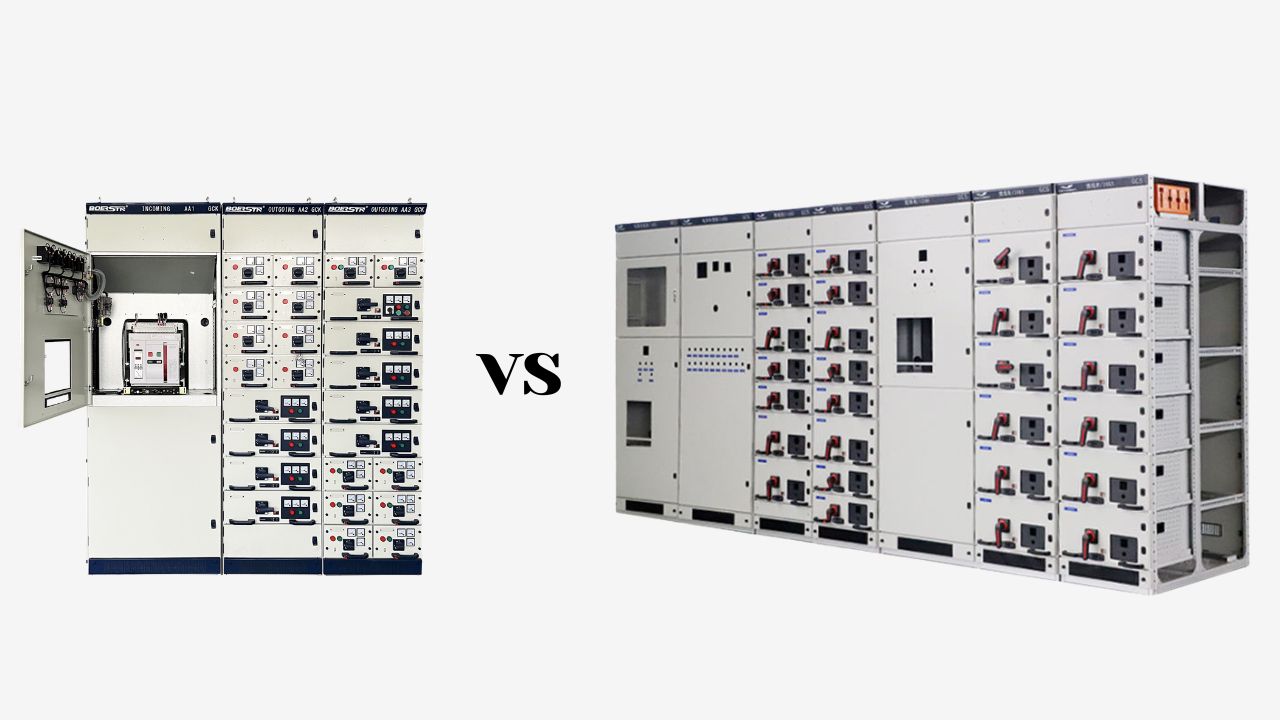
What Is Double Busbar Switchgear?
Two separate busbars are used in double busbar switchgear to make parallel lines for electricity. With this set-up, circuits can be linked to the busbar using either disconnectors or circuit breakers. It’s like having a two-lane highway with built-in backup, which gives you more options for operations and maintenance without having to interrupt the power source.
Top 10 Key Differences between Single Bus vs Double Busbar Switchgear
1. Basic Design & Configuration
Single Bus Switchgear
It has one main busbar that all the feeders, incomers, and the bus section (if it’s there) are linked to. All of the circuits are directly connected to a single power highway, making the layout simple. Bus ties can be used to separate parts of the bus, but the basic structure is still a single-bar design. This simplicity is what makes it unique.
Double Busbar Switchgear
This setup has two main busbars that usually work at the same voltage level. Through its circuit breaker or switchgear and any disconnectors that go with it, each circuit can be linked to either busbar. This setup makes it possible to use complicated switching arrangements, such as moving loads between busbars, which makes the power distribution box and network very flexible.
2. Reliability & Redundancy
Single Bus Switchgear
When it comes to single bus switchgear, reliability is average because the whole system rests on a single part. If the main busbar breaks down or needs repair, the whole switchboard might need to be turned off, which would mean a full shutdown. Even though dividing the bus into sections can keep the outage to a single part, it doesn’t make the whole system redundant.
Double Busbar Switchgear
It is very reliable because it has two sets of connections. You can move all important loads to the healthy busbar if one fails, making sure that the power stays on all the time. This “N-1” redundancy means that the system can handle a single problem without stopping service. This makes it perfect for places where downtime is not an option.
3. Operational Flexibility
Single Bus Switchgear
It’s not very flexible in how it works. Most of the time, you have to turn off the affected part or the whole board in order to do maintenance on the busbar or a connected breaker. During situations, load shedding is harder to do because there are fewer ways to reroute power. The method is rigid and is meant to work in a stable and predictable way.
Double Busbar Switchgear
The double busbar switchgear gives you a lot of options. One busbar can be taken apart for repair while the other one keeps supplying power. To balance loads, separate areas for repairs, or take care of different power sources, operators can move feeders between busbars. There are even more advanced designs that let the load move busbars without stopping.
4. Cost & Capital Investment
Single Bus Switchgear
This is the greatest deal in terms of price. Because you don’t need a second busbar, as many disconnectors, or as complicated a protection scheme, the cost of the equipment is cheaper. The cost of installation, site procedures, and upkeep is also lower, which makes it the best choice when money is tight.
Double Busbar Switchgear
With double busbar switchgear, you have to spend a lot more money. You’re spending money on more busbars, more disconnectors or circuit breakers, more advanced safety relays, and more complicated interlocking mechanisms. Eaton does say, though, that a double busbar installation is often cheaper than two separate single busbar setups that offer the same level of redundancy.
5. Space & Footprint
Single Bus Switchgear
It takes up less space. Because the configuration is simpler, the switchgear lineup takes up less space. This can save a lot of money on building and land prices. This is especially helpful for small industrial substations or retrofit jobs that don’t have a lot of room.
Double Busbar Switchgear
It needs more floor space because it has more parts and busbar runs. But new designs, like Gas Insulated Switchgear (GIS), are making this gap less noticeable. For instance, Eaton’s MMS system is made to be small, and double busbar arrangements can save room compared to duplex ones.
6. Maintenance Impact
Single Bus Switchgear
Almost always, maintenance has an effect on how things work. Usually, you need to plan an outage before you can work on the main bus or a circuit breaker that is linked to it. This needs to be carefully planned because it could stop production. Even so, once the equipment is separated, it is usually easier and faster to keep up.
Double Busbar Switchgear
It is made to be maintained without any downtime. One busbar can be disconnected so that it can be inspected or fixed, and the other busbar can carry the whole load. This ability to do “maintenance while running” is a big deal for businesses that use continuous processes. Eaton’s MMS system even lets switchgear be extended while it’s in real service.
7. Operational Complexity
Single Bus Switchgear
Single-bus switchgear is very simple to understand and use. The switching states are fully clear, which lowers the chance of an operator making a mistake in an emergency. Operators can quickly understand how the system works without having to read a lot of paperwork. This makes it perfect for places where technical staff aren’t very specialized.
Double Busbar Switchgear
This type of gear is naturally harder to use. To avoid making mistakes, switching processes needs to be carefully ordered, and operators need to be well-trained. Modern systems, on the other hand, have control panels that are easy for anyone to use and remote SCADA integration that makes operations simpler by letting complicated transfers be done with just one order.
8. Load Shedding & Load Transfer
Single Bus Switchgear
Load shedding is more severe with single-bus switchgear. Most of the time, you have to ride the whole bus. If it’s possible, load transfer between sections needs a bus coupler and generally causes a short break. It’s not made to move individual lines smoothly from one power source to another.
Double Busbar Switchgear
It’s great at managing loads. Putting non-essential loads on one busbar makes it easy to get rid of them in an emergency. Even better, you can move loads between busbars, and you can do this most of the time without stopping. This makes it possible to move to a backup power source or spread the load across two transformers.
9. Suitability for Critical Applications
Single Bus Switchgear
This type of switchgear is good for situations where short power blackouts are okay. This includes business buildings, small industrial units, rural substations, and places that only need basic power. It works fine in many situations, and research has shown that sectionalizing can make it more reliable than a double busbar at a lower cost.
Double Busbar Switchgear
For mission-critical tasks, double busbar switchgear is the best option. Double busbar schemes are used to make sure the highest level of availability in hospitals, data centers, big factories, and power plants. To meet strict standards for reliability, offshore substations and utility main stations also use this configuration.
10. Fault Management
Single Bus Switchgear
If there is a problem with the main busbar, that part of the board or the whole thing will usually be turned off until the problem is found and fixed. Since power can’t go anywhere else, fault management works on fixing problems quickly instead of keeping service up and running.
Double Busbar Switchgear
This type of gear is better at handling faults. If there is a problem on one busbar, you can move all the healthy circuits to the other busbar right away, which restores power almost instantly. This feature cuts down on outages by a large amount and lessens the effect of broken equipment on the general system availability.
Single Bus vs Double Busbar Switchgear – Which One Should You Choose?
Your choice will depend on how reliable it is and how much it costs. Single Busbar is a good choice for projects with limited funds, light loads, or a desire for ease because it is cheap and simple to use. If you need to avoid downtime in mission-critical places like data centers or hospitals, choose Double Busbar. It gives you a backup and lets you do repairs without turning off the power. Remember that you may need a double busbar if your loads need different amounts of availability or if your sources are not in sync.
Get Your Customized Busbar Switchgear from KDM Steel
We offer strong, custom-made options for your power distribution needs at KDM Steel. Our Switchgear parts work perfectly with our Electrical Enclosures and Busbar Systems, whether you need a single-bus system for ease or a double-bus system for backup. Contact us to get a reliable design that is made just for you and your project.
FAQS
How easy is it to maintain single-bus or double-busbar switchgear?
Single-bus systems often make it easier to maintain the equipment itself, but they need to be shut down. With a double busbar, you can work on one bus while the other is live, so there is no downtime. However, the switching process is more complicated.
Does system downtime depend on whether the switchgear is single bus or double busbar?
Yes. A fault on a single bus can shut down the whole system. With a double busbar, you can move loads to the healthy bus, which cuts down on or gets rid of downtime completely.
Do single bus switchgears always work worse than double bus switchgears?
No. What you mean by “better” is different. Single buses are great for many uses because they are simple and don’t cost much. A double busbar is only better when you need a lot of availability and a lot of operating flexibility.
Is it possible to change a single-bus system into a double-busbar system?
Yes, technically, but it’s hard to do and costs a lot because it usually involves a lot of civil work, new wiring, and replacing equipment. Most of the time, it’s easier to handle things if you plan for them ahead of time.
Which type of switchgear is better for load shedding: single bus or double busbar?
The double busbar gives you a lot more options. It lets you turn off only non-critical loads by putting them together on one busbar while critical feeds stay powered on the other.
Is there a switchgear arrangement that is between single and double busbar?
Yes. The “single bus with sectionalized” is a typical middle-ground. It divides the bus into sections with a circuit breaker, so a fault can only affect one section.
If you have to choose between Single Bus and Double Busbar Switchgear, what part does system synchronization play?
A double busbar is necessary if you need to power two loads at the same time from two sources that are not in sync, like two different utility feeds or a generator and the grid.
Do manufacturers offer modular choices for how to set up busbars?
Yes. MMS system and UniGear are two examples of modular, scalable double busbar designs that can be changed or added to, sometimes even while the system is running.
Are there rules that affect the design of Single Bus vs. Double Busbar Switchgear?
Yes, IEC 62271-200 is the most important standard for medium-voltage switchgear. It covers how to build, test, and classify internal arcs. Compliance makes sure that the configuration you choose meets standards for safety and efficiency.
 English
  Arabic
  French
  Spanish
  Russian
  Japanese
  Korean
  Portuguese
  Indonesian
  Chinese