


Both NEMA 4X and NEMA 6P can provide strong dust and water protection, but they are designed for different levels of environmental protection. This article helps electrical engineers and system integrators understand the differences between NEMA 4X and NEMA 6P in terms of water resistance, corrosion resistance, and typical applications.
Qu'est-ce que NEMA ?
The National Electrical Manufacturers Association(NEMA) is an organization that sets standards for electrical equipment. It formulates a rating system for electrical enclosures. Unlike Indices de protection IP, NEMA ratings take a more integrated dimension. The NEMA system covers dust and solid objects, water, corrosion, and chemical exposure to oils, coolants, and physical impacts.
Qu'est-ce que NEMA 4X ?
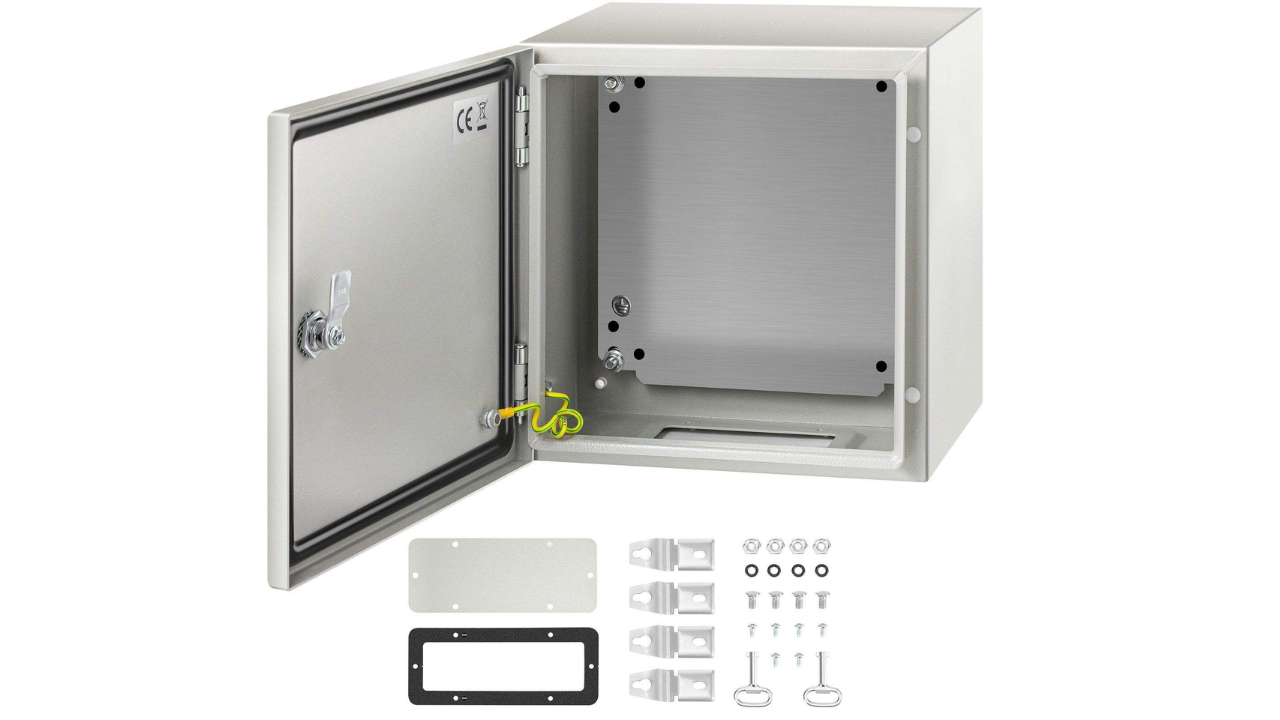
Boîtiers NEMA 4X are usually made of stainless steel or fiberglass. It is mainly used to protect electrical components from the effects of rain and splashing water. Besides, it can prevent dust, dirt, and debris from entering the enclosure. The most notable feature of NEMA 4X is its corrosion resistance. It is widely used in marine, food processing, and outdoor environments.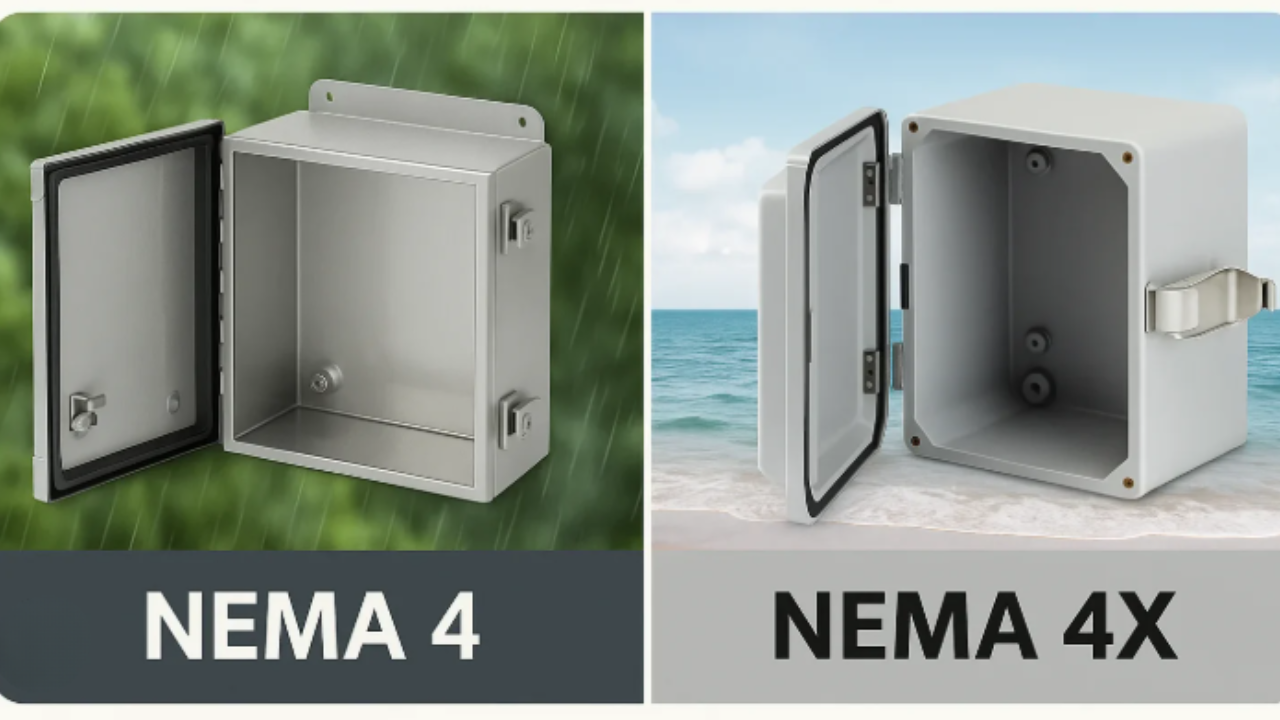
What is NEMA 6P?
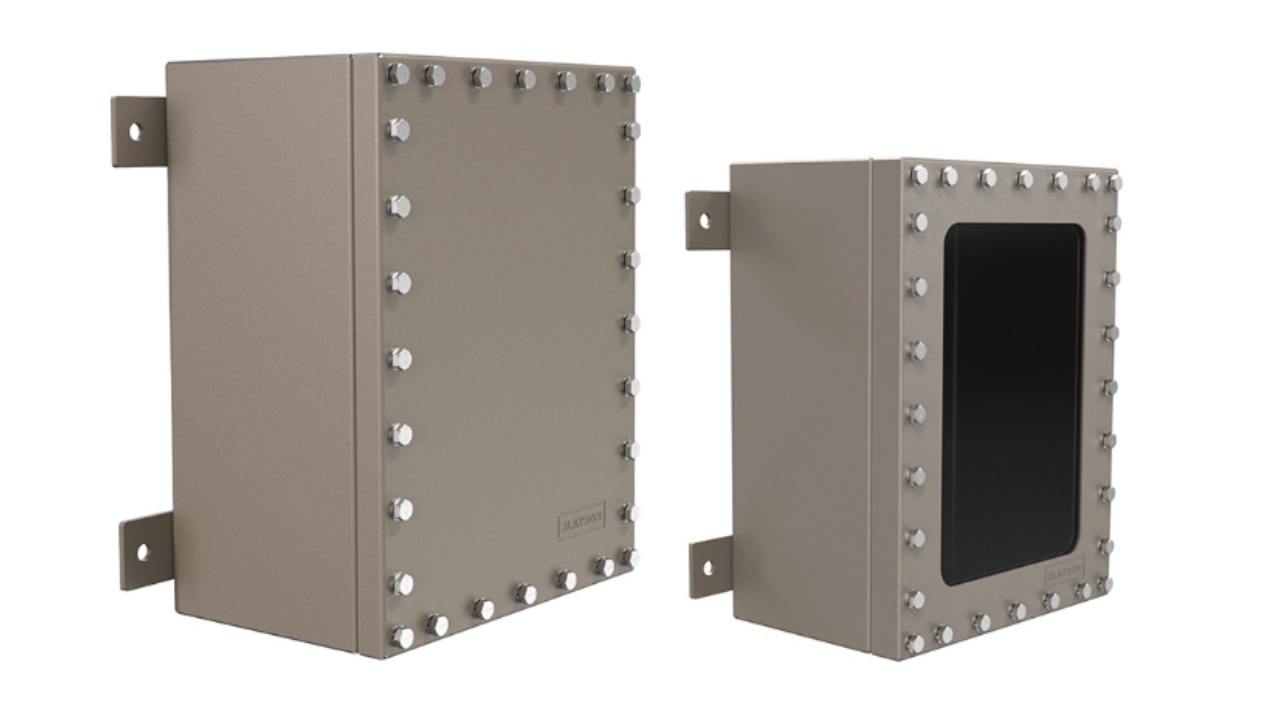
NEMA 6P is an enclosure that can be prolonged submerged in water, enabling its application in underwater and flood-prone areas. At the same time, it can also prevent dust. Because the design focus of NEMA 6P is on waterproof protection, its corrosion resistance level mainly depends on its materials.
NEMA 4X vs NEMA 6P: What Is the Key Difference Between Them?
NEMA 4X and NEMA 6P are typically used in industrial environments. They are designed for different environmental conditions and protection priorities. The main differences between NEMA 4X and NEMA 6P lie in their water resistance, corrosion resistance, and application environment. Here is a detailed explanation of their differences:
Dustproof Capability
NEMA 4X and NEMA 6P have basically the same dust-proof capability. Dust, dirt, and particles in the air cannot enter the enclosure and interfere with the internal electrical or electronic components. However, the design purposes and application environments of these two types of dust-proofing are different.
The NEMA 4X uses sealed joints, gaskets, and tight doors to prevent dust from entering. Its complete dustproof capability is very important in industrial environment applications. However, the dustproof ability of NEMA 6P is an inevitable result of its good waterproof sealing.
Résistance à l'eau
The ability to handle water exposure and submersion is the main difference between NEMA 4X and NEMA 6P.
The NEMA 4X housing is protected from rain, splashing water, and hose-directed water. Therefore, it can be used in environments where the equipment may be exposed to outdoor weather or undergo regular cleaning. For example, food processing facilities that are frequently cleaned with high-pressure water or outdoor control panels exposed to heavy rain. NEMA 4X can guarantee that the equipment is not affected by splashing water.
If you use the NEMA 4X in areas prone to flooding or underwater installation, NEMA 4X cannot withstand the water pressure of submersion. Therefore, when the NEMA 4X enclosure is submerged, water may enter the interior through the enclosure gaps. Even a short period of submersion is beyond the capacity of NEMA 4X.
The waterproofing performance of NEMA 6P is significantly different from that of NEMA 4X. NEMA 6P is specifically designed to provide protection for equipment that may be temporarily or permanently submerged in water. NEMA 6P enclosure adopts a stronger seal and structure design.
Even if you submerge the NEMA 6P enclosure in water for a long time, water will not enter. This outstanding waterproofing ability enables it to be widely used in diving equipment, underwater sensors, or flood-affected areas.
In brief, both NEMA 4X and NEMA 6P prevent water exposure, but only NEMA 6P can be used for temporary or prolonged submersion.
Résistance à la corrosion
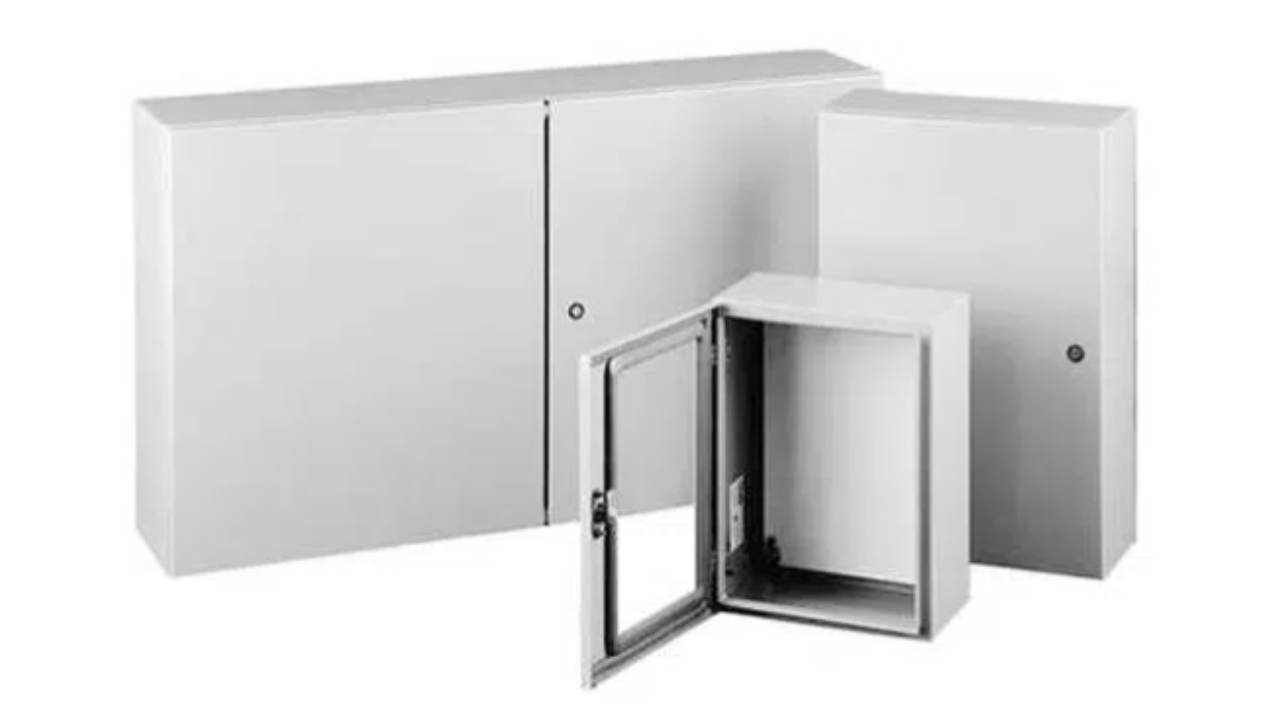
NEMA 4X enclosures have clear requirements for corrosion resistance, while NEMA 6P does not. However, from the perspective of long-term durability and practical application, the NEMA 6P has stronger corrosion resistance.
According to NEMA, NEMA 4X and NEMA 6P meet the corrosion resistance standard with ‘X’, having passed the salt spray test and chemical exposure corrosion resistance test. Both also meet the basic corrosion resistance requirements.
The NEMA 6P is more corrosion-resistant due to the differences in materials, alloys, and structures. NEMA 4X can use thinner steel plates and non-metallic materials while meeting the requirements of anti-spray and anti-corrosion. Moreover, 304 stainless steel has sufficient corrosion resistance in general industrial environments.
To withstand underwater pressure and guarantee reliability when submerged in seawater, NEMA 6P typically uses thicker stainless steel plates or defaults to 316L stainless steel. Thicker materials mean longer corrosion penetration time.
What’s more, NEMA 4X enclosures are not welded, unlike NEMA 6P enclosures. NEMA 6P enclosures are generally sleeker and have a more demanding welding process to meet the submersible seal, eliminating potential corrosion spots.
You should be aware that the non-metallic NEMA 4X enclosure may be more corrosion-resistant and less prone to rust than the stainless steel one. Although there are also engineering plastic NEMA 6P enclosures available, considering the risks of water pressure and water seepage, most of the enclosures are made of metal.
Coût
The NEMA 6P is more expensive than the NEMA 4X because the NEMA 6P requires stronger sealing and structure. Their differences mainly stem from design complexity, materials, and testing requirements.
To achieve prolonged submersion without water seepage, manufacturers need to use stronger sealing systems, tighter sealing designs, and higher-quality cable glands and fittings. These engineering design requirements have increased the production cost and product price of NEMA 6P.
Applications
Generally, the different waterproof and corrosion-resistant properties of NEMA 4X and NEMA 6P determine their application in different industrial environments.
You can apply NEMA 4X in food and beverage processing plants, chemical plants, sewage treatment plants, and outdoor electrical control systems.
In such environments, the equipment needs to withstand outdoor exposure, moisture, and corrosive substances. The NEMA 4X-rated enclosure can protect against these conditions.
You can install a NEMA 6P enclosure in water or in areas prone to flooding. Therefore, you can apply the NEMA 6P enclosure to marine equipment, underwater sensors, submersible pumps, and underground monitoring systems. Even if completely submerged, the enclosure can provide excellent waterproof sealing for you.
How to Choose the Right NEMA Enclosure for You?
It’s very simple to choose the right NEMA case for you between NEMA 4X and NEMA 6P. From above, it is easy to know that the main differences between NEMA 4X and NEMA 6P are whether they can be submerged.
The first step is to determine whether the enclosure is submerged in water. If your answer is yes, NEMA 6P is undoubtedly your ideal choice.
If not, you should check the environmental conditions. If the surrounding environment contains saltwater, chemicals, or corrosive cleaning agents, NEMA4X is your preferred choice.
If there is a corrosion risk and the enclosure only has water exposure, you also need to specifically consider the type of water exposure. If it is rain, splashing, or washdown, choosing NEMA 4X is sufficient. If facing floods or underwater installations, you need to choose NEMA 6P.
Overall, choose NEMA 6P only when submersion is necessary. If submersion is not required, NEMA 4X is a more practical and cost-effective option.
FAQ
What Does The ‘X’ Mean in NEMA Ratings?
The National Electrical Manufacturers Association defines this. In the NEMA enclosure ratings, the letter ‘X’ indicates corrosion resistance. For instance, NEMA 4X and NEMA 4 have the same dustproof, rainproof, and splash-proof, but NEMA 4X has additional corrosion resistance. This guarantees that the enclosure can withstand harsh environments, such as chemical exposure and seawater.
Are NEMA Ratings the Same as IP Ratings?
No. The NEMA rating is not equivalent to the IP rating. The NEMA evaluates protection against dust, water, corrosion, oil, and other environmental factors. The IP rating mainly measures protection against solid particles and water ingress.
Generally, it is believed that NEMA 4X is similar to IP 66, and NEMA 6P is similar to IP 68. They only have similar properties in terms of dustproof and waterproof, but not identical.
Can An Enclosure Have Both NEMA And IP Ratings?
Yes. An enclosure can have both NEMA and IP ratings. Manufacturers can test their products according to both standards, so that the enclosure meets the requirements of the National Electrical Manufacturers Association and the International Electrotechnical Commission.
Enclosures with both ratings can be adapted to different markets and applications. The NEMA standard is commonly used in North America, while IP ratings are widely applied in the international market.
Final Thought
As a professional electrical enclosures manufacturer, KDM can provide various electrical enclosures with different NEMA and IP ratings. Our products undergo strict testing and inspection to ensure their high quality. We have years of experience in custom production. If you need it, Contactez-nous to obtain the custom solution.
 French
  English
  Arabic
  Spanish
  Russian
  Japanese
  Korean
  Portuguese
  Indonesian
  Chinese