


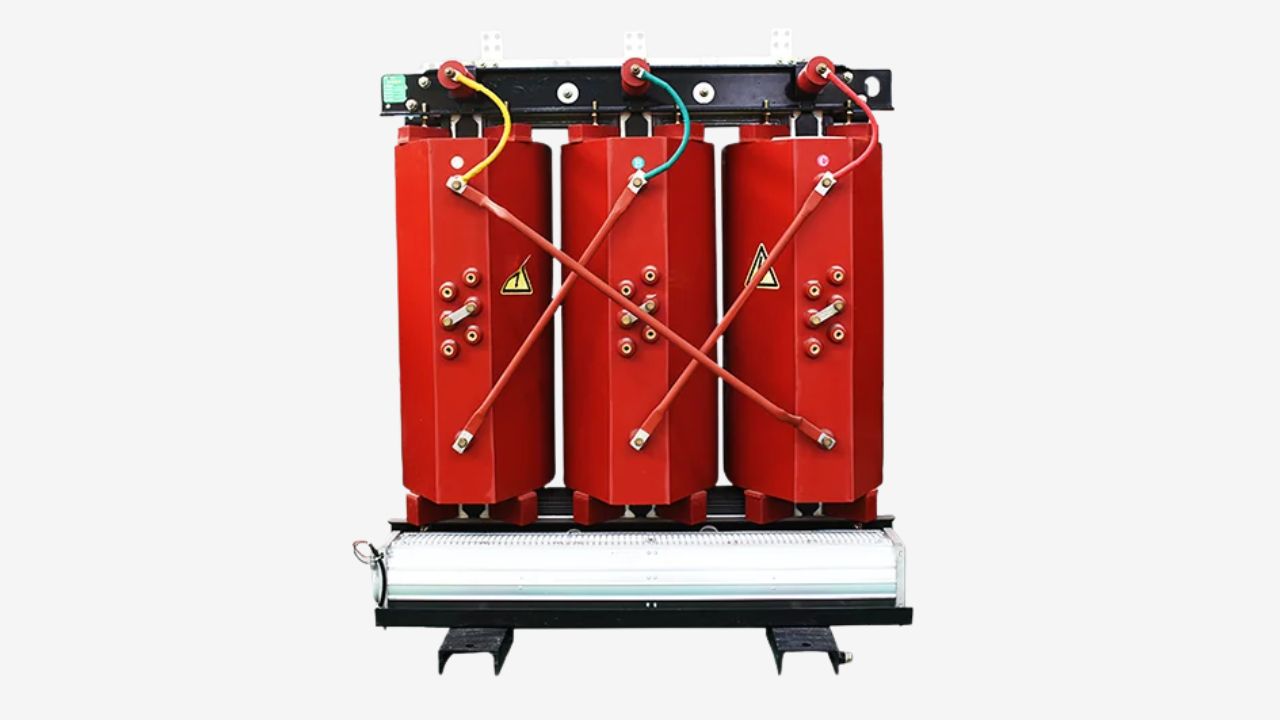
Lorsque la sécurité, la prévention des incendies et la protection de l'environnement sont prioritaires, le type sec transformateurs Le choix d'un transformateur est crucial pour des raisons pratiques, économiques et de sécurité. Cet article aborde l'importance et l'impact du dimensionnement des transformateurs et explique comment l'adapter à vos besoins industriels. Nous espérons qu'il vous aidera à choisir le transformateur sec le plus adapté.
Que sont les transformateurs de type sec ?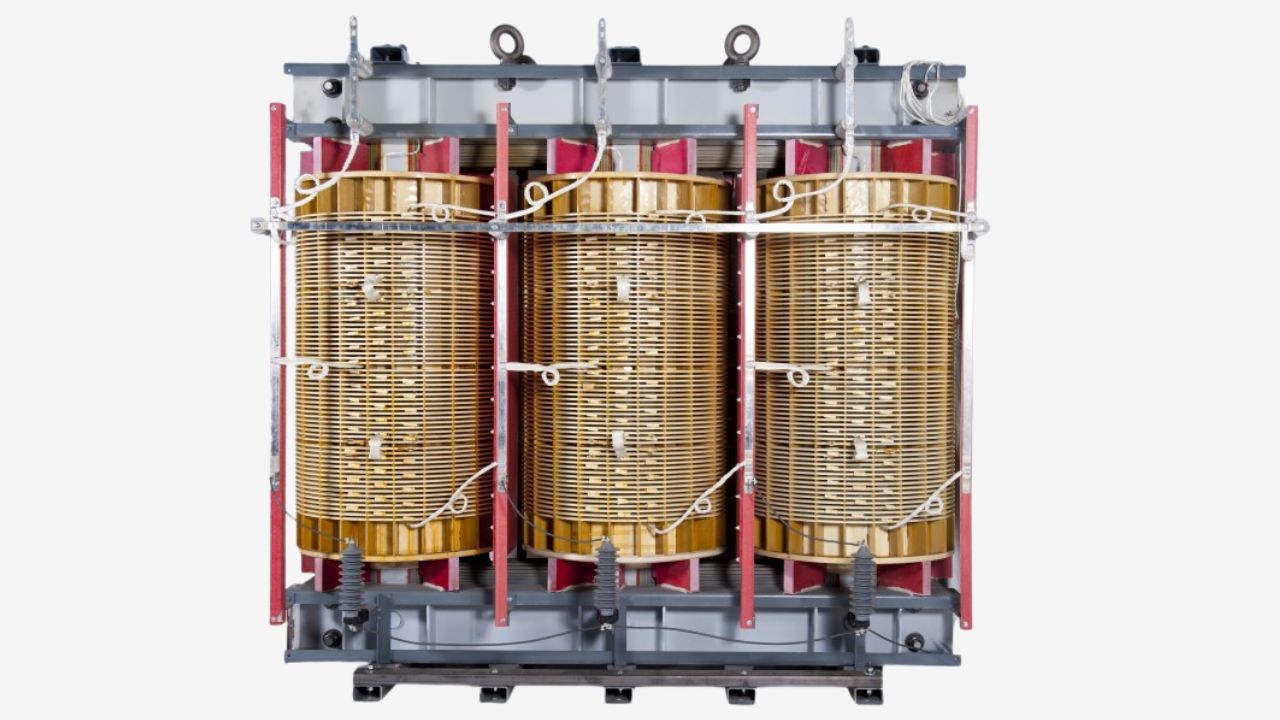
Un transformateur sec est un type de transformateur de puissance qui n'utilise pas de liquides tels que l'huile minérale ou l'huile de silicone comme isolants et fluides de refroidissement. Le noyau et les enroulements à l'intérieur de l'appareil sont directement exposés à l'air ou encapsulés dans des matériaux isolants solides. La dissipation de la chaleur dans les transformateurs secs repose principalement sur la convection naturelle, le refroidissement par air forcé ou la conduction thermique des matériaux solides.
Sa conception sans liquides inflammables lui confère une sécurité et une résistance au feu extrêmement élevées. Cet équipement offre de bonnes performances électriques et est facile d'entretien. Il est largement utilisé dans les bâtiments commerciaux, les habitations, les usines et autres lieux.
Importance des dimensions des transformateurs à sec
La taille d'un transformateur sec est généralement le résultat concret d'un jeu multifactoriel impliquant les matériaux, la capacité, la tension, l'isolation et les limitations d'élévation de température.
Si vous avez besoin d'une puissance apparente (kVA) plus élevée, cela signifie également que l'équipement nécessite davantage de noyaux de cuivre et de fer, ce qui augmente directement le volume des composants du noyau. De plus, les dimensions du transformateur sec sont directement liées à la conception des canaux de dissipation thermique, notamment l'espacement des enroulements et le taux d'ouverture du boîtier. Le respect des distances de sécurité d'isolation et la résistance mécanique des transformateurs secs requièrent tous deux un volume structurel minimal.
Outre les facteurs mentionnés ci-dessus, les dimensions des transformateurs secs influent également sur l'impédance de court-circuit, la dissipation thermique, la capacité de surcharge, les pertes et le rendement énergétique. La distance de sécurité incendie, la facilité de maintenance, la durée de vie de l'équipement et le coût d'installation sont également affectés par ces dimensions.
Le dimensionnement d'un transformateur sec est donc important car il dépend à la fois des exigences électriques, des contraintes physiques, des pratiques d'ingénierie et des impératifs économiques. Choisir la bonne taille garantit un équilibre optimal entre technologie, sécurité et coût pour votre projet.
Tailles standard des transformateurs à sec
Spécifications des normes industrielles
Les dimensions standard des transformateurs secs sont généralement soumises aux limites de conception et aux exigences de performance stipulées par la National Electrical Manufacturers Association (NEMA) et la Commission électrotechnique internationale (CEI). Ces exigences ne stipulent pas directement les dimensions courantes des transformateurs secs, mais définissent indirectement les dimensions minimales possibles des transformateurs par le biais de certaines exigences de performance.
La norme spécifie les normes d'isolation électrique et de distance de sécurité des transformateurs, les limites d'élévation de température et de dissipation de chaleur, les degrés de protection de sécurité et les types d'enveloppes.
Parmi ces facteurs, l'isolation électrique et la distance de sécurité sont les plus directement et strictement déterminants pour le dimensionnement. La norme spécifie en détail les distances d'isolement et de fuite à la terre en fonction du niveau de tension du transformateur (0,4 kV, 10 kV, 35 kV).
Il spécifie également en détail la limite maximale d'élévation de température admissible pour les enroulements de différentes classes d'isolation, telles que les classes F et H. Pour garantir que l'élévation de température ne dépasse pas la norme, le transformateur doit présenter une surface de dissipation thermique suffisante. Par ailleurs, le niveau de résistance au feu et l'indice de protection IP du transformateur peuvent légèrement influer sur l'épaisseur et le volume de son enveloppe.
Le respect de ces normes garantit un certain niveau de qualité, de sécurité et de fiabilité du transformateur. Il peut ainsi fonctionner normalement au sein du réseau électrique, comme prévu.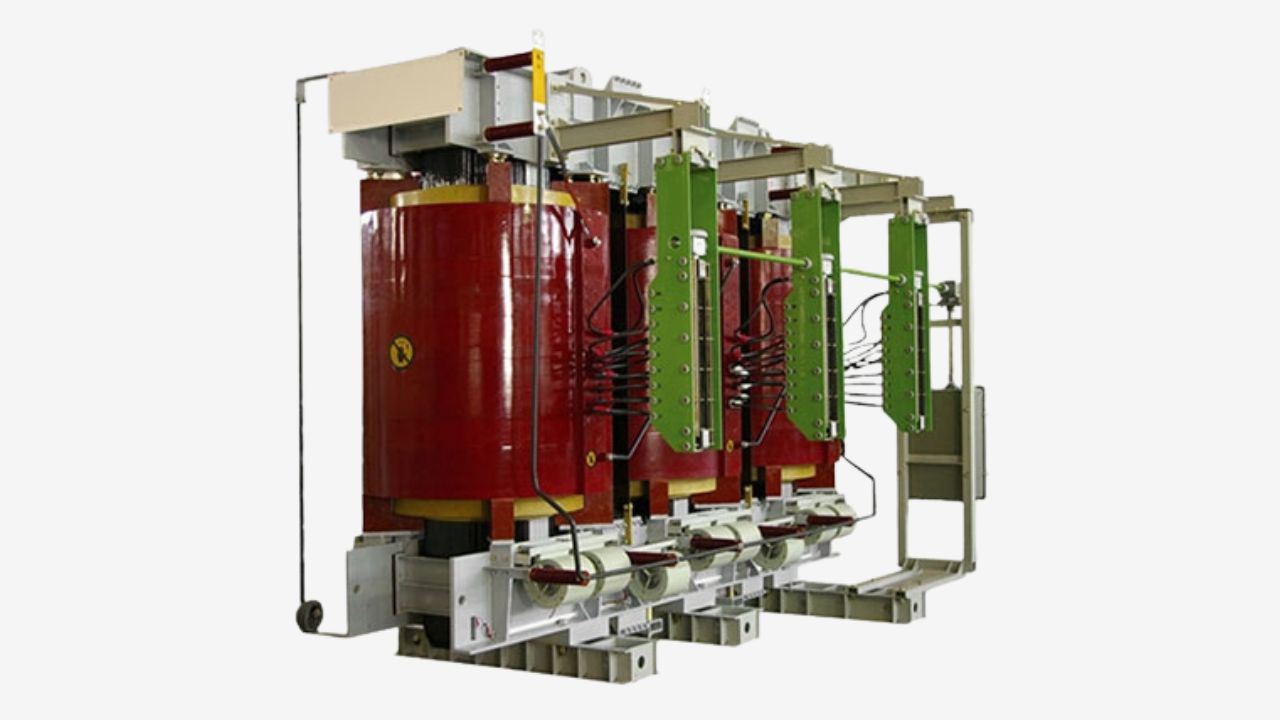
Puissance apparente (kVA) du transformateur
Parmi les variables spécifiées par la norme, la puissance apparente (KVA) est la variable la plus importante qui influe sur les variations continues et systématiques de taille, et son impact sur la taille et le fonctionnement du transformateur est également fondamental.
Pour transmettre une puissance plus élevée, le transformateur nécessite une section de noyau plus importante. La hauteur et la largeur de l'ouverture du noyau déterminent directement les dimensions du bâti du transformateur. Plus la puissance apparente (kVA) augmente, plus le diamètre et la hauteur de l'enroulement du transformateur augmentent également.
À mesure que la puissance apparente (kVA) augmente, vos besoins en refroidissement croîtront fortement. Il vous faudra optimiser davantage la structure de dissipation thermique du transformateur sec, notamment en augmentant le nombre et la largeur des canaux d'air, ce qui augmentera également le volume de votre transformateur.
En général, les tailles courantes pour transformateur monophasé Les applications couvrent une gamme de puissances allant de 1,5 kVA à 333 kVA. Les transformateurs triphasés à sec ont généralement une puissance comprise entre 15 kVA et 2 000 kVA. Fabriqués selon les normes de puissance apparente (kVA), les transformateurs à sec répondent à vos divers besoins en énergie.
En règle générale, la puissance apparente (kVA) est principalement déterminée par votre charge de raccordement et vos besoins d'extension. Il est généralement conseillé de choisir un transformateur d'une puissance supérieure à votre charge totale, ce qui facilite les extensions futures et permet de mieux prévenir les surcharges.
Facteurs influençant le dimensionnement des transformateurs à sec
Les dimensions d'un transformateur sec résultent de l'équilibre et des contraintes physiques liés à divers facteurs internes. L'explication détaillée qui suit décrit comment le mode de refroidissement, les matériaux et technologies d'isolation, ainsi que la structure de l'enroulement influencent ces dimensions.
Méthode de refroidissement
Le mode de refroidissement détermine l'efficacité de la dissipation thermique du transformateur, facteur le plus direct influençant les dimensions d'un transformateur sec, notamment sa hauteur et la conception de ses conduits d'aération. On distingue généralement deux modes de refroidissement : le refroidissement par air naturel (AN) et le refroidissement par air forcé (AF).
Si vous optez pour un transformateur refroidi par air naturel, celui-ci doit être conçu avec des canaux de dissipation thermique suffisants et réguliers. Cela implique également une hauteur d'enroulement et un espacement entre les spires plus importants. Par conséquent, à puissance égale, les transformateurs refroidis par air naturel sont généralement les plus volumineux et les plus hauts.
Si vous utilisez un transformateur Grâce au refroidissement par air forcé, ce type de transformateur permet de réduire la taille et le nombre de conduits de dissipation thermique, ce qui se traduit par une conception compacte. Son efficacité de dissipation thermique et sa tolérance aux surcharges sont toutes deux améliorées (modèles 30% à 50%). À puissance nominale égale, les transformateurs AF sont généralement plus compacts (modèles 15% à 30%).
Bien que sa taille ait diminué grâce à son système de refroidissement, il nécessite l'intégration de ventilateurs et de systèmes de régulation de température. Il faut également tenir compte de l'espace nécessaire à l'installation et à la maintenance du ventilateur, ainsi que de l'alimentation électrique supplémentaire et du bruit généré. Cela accroît la complexité du transformateur.
Technologies d'isolation
Le système d'isolation détermine la sécurité électrique, la tolérance environnementale et l'efficacité de conduction thermique du transformateur. Selon le procédé de fabrication de l'isolant, on distingue les transformateurs à isolation par résine coulée (CRT) et les transformateurs à isolation par imprégnation sous vide (VPI).
Les transformateurs en résine coulée utilisent un mélange de résine pour couler les enroulements dans un moule sous vide, puis le laisser durcir. On obtient ainsi un isolateur solide. Ces transformateurs présentent une rigidité structurelle élevée et une résistance mécanique extrêmement élevée, ce qui réduit le besoin de composants de support internes et améliore l'utilisation de l'espace intérieur.
Cependant, la résine ne favorise pas la dissipation de la chaleur ; l’épaisseur de coulée doit donc être uniforme et des passages d’air doivent être prévus dans le moule de coulée afin de former un canal de dissipation de chaleur intégré.
L'optimisation de la taille des transformateurs moulés en résine repose sur un équilibre entre l'épaisseur de l'isolation, la résistance mécanique et les exigences de dissipation thermique. L'utilisation d'un procédé d'isolation mince plus avancé permet de réduire leur taille.
Le transformateur VPI est principalement obtenu en soumettant les enroulements à plusieurs étapes : séchage sous vide, imprégnation de peinture isolante et polymérisation. Ce type de transformateur présente de bonnes performances de dissipation thermique.
Cependant, sa résistance mécanique relativement faible nécessite davantage de coussinets isolants et de fixations, ce qui occupe un certain espace interne. De plus, son aspect est peu esthétique et ses dimensions sont légèrement supérieures à celles d'un transformateur moulé de même capacité.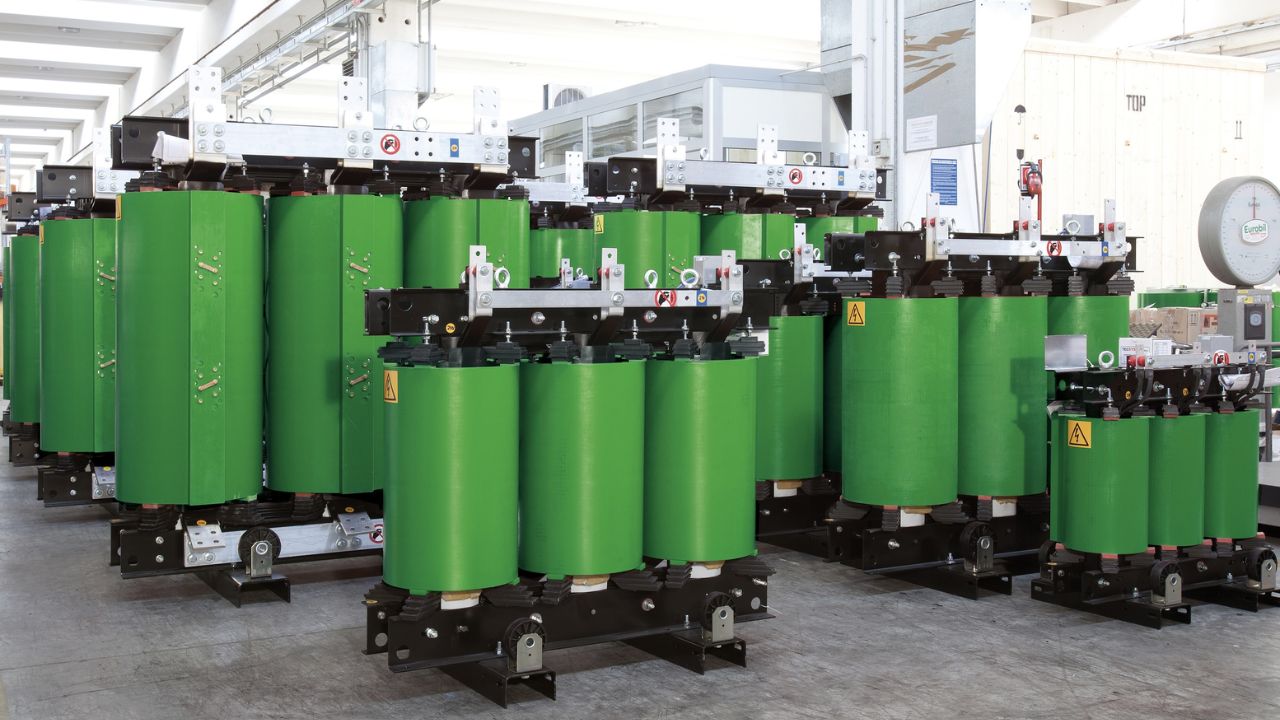
Classe d'isolation
La classe d'isolation peut également être considérée comme la classe de résistance à la chaleur, indiquant la température de fonctionnement maximale que le matériau isolant peut supporter sur une longue durée. Par exemple, la classe H supporte jusqu'à 180 °C, la classe F jusqu'à 155 °C et la classe B jusqu'à 130 °C.
Choisir une classe d'isolation supérieure implique également d'accepter une plus grande élévation de température. Lors de la conception d'un transformateur de classe H, on tient compte de sa capacité à supporter des températures de fonctionnement plus élevées, lui permettant ainsi de gérer un courant plus important, ou bien de réduire la surface de dissipation thermique tout en conservant la même capacité.
Par conséquent, l'adoption d'un haut degré d'isolation est une technologie clé pour la réalisation de transformateurs compacts. Elle permet aux transformateurs de fonctionner à des températures plus élevées et autorise l'utilisation de moins de matériaux ou une structure plus compacte pour répondre à vos besoins en capacité.
Construction en enroulement
La conception de l'enroulement détermine directement le taux d'utilisation de l'espace et les performances électromagnétiques, et constitue le cœur de la conversion de puissance. La structure de l'enroulement comprend principalement le type d'enroulement et la méthode d'agencement.
L'enroulement en feuille permet un meilleur rendement spatial, ce qui favorise une plus grande surface de dissipation thermique et réduit la résistance thermique. L'enroulement en fil, principalement réalisé avec des fils isolés, convient à diverses tensions et puissances et offre une grande flexibilité d'utilisation. Cependant, les espaces entre les fils limitent le rendement spatial. À courant égal, le transformateur à enroulement en fil nécessite un appareillage plus volumineux que les autres méthodes.
Les différents types d'enroulements peuvent être classés en deux grandes catégories : les enroulements concentriques et les enroulements entrelacés. Les premiers présentent une structure plus simple et l'enroulement haute tension bénéficie d'un chemin de dissipation thermique plus long. Les seconds permettent de réduire efficacement l'impédance de court-circuit et le flux de fuite, mais leur structure est plus complexe et leur isolation plus délicate. Le choix de ces derniers ne doit pas se limiter à la simple réduction de la taille, au détriment des performances électriques.
Outre les facteurs mentionnés précédemment, le matériau du noyau, la tension nominale, le niveau d'isolation et l'enveloppe de protection influent également sur la taille du transformateur sec. Comme indiqué plus haut, les niveaux de tension plus élevés sont le principal facteur d'augmentation de la taille. De plus, si vous souhaitez également atteindre une tension plus élevée, il est nécessaire d'utiliser un transformateur plus performant. Propriété intellectuelle Plus le niveau de protection est élevé, plus le volume et le poids du boîtier seront importants.
Comment mesurer les dimensions des transformateurs à sec
Mesurer les dimensions des transformateurs secs permet d'établir une correspondance précise entre vos besoins électriques, l'espace disponible et la faisabilité de l'installation.
Exigences en kVA et autres paramètres électriques
Déterminer les besoins en kVA et les paramètres électriques est l'étape la plus cruciale.
Le calcul de la demande en kVA nécessite de prendre en compte la diversité et l'évolution du réseau, afin de déterminer une capacité d'alimentation électrique sûre, économique et continue. Il est nécessaire de calculer la puissance apparente de tous les équipements et de déterminer la tension et le courant auxquels ils fonctionnent. Toutes les charges sont calculées uniformément en kVA. La formule de base est : kVA = kW / PF (facteur de puissance).
Il est important de comprendre que tous les équipements ne fonctionneront pas simultanément à pleine capacité. Le facteur de demande indique l'intensité d'utilisation réelle de certains équipements, et le coefficient tient compte du fait que les périodes de pointe des différents types de charges ne se chevauchent pas complètement. Ces deux facteurs vous permettent de mieux calculer votre puissance de charge réelle.
Outre la puissance de charge totale requise pour une application pratique, il est nécessaire d'ajouter une marge courante, généralement comprise entre 15% et 25%. Cette marge permet d'anticiper les extensions futures et d'éviter les remplacements fréquents de transformateurs dus à une augmentation de la charge.
Par conséquent, en fonction des niveaux de puissance nominale normalisés du transformateur, il convient de choisir la puissance nominale minimale supérieure à la demande finale. Si la valeur calculée est très proche d'une certaine puissance nominale, il est important d'examiner attentivement le type de charge ou, par mesure de sécurité, de choisir une puissance nominale supérieure.
Dimensions physiques
Après avoir clarifié vos besoins électriques réels, vous devez prendre en compte les dimensions physiques réelles du transformateur, notamment sa longueur, sa largeur et sa hauteur.
Il convient également de tenir compte des dimensions des interfaces externes et des parties saillantes du transformateur. De plus, le poids du transformateur sec doit être mesuré. Ce poids inclut le poids total et le poids du centre de gravité. Ces éléments sont liés au matériel et aux méthodes de transport du transformateur.
Par ailleurs, les circuits de refroidissement et de maintenance du transformateur, son niveau de protection et la sécurité de son installation murale doivent être clairement définis avant la mise en service. L'étude des itinéraires de transport et d'installation doit également être réalisée avant la commande et l'installation du transformateur.
Considérations relatives aux dimensions pour la sélection et l'installation
Type d'application
La première étape du choix d'un transformateur sec consiste à déterminer son application. Ce choix d'application sert de point de départ pour le dimensionnement et détermine les priorités de conception du transformateur.
Si vous utilisez des transformateurs secs dans des applications industrielles ou manufacturières, il est essentiel de prendre en compte leur indice de protection (IP), leur résistance aux chocs et aux vibrations, et de prévoir un espace suffisant pour la maintenance, permettant des inspections et un nettoyage réguliers. En environnement poussiéreux ou humide, privilégiez un transformateur IP23 ou supérieur. L'utilisation d'un boîtier de protection augmentera également la taille du transformateur sec.
Dans les bâtiments commerciaux, il convient de tenir compte des exigences en matière de sécurité, de prévention des incendies, de faible niveau sonore et d'esthétique. Dans les salles informatiques, il est recommandé d'opter pour des transformateurs secs à très haute densité de puissance, de conception compacte et de grande fiabilité.
Spécifications du transformateur
Vérifiez les spécifications du transformateur, notamment le niveau de tension, la puissance apparente (kVA) et la marge de capacité. Le niveau de tension influe directement sur la taille des enroulements, l'épaisseur de l'isolation et d'autres paramètres. Cependant, une taille importante due au niveau de tension ne peut être résolue par une optimisation de la conception.
La puissance apparente (kVA) est le principal critère de dimensionnement. Lors de l'achat, il est essentiel de bien prendre en compte les possibilités d'extension future et l'espace actuellement occupé. En effet, une marge de sécurité plus importante implique un encombrement plus grand et un coût plus élevé.
Par ailleurs, il convient également de déterminer si des conditions de charge harmonique personnalisées spécifiques sont requises.
Environnement d'installation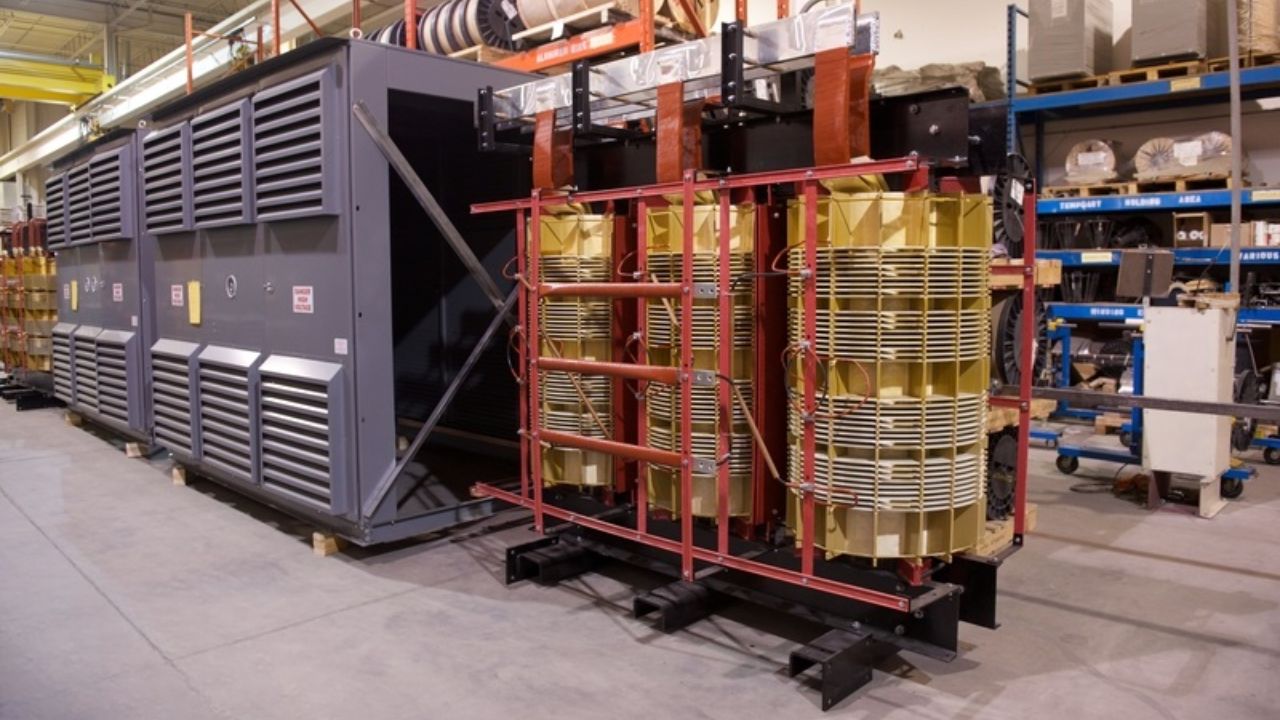
Outre l'humidité, la poussière, la température et les autres facteurs mentionnés précédemment pour des lieux spécifiques, il est tout aussi important d'étudier l'environnement d'installation sur site. C'est aussi l'aspect le plus souvent négligé.
Il est nécessaire de vérifier que l'itinéraire de transport permette le passage aisé du transformateur. L'espace d'installation final est-il conforme aux normes locales ? Les conditions de ventilation sont-elles adéquates ? Pour les transformateurs de grande taille, la capacité portante du lieu d'installation est-elle suffisante ? Chaque détail relatif au transport et à l'installation doit être soigneusement étudié lors du processus de sélection.
FAQ
Comment la tension nominale influence-t-elle les dimensions ?
En clair, plus la tension est élevée, plus le transformateur est volumineux. Avec l'augmentation de la tension, les exigences en matière d'isolation croissent fortement. Par conséquent, les enroulements doivent être plus épais et plus larges. Des structures et des matériaux d'isolation plus performants nécessitent également plus d'espace. La conception du système de dissipation thermique doit aussi être prise en compte de manière globale.
La conception à faible élévation de température nécessite-t-elle une plus grande surface de dissipation de chaleur ou davantage de matériaux ?
Oui. L'objectif principal de la conception à faible élévation de température est de maintenir la température de fonctionnement du transformateur à un niveau relativement bas. Ceci est principalement réalisé en augmentant la surface de dissipation thermique et en utilisant des matériaux plus nombreux ou de meilleure qualité. Une faible élévation de température engendre des pertes réduites et une fiabilité accrue. C'est le choix privilégié pour la fabrication haut de gamme., centres de données.
Quel est l'impact de la conception de l'isolation sur le volume ?
La conception de l'isolation thermique augmentera le volume du transformateur. L'isolation thermique obtenue par l'épaississement du boîtier et l'ajout de matériaux isolants occupera davantage d'espace, ce qui entraînera une augmentation des dimensions extérieures du transformateur et donc de son volume.
Que comprend la spécification d'un transformateur de type sec ?
Les spécifications des transformateurs secs comprennent les paramètres électriques (puissance nominale, combinaison de tensions, tension d'impédance), les caractéristiques structurelles (méthode de refroidissement, classe d'isolation, indice IP), les indicateurs de performance (pertes en charge, limites d'élévation de température), les paramètres physiques et environnementaux (méthode d'installation, dimensions, poids).
Dernière réflexion
KDM est un fabricant professionnel d'armoires électriques sur mesure. Nous produisons des transformateurs secs pour répondre à vos différents besoins électriques. Nous contrôlons rigoureusement les matières premières afin de vous fournir des produits personnalisés de haute qualité. Nous répondrons à vos demandes de personnalisation sous 1 à 3 jours et vous proposerons une solution complète et personnalisée. Pour toute demande de personnalisation d'armoires électriques, n'hésitez pas à nous contacter. Contactez-nous.
 French
  English
  Arabic
  Spanish
  Russian
  Japanese
  Korean
  Portuguese
  Indonesian
  Chinese