


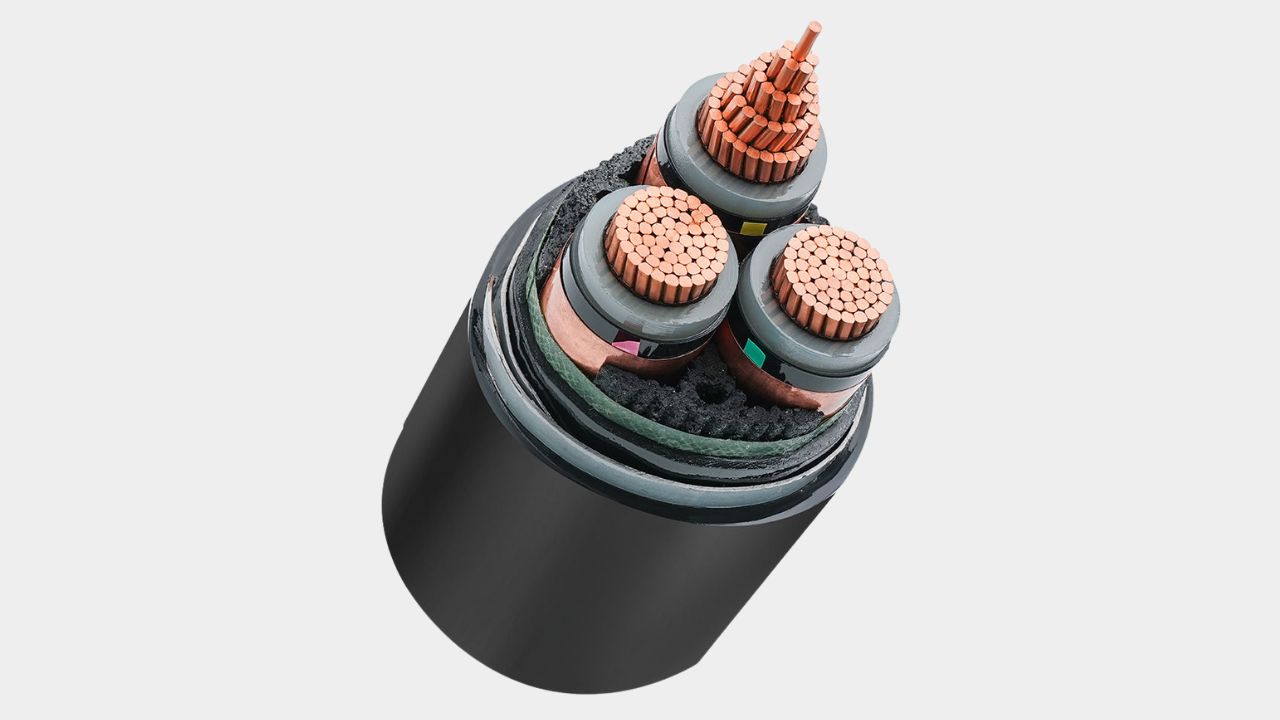
Cet article contient toutes les informations relatives aux câbles XLPE. Sa lecture vous permettra de comprendre en détail les câbles XLPE, de déterminer s'ils conviennent à votre projet et de savoir comment choisir le câble XLPE le plus adapté.
Qu'est-ce qu'un câble XLPE ?
câble XLPE est un type de câble qui utilise du polyéthylène réticulé (XLPE) comme matériau isolant.
Le nom complet du XLPE est polyéthylène réticulé ; il s’agit d’un matériau thermodurcissable obtenu par réticulation du polyéthylène ordinaire. Le XLPE réticulé est plus résistant à la chaleur et au vieillissement. C’est un excellent matériau pour les câbles.
Grâce à sa structure stable et à ses excellentes performances, le câble XLPE est couramment utilisé dans des environnements difficiles tels que l'extérieur, l'enfouissement direct, les hautes températures et l'industrie. Il est également largement utilisé dans les systèmes de transport et de distribution d'énergie basse, moyenne et haute tension.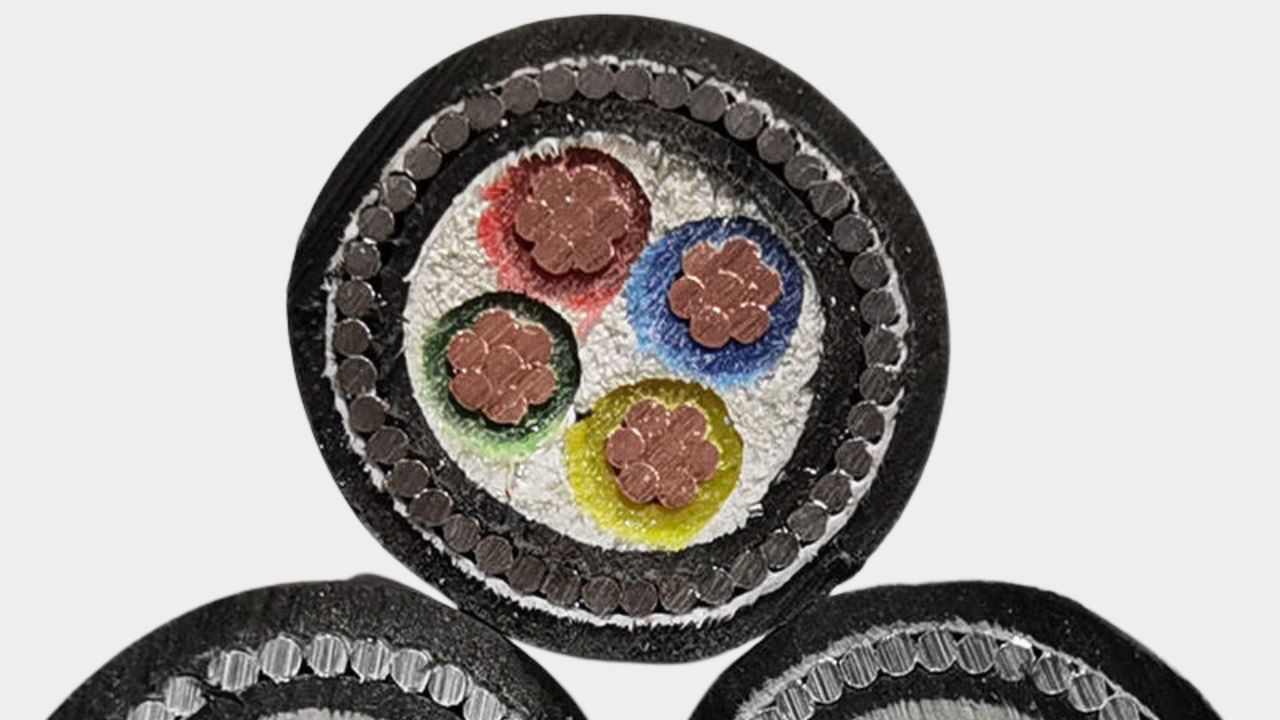
Pourquoi utiliser un câble XLPE ? Quels sont les avantages du XLPE ?
Résistant aux hautes et basses températures
Le câble XLPE fonctionne de manière stable aussi bien à haute qu'à basse température. Résistant à la chaleur, il ne devient pas cassant à basse température. Il convient aux environnements de travail présentant des températures élevées ou d'importantes variations de température.
Résistant à l'abrasion, à la pression et à la corrosion
L'isolant XLPE possède une excellente résistance mécanique et ne s'abîme pas facilement sous l'effet de l'étirement, de l'extrusion ou de l'abrasion. Il résiste également à l'huile, au sel et à une large gamme de produits chimiques, ce qui permet de l'utiliser en toute confiance à l'extérieur, en souterrain ou sur des sites industriels.
Performances électriques stables
Le XLPE possède une résistance d'isolation élevée et de faibles pertes diélectriques, et est stable en fonctionnement continu et sous des conditions de charge élevées.
Résistant à l'humidité, résistant à l'eau, utilisable pour l'enfouissement direct
L'isolant XLPE n'absorbe pas l'eau, ce qui permet de l'utiliser pendant de longues périodes dans des environnements humides, gorgés d'eau ou enfouis directement. Cela contribue à minimiser les risques de défaillance liés à l'humidité.
Longue durée de vie, faible entretien
Le polyéthylène haute densité (XLPE) ne vieillit pas, ne se fissure pas et ne durcit pas facilement, et sa durée de vie est relativement longue. Il est peu susceptible de tomber en panne et nécessite moins d'entretien, ce qui contribue à réduire les coûts d'exploitation à long terme.
Supporte des tensions plus élevées
La haute rigidité diélectrique du XLPE permet son utilisation dans les systèmes basse, moyenne et même haute tension. Le câble XLPE couvre donc un plus large éventail d'applications de distribution d'énergie.
Quelles sont les applications courantes des câbles isolés XLPE ?
Les câbles isolés XLPE sont largement utilisés. Ils sont fréquemment utilisés dans :
- lignes de transport d'électricitéPour le transport d'énergie sur de longues distances et à haute tension, les câbles XLPE garantissent un fonctionnement stable et sûr.
- réseaux de distribution d'énergie urbains: assurant le raccordement des sous-stations aux bâtiments résidentiels et commerciaux ainsi qu'aux usines, il est souvent privilégié pour les systèmes de distribution d'énergie basse et moyenne tension.
- environnement industriel: convient à la métallurgie, au raffinage du pétrole, à l'industrie chimique, à l'industrie pharmaceutique, etc. Il résiste à l'huile, à la corrosion chimique et aux chocs mécaniques.
- Souterrains et tunnels: résistant à l'humidité et à la corrosion chimique, couramment utilisé dans les tranchées de câbles souterrains, les tunnels, les métros et autres zones à espace limité et environnements complexes.
- Sous-marin et équipement sous-marin: peut être utilisé pour le câblage sous-marin et certains systèmes de câbles en eaux peu profondes, peut résister à la pression, à l'humidité et à une immersion prolongée dans l'eau.
- Bâtiments et installations publiquesUtilisé pour l'alimentation électrique principale et les lignes d'éclairage dans les hôpitaux, les écoles, les stades, les aéroports, les centres commerciaux et autres lieux.
- Équipements automobiles et de transport : Les faisceaux de câbles XLPE embarqués sont résistants à la chaleur, à l'abrasion, légers et adaptés aux environnements à haute température tels que les compartiments moteur et les châssis.
- Systèmes d'énergie solaire et renouvelable: couramment utilisé dans la connexion entre les équipements de production d'énergie photovoltaïque et les onduleurs, et peut résister à des températures extérieures élevées et à l'exposition aux UV.
- projets d'éclairage extérieur et municipauxUtilisé pour l'éclairage routier, l'éclairage de jardin, les projets d'aménagement paysager, etc., qui nécessitent un fonctionnement prolongé en extérieur.
Quels sont les avantages des câbles XLPE par rapport aux câbles PVC ?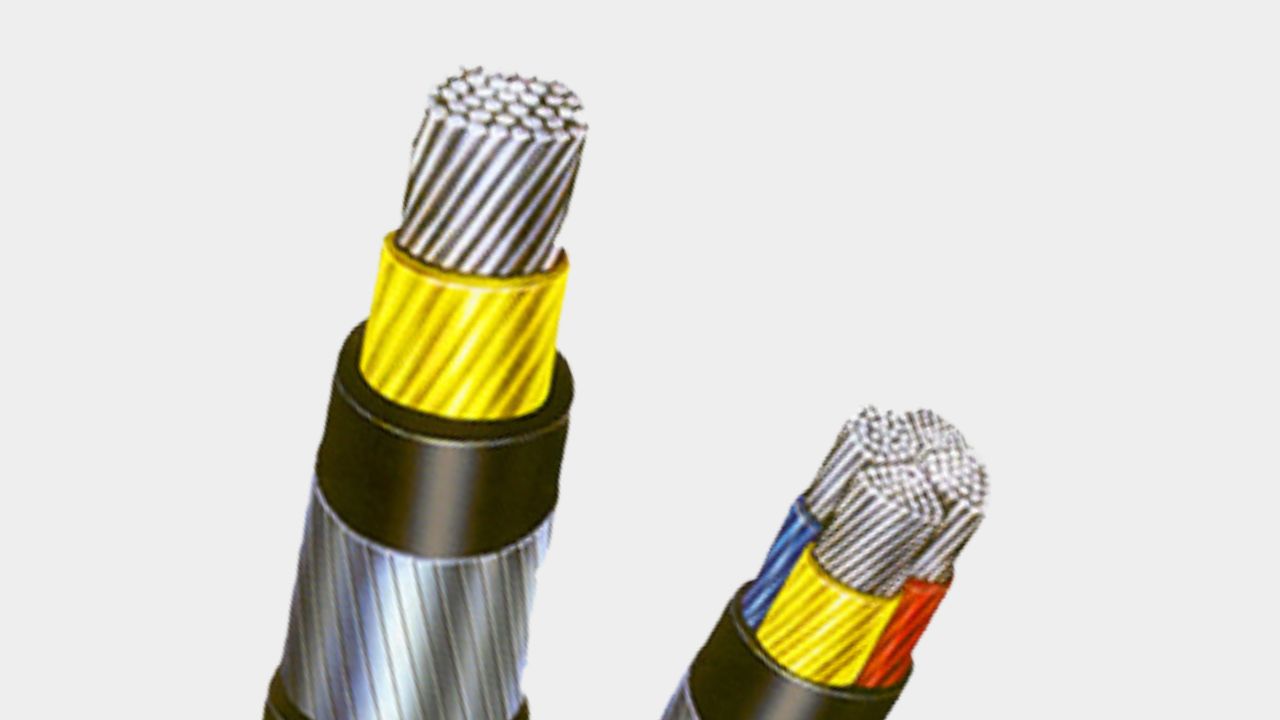
Le câble XLPE est plus performant que le câble PVC à bien des égards.
- Il peut résister à des tensions et des contraintes mécaniques plus élevées et est donc utilisé dans des scénarios plus exigeants, tandis que le PVC ne peut être utilisé que pour des applications basse tension ou générales.
- Le XLPE possède une plage de températures plus étendue que le PVC et peut être utilisé à des températures plus élevées.
- Le XLPE est plus résistant à l'humidité et ses performances sont moins susceptibles d'être affectées dans les environnements humides, souterrains et extérieurs.
- Il possède également une durée de vie plus longue et n'est pas sujet au vieillissement ni aux fissures lors d'une utilisation prolongée.
- Parallèlement, le XLPE est sans chlore et ne dégage pas de gaz corrosifs ou toxiques lors de sa combustion. Il est respectueux des équipements et de l'environnement.
Quels types de câbles XLPE sont disponibles ?
Par tension
- Câbles XLPE basse tension (BT)Tension nominale jusqu'à 1 kV, couramment utilisée dans les habitations, les bureaux et la distribution électrique industrielle en général.
- Câbles XLPE moyenne tension (MT): jusqu'à 35 kV, convient à la distribution d'énergie dans les parcs industriels, les bâtiments commerciaux et les grands complexes résidentiels.
- Câbles XLPE haute tension (HT): jusqu'à 500 kV, utilisé pour le transport d'électricité sur de longues distances et les réseaux électriques urbains de base.
Selon le nombre de conducteurs
- Câbles XLPE monoconducteurs: principalement utilisé pour les applications à haute tension ou à courant élevé.
- Câbles XLPE multiconducteurs: inclure des constructions flexibles multibrins comme le RVV pour les connexions de contrôle, de distribution et d'équipement.
Par armure
- Câbles XLPE blindés: Blindé avec des fils ou des bandes d'acier pour résister aux contraintes mécaniques et aux dommages externes, pour les environnements souterrains, industriels et à forte abrasion.
- Câbles XLPE non blindés: construction plus légère, pour les installations intérieures ou mieux protégées.
Par utilisation
- Câbles XLPE résistants au feu: assurent l'alimentation électrique pendant une certaine période en cas d'incendie et sont utilisées pour les systèmes d'urgence et les équipements critiques.
- Câble XLPE d'instrumentation: Pour la transmission de signaux, couramment utilisé dans les systèmes de contrôle industriels et les équipements d'automatisation.
Quels modèles de câbles sont isolés avec du XLPE ?
- Câblage intérieur et extérieur: XHHW, XHHW-2, RHH, RHW, RHW-2
- Câbles d'extérieur et à enfouir directement: USE-2, fil/câble PV, ainsi que certains câbles pour chemins de câbles isolés XLPE (TC, TC-ER)
- Câbles de distribution électrique: Câbles d'alimentation XLPE BT, MT et HT, ainsi que câbles XLPE blindés dans diverses configurations (telles que XLPE/SWA/PVC, XLPE/LSZH, etc.)
Ces modèles couvrent de nombreuses applications, du bâtiment à l'industrie. Si votre projet nécessite des câbles résistants à la chaleur et à l'humidité, ou stables dans le temps, l'isolation XLPE est souvent le choix idéal.
L'isolant XLPE est-il résistant aux UV ?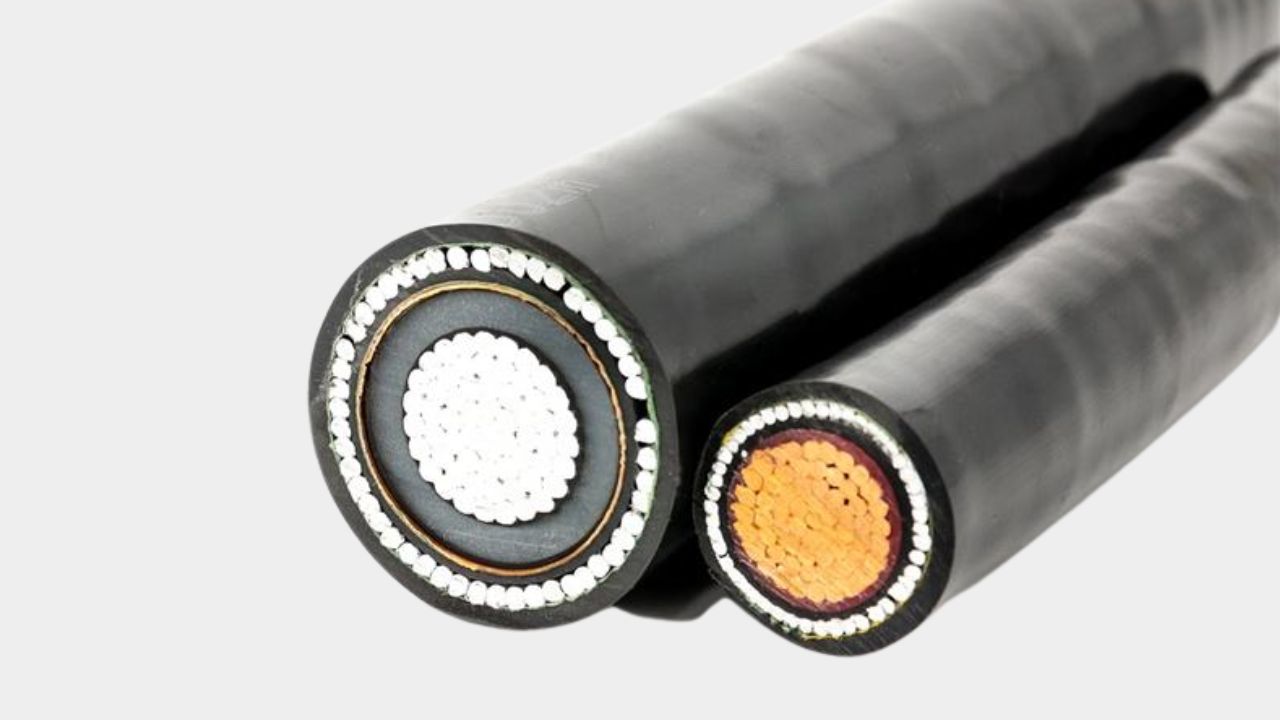
Oui. Le matériau XLPE offre une bonne résistance aux intempéries et supporte généralement une exposition prolongée aux UV en extérieur. C'est pourquoi il est souvent utilisé dans les câbles photovoltaïques, le câblage extérieur et les environnements exposés au soleil. Cependant, la résistance exacte aux UV dépend également du type de câble et du matériau de sa gaine. Si le câble est destiné à être utilisé longtemps sous un fort ensoleillement, il est nécessaire de choisir des câbles XLPE portant la mention « résistant aux UV » ou dotés d'une gaine noire résistante aux UV.
Quelle température un câble XLPE peut-il supporter ?
La température de fonctionnement normale des câbles isolés XLPE est de 90 °C. Dans les constructions XLPE de qualité supérieure, les câbles peuvent fonctionner pendant de longues périodes à 105 °C ou 125 °C. En cas de court-circuit, les câbles XLPE peuvent supporter des températures encore plus élevées, typiquement autour de 250 °C, pendant plusieurs secondes sans que leur structure ne soit altérée.
Quelle est la durée de vie d'un câble XLPE ?
Les câbles XLPE ont généralement une durée de vie de 30 à 50 ans, qui peut varier en fonction de l'environnement d'installation, des niveaux de charge, de la température, de l'humidité et des contraintes mécaniques. L'isolation XLPE est naturellement résistante à la chaleur, à l'humidité et au vieillissement, ce qui lui confère une grande stabilité sur le long terme dans des conditions normales. Utilisés en extérieur, en souterrain ou en milieu industriel, ils peuvent également atteindre une longue durée de vie, à condition que l'installation soit conforme aux normes. En résumé, les câbles XLPE sont des câbles durables et nécessitant peu d'entretien.
Le câble XLPE est-il ignifugé ou résistant au feu ?
Les câbles XLPE présentent une bonne résistance à la chaleur et aux flammes, mais ils ne sont pas ignifugés.
Si vous avez besoin que le câble reste alimenté pendant un incendie (par exemple, pour les pompes à incendie, l'éclairage d'évacuation ou les systèmes d'urgence), il est important de choisir un câble résistant au feu avec une construction spéciale résistante au feu, comme un ruban de mica ou une couche de céramique, plutôt qu'une isolation XLPE ordinaire.
Le câble XLPE est-il sans halogène ou à faible émission de fumée ?
Le polyéthylène XLPE (XLPE) est intrinsèquement sans halogène, il s'agit donc d'un matériau sans halogène. Cependant, son faible dégagement de fumée dépend de la gaine extérieure. De nombreux câbles XLPE sont fabriqués avec une gaine extérieure LSZH, ce qui permet au câble entier d'être à faible dégagement de fumée et sans halogène. Les câbles XLPE utilisant une gaine extérieure en PVC ne sont pas à faible dégagement de fumée.
Quelle est la capacité de transport de courant maximale des câbles XLPE ?
Les câbles XLPE n'ont pas de valeur fixe pour leur capacité de transport de courant, celle-ci variant en fonction du matériau de l'âme, de la classe de tension, de la structure du conducteur, de la température ambiante, de la méthode de pose, etc.
De manière générale, le XLPE est conçu pour des températures de fonctionnement allant jusqu'à 105 °C ; il possède donc généralement une capacité de transport de courant supérieure à celle des câbles en PVC de même section. La capacité de transport de courant des câbles XLPE basse tension se situe généralement entre quelques dizaines et quelques centaines d'ampères, tandis que celle des câbles moyenne tension peut atteindre plusieurs centaines, voire plusieurs milliers d'ampères.
En pratique, vous devrez déterminer la capacité de transport de courant en fonction du tableau normalisé des capacités de transport de courant du câble et de l'environnement d'installation.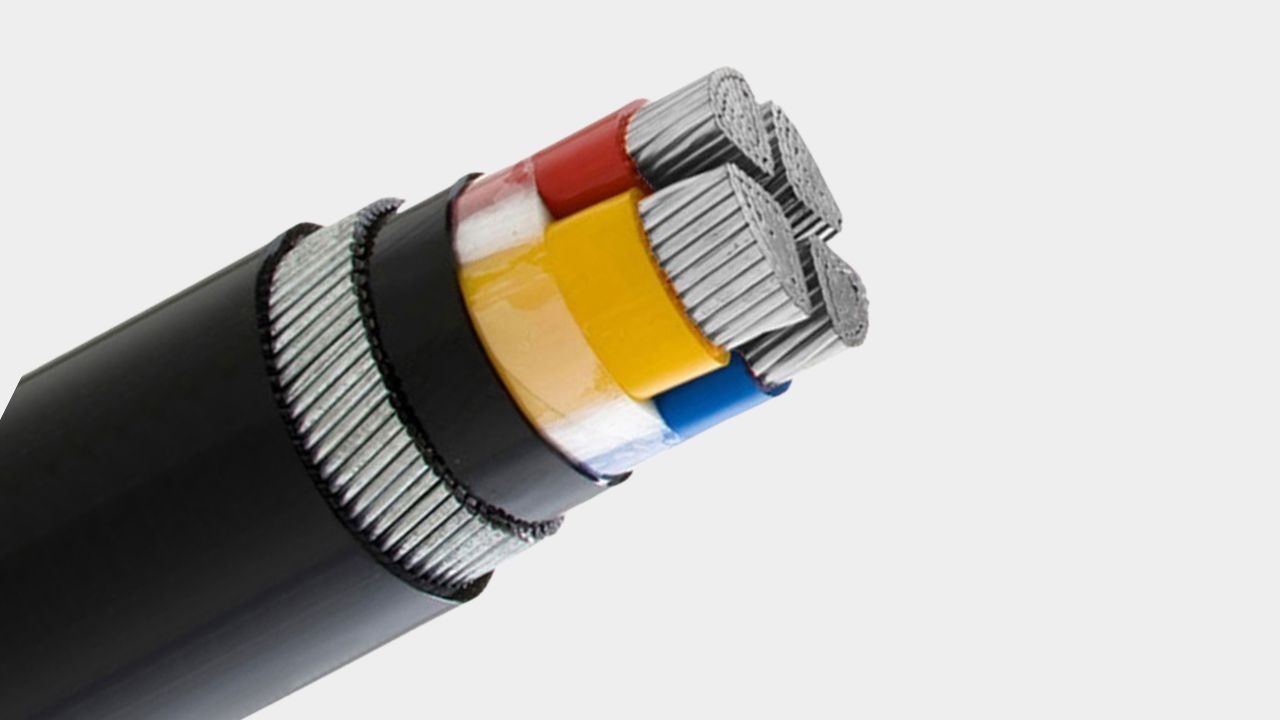
Quelles normes s'appliquent aux câbles XLPE (UL, IEC, BS, ICEA) ?
Les câbles XLPE répondent à diverses normes selon les pays et les applications. Voici les normes courantes :
- Norme UL (États-Unis): principalement adopté pour les câbles de construction et d'équipement, tels que UL 44, XHHW-2, RHH, RHW-2, UL 854, USE-2 et UL 4703.
- Normes CEI: international, principalement appliqué aux câbles d'alimentation, comme la norme IEC 60502-1 pour la basse tension et la norme IEC 60502-2 pour la moyenne tension.
- Normes BS (Royaume-Uni): Les types courants incluent BS 5467 (XLPE/SWA/PVC) et BS 6724 (XLPE/SWA/LSZH).
- Normes ICEA/NEMA (Industrie nord-américaine de l'énergie électrique): Câbles d'alimentation XLPE pour les services publics d'électricité et les systèmes industriels, par exemple, ICEA S-93-639, ICEA S-97-682.
Quelle est la différence entre les isolants XLPE, EPR et PE ?
PE Il s'agit d'un isolant en polyéthylène courant présentant de bonnes propriétés diélectriques, mais une faible résistance à la température. Sa température nominale habituelle est d'environ 70 °C, et il ne convient pas aux applications exigeant une forte contrainte mécanique ; il est principalement utilisé pour les câbles basse tension, de télécommunications ou d'alimentation faible.
XLPE Sa résistance à la température a été considérablement améliorée, atteignant 90 °C, 105 °C et même 125 °C. Elle offre une meilleure résistance à la chaleur, à l'humidité et une isolation thermique renforcée. C'est actuellement le matériau isolant le plus couramment utilisé pour les câbles d'alimentation basse, moyenne et haute tension.
EPR L'isolant en caoutchouc éthylène-propylène (XLPE) offre une flexibilité optimale, un faible rayon de courbure, une résistance thermique constante et des performances électriques fiables dans les environnements industriels difficiles et les câbles d'équipements mobiles. Son coût est généralement supérieur à celui du XLPE.
Brièvement:
Le PE offre un bon rapport qualité-prix mais des performances moyennes, le XLPE est polyvalent et économique, tandis que l'EPR est plus souple, plus homogène et beaucoup plus cher.
Les câbles XLPE nécessitent-ils une installation spéciale ou un rayon de courbure particulier ?
L'installation de câbles XLPE requiert le respect de certaines exigences fondamentales, notamment en ce qui concerne le rayon de courbure. L'isolant XLPE étant rigide, une courbure trop faible risque de l'endommager ; il est donc généralement nécessaire de respecter le rayon de courbure minimal préconisé par le fabricant ou la norme de construction. Ce rayon varie selon le niveau de tension et la présence ou non d'armure.
De plus, il convient d'éviter toute traction brutale, toute torsion excessive et tout choc violent lors de l'installation. Lors de la descente, du passage ou de l'insertion du câble dans le pont, la tension du câble doit être maintenue uniforme et les virages brusques minimisés. Si l'installation se déroule dans un environnement à basse température, le câble risque de durcir ; il est donc recommandé de préchauffer ou d'augmenter la température de l'environnement de travail au préalable.
Comment choisir la bonne section de câble XLPE ?
Pour choisir la bonne taille de câble XLPE, vous pouvez suivre ces étapes :
- Vérifiez l'intensité du courant nécessaire à l'équipement. Plus l'intensité est élevée, plus le câble doit être épais.
- Vérifiez le niveau de tension à utiliser. Plus la tension est élevée, plus la résistance à l'isolation du câble est importante.
- Observez le mode d'installation du câble. Différentes méthodes, comme l'enfouissement direct, le passage dans une canalisation, la pose aérienne, etc., auront une incidence sur le courant que le câble peut transporter.
- Si la distance est longue, il faut choisir une section transversale plus importante afin de réduire la chute de tension.
- Les températures élevées rendront le câble “ insupportable ”, il faudra augmenter sa section.
- Si l'appareil est équipé d'un moteur ou présente un courant d'appel important, il est recommandé de prévoir une marge de sécurité et de choisir un câble de section plus importante.
- Il est possible que la capacité soit augmentée ultérieurement. Si une charge supplémentaire est envisagée, prévoyez dès maintenant une capacité supérieure.
Ces informations vous permettront de déterminer la section de câble XLPE appropriée. En cas de doute, n'hésitez pas à communiquer les détails de votre projet à Honest Cable ; nous vous aiderons à trouver la solution.
Le câble XLPE peut-il être personnalisé ?
Les câbles XLPE peuvent être personnalisés de nombreuses manières : matériau du conducteur (cuivre ou aluminium), nombre de conducteurs, section, longueur, couleur, conditionnement, etc. Le matériau extérieur, l’armure et le blindage peuvent également être choisis selon les besoins.
Si votre projet présente des exigences particulières, telles que la résistance aux hautes températures, l'enfouissement direct, aux UV ou aux huiles, ou encore un indice de résistance au feu supérieur, nous pouvons également le réaliser. Indiquez-nous l'environnement d'utilisation et les paramètres de base, et nous vous aiderons à élaborer une gamme de câbles XLPE adaptée.
Quels sont les inconvénients des câbles XLPE ?
Le câble XLPE présente également certains inconvénients. Il est plus cher que les câbles PVC classiques et doit être envisagé si votre budget est limité.
Bien que le XLPE puisse résister à des températures élevées pendant de courtes périodes, une surchauffe ou une surcharge prolongée accélérera sa détérioration.
De plus, il n'est pas intrinsèquement ignifuge, et sa résistance au feu dépend de la gaine extérieure.
Dans les environnements très froids, le câble durcit et peut être facilement endommagé lorsqu'il est plié.
De plus, le processus de production du XLPE est exigeant et sa qualité varie considérablement d'un fabricant à l'autre ; il convient donc d'y prêter une attention particulière lors de l'achat.
Le câble XLPE provoque-t-il des interférences ou nécessite-t-il un blindage ?
Les câbles XLPE ne génèrent pas d'interférences par eux-mêmes. Le blindage n'est pas nécessaire pour les lignes électriques domestiques ou industrielles classiques. Toutefois, si un équipement sensible aux interférences se trouve à proximité du câble, ou si celui-ci sert à la transmission de signaux, une couche de blindage supplémentaire peut être ajoutée afin de protéger ces signaux. Le choix d'ajouter ou non un blindage dépend principalement de l'utilisation du câble et de son environnement d'installation.
Dernière réflexion
Après avoir lu ces questions fréquentes, si vous avez encore des questions ou si vous hésitez encore sur le câble XLPE idéal pour votre projet, Honest Cable Nous pouvons vous aider. Notre équipe de professionnels vous offre un soutien technique et un service de qualité pour vous permettre de trouver rapidement une solution de câblage fiable et performante, afin de rendre votre travail plus efficace et serein.
 French
  English
  Arabic
  Spanish
  Russian
  Japanese
  Korean
  Portuguese
  Indonesian
  Chinese