MATERIALES PARA CAJAS ELÉCTRICAS
Elegir el metal en función del entorno, la estructura y la ruta de fabricación.
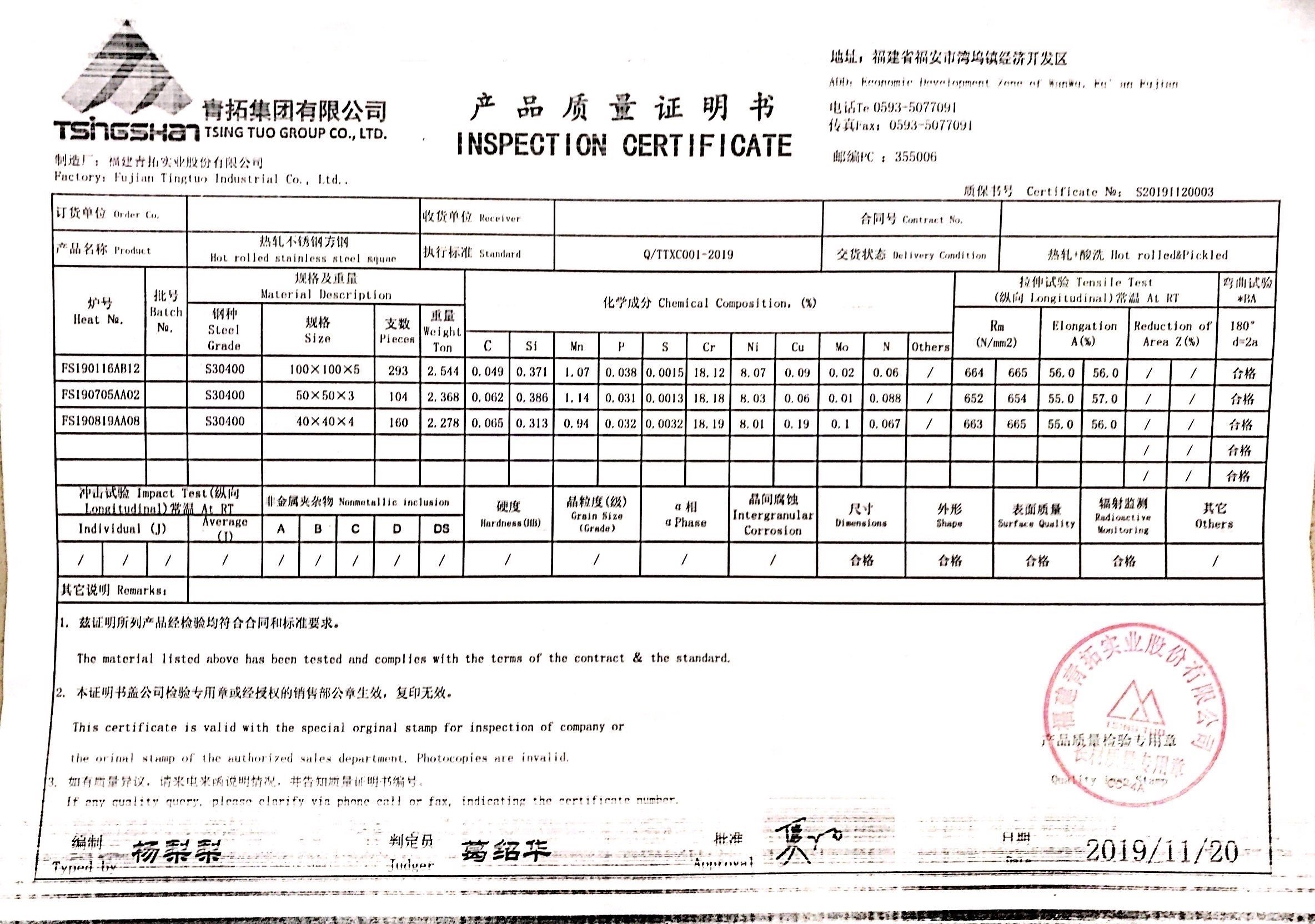
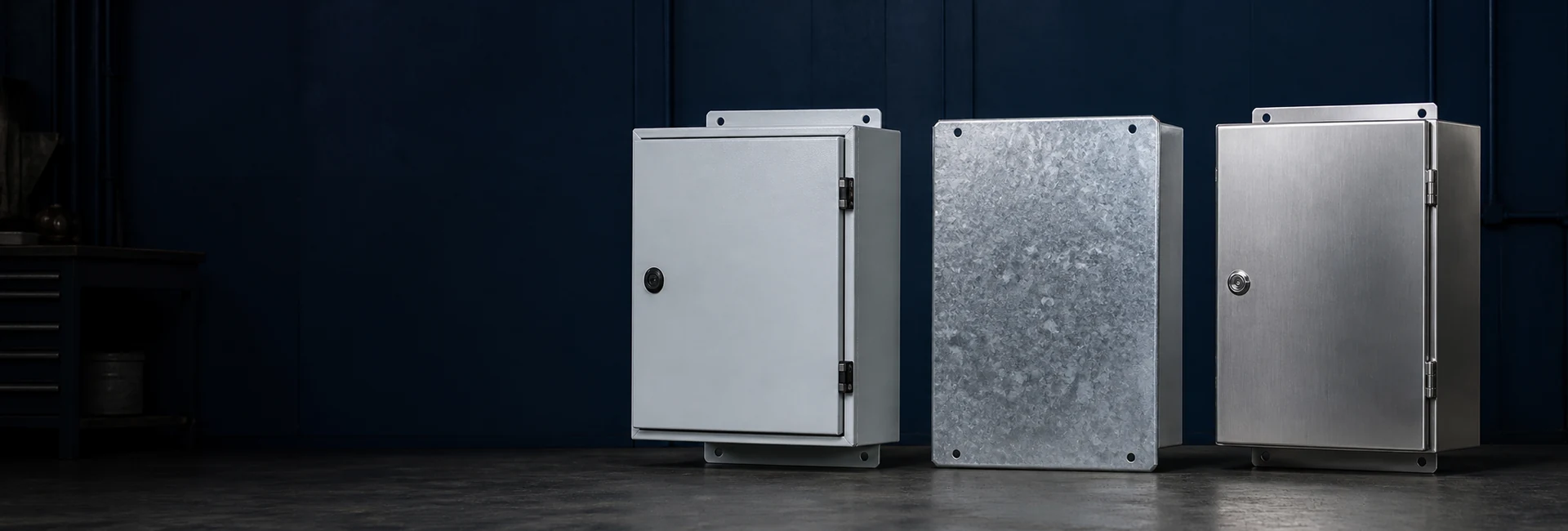
Los principales materiales que utiliza KDM Steel para sus cerramientos son acero dulce o al carbono con recubrimiento en polvo, acero galvanizado y acero inoxidable. La pregunta clave no es qué material es el mejor en general, sino cuál se adapta mejor a su entorno, estructura y acabado.
FABRICACIÓN RENTABLE
Acero dulce o al carbono pintado
Una solución práctica para muchos armarios de interior cuando la estructura, el sistema de revestimiento, los bordes cortados y el entorno de servicio están debidamente definidos.
ACERO RECUBIERTO DE ZINC
Acero galvanizado
Resulta útil cuando se requiere mayor resistencia a la corrosión sin comprometer el proceso de fabricación en acero. Aún se requiere revisión para la soldadura, el recubrimiento y los bordes cortados expuestos.
RUTA RESISTENTE A LA CORROSIÓN
Acero inoxidable 304, 316 o 316L
Adecuado para condiciones de lavado, exteriores, costeras, higiénicas o corrosivas. La clasificación final depende de los productos químicos utilizados, la exposición a cloruros, el acabado y el proceso de fabricación.
FACTORES DE DECISIÓN
Se deben responder seis preguntas antes de que se bloquee la calificación.
Ambiente
Exposición a interiores, exteriores, zonas costeras, lavados, productos químicos, temperaturas, polvo y condensación.
Fortaleza
Tamaño del armario, carga montada, peso de la puerta, elevación, transporte, vibración e impacto.
Espesor
Planitud, radio de curvatura, ruta de soldadura, roscas, herrajes, compresión de la junta y peso.
Peso
Manipulación, carga de la pared, estructura de soporte, coste de transporte y método de instalación.
Finalizar
Recubrimiento en polvo, superficie cepillada, tratamiento anticorrosión, apariencia, color y mantenimiento.
Conexión a tierra y calefacción
Conexión eléctrica, juntas conductoras, trayectoria del calor, ventilación y temperatura de los componentes.
TRES RUTAS DE MATERIALES PRINCIPALES
Compare el cerramiento terminado, no solo la lámina en bruto.
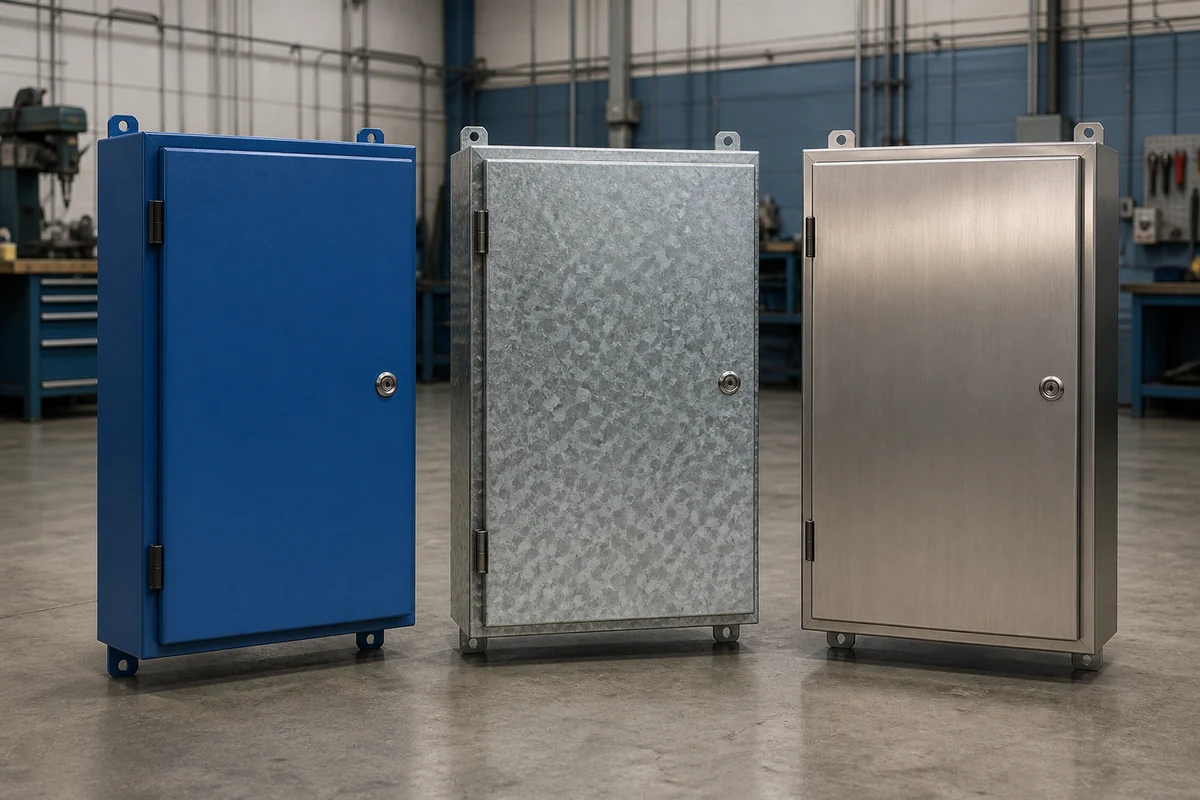
El material, el grosor, las curvas, las soldaduras, los sujetadores, la junta, el acabado y los bordes cortados trabajan en conjunto. El nombre del metal por sí solo no define el rendimiento de la carcasa.
Acero dulce o al carbono
Fabricación flexible y una opción económica y práctica para numerosos proyectos controlados en interiores, siempre que se especifiquen correctamente el revestimiento y la protección de los bordes.
Reseña: Recubrimiento, arañazos, bordes cortados, condensación.
Acero galvanizado
Se utiliza una ruta de acero galvanizado para determinados cuerpos, placas o estructuras. Es necesario prestar atención a las zonas afectadas por el calor y a la compatibilidad del recubrimiento.
Revisión: capa de zinc, zonas de soldadura, acabado, bordes expuestos
Acero inoxidable
Los aceros inoxidables 304, 316 o 316L pueden ser adecuados para aplicaciones que requieran resistencia a la corrosión, lavado a presión, uso en exteriores o higiene, dependiendo de la exposición y los requisitos de la superficie.
Revisión: grado, cloruro, acabado, control de la contaminación
COMPARACIÓN PRÁCTICA
Preseleccionar el material antes de la ingeniería de detalle
| Decisión | Acero dulce con recubrimiento de polvo | Acero galvanizado | Acero inoxidable |
|---|---|---|---|
| Motivo típico para considerar | Recinto prefabricado rentable para entornos controlados. | Ruta de acero con una superficie recubierta de zinc. | Corrosión, lavado, higiene o exposición exterior exigente |
| Enfoque de corrosión | Depende del pretratamiento, el recubrimiento en polvo y la protección de los bordes. | La capa de zinc proporciona protección; las soldaduras y los bordes cortados aún necesitan revisión. | El grado y el acabado cepillado o del proyecto se seleccionan en función de la exposición. |
| Fabricación | Ruta de corte, doblado, soldadura y recubrimiento en polvo de gran tamaño | Fabricable, teniendo en cuenta la capa de zinc y las zonas afectadas por el calor. | El uso de herramientas específicas, el tratamiento de soldadura y el control de la contaminación pueden ser importantes. |
| Acabado visible | Recubierto con pintura en polvo del color y textura RAL aprobados. | Superficie galvanizada natural o un acabado adicional específico para cada pedido. | Generalmente acero inoxidable cepillado u otro acabado de acero inoxidable aprobado. |
| Lo que debe indicar el dibujo | Grado de acero, espesor, pretratamiento, color RAL, textura y requisitos de recubrimiento | Acero base, espesor, estado de galvanizado, borde cortado y requisitos de soldadura | Grado exacto 304, 316 o 316L, espesor, acabado visible y dirección de la veta. |
| Prueba de la orden | Dibujo aprobado y referencia de acabado | Requisitos de especificación e inspección del material | Informe de material específico del grado cuando sea necesario para el pedido. |
Esta tabla solo admite la preselección de candidatos. La selección final requiere conocer el entorno real, las cargas, la geometría, la fabricación, el recubrimiento, los herrajes, el objetivo de protección y los documentos del pedido.
VÍAS DE SOLICITUD
Comience con la exposición que el recinto debe soportar.
Interior controlado
El acero dulce pintado suele ser un punto de partida práctico cuando el riesgo de corrosión y de lavado es limitado.
Exposición al aire libre
Analice conjuntamente la lluvia, el sol, los ciclos de temperatura, la condensación, el sellado, el recubrimiento y la corrosión.
Lavado o corrosión
El tipo de acero inoxidable, el acabado, la junta, los herrajes, el tratamiento de soldadura y la exposición a productos químicos influyen en la ruta.
Exposición costera o al cloruro
Analice conjuntamente el acero inoxidable 316 o 316L, el acabado cepillado, el tratamiento de soldadura, los herrajes y la exposición real a los cloruros.
FABRICACIÓN
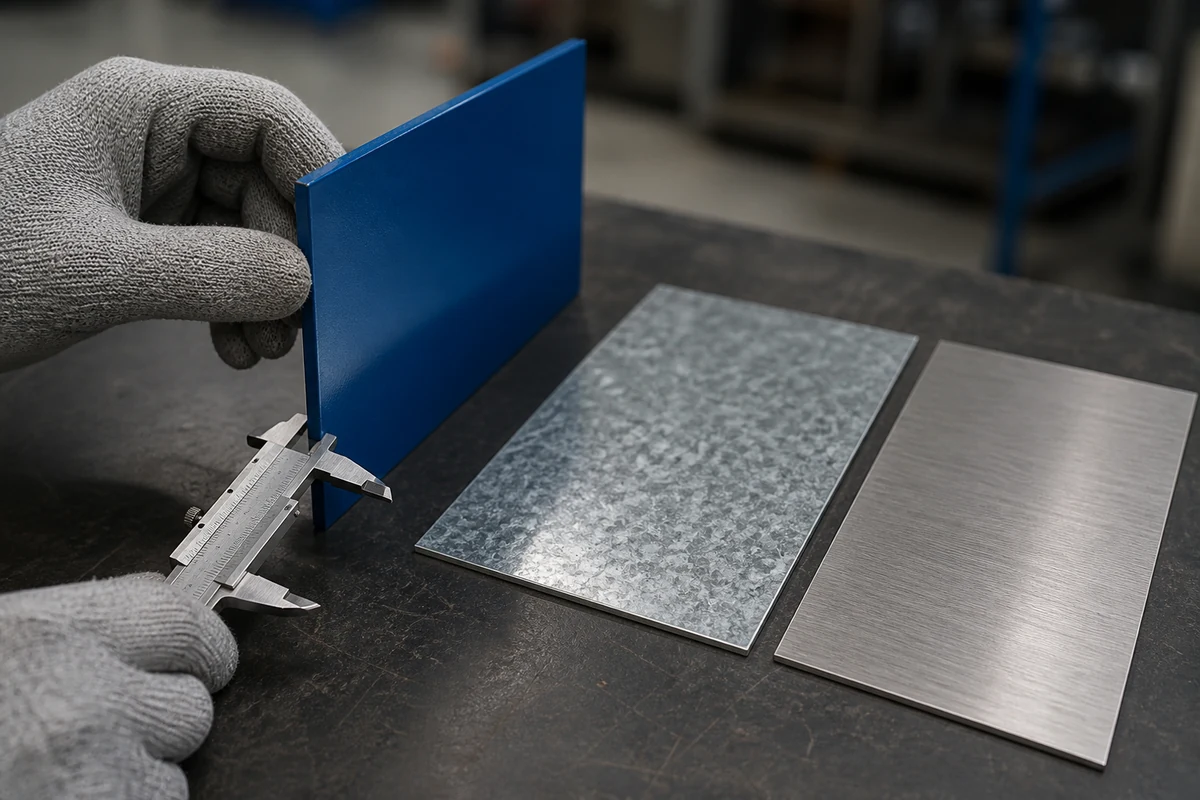
El grado y el espesor deben ser compatibles con el dibujo.
Cambiar el material implica más que solo cambiar el costo. El radio de curvatura, la recuperación elástica, la ruta de soldadura, las características roscadas, la rigidez de la puerta, la compresión de la junta, el acabado superficial, la trayectoria del calor y el peso total también pueden variar.
RUTAS DE SUPERFICIE
Elija el acabado que mejor se adapte a su protección, apariencia y mantenimiento.
Recubrimiento en polvo
Defina el pretratamiento, el color RAL, la textura, el brillo, los requisitos de la película y las roscas protegidas.
Acero inoxidable cepillado
Defina la dirección de la veta, el nivel de acabado, las caras visibles, la película protectora y el manejo.
Superficie galvanizada
Confirme si la pieza permanece sin acabado o si recibe un acabado adicional.
INFORMES Y DOCUMENTACIÓN DE MATERIALES
Conserve los informes de material existentes con la nueva guía de selección.
La página original de KDM Steel incluye los siete informes que se detallan a continuación. Úselos como documentos de referencia y, a continuación, confirme que el grado, el espesor, la forma del material, el lote y los requisitos de trazabilidad coinciden con su pedido.
Certificado de material 316L de 1,2 mm
Informe de material SS316L de 1,5 mm
Informe de material SS304 de 2,0 mm
Informe de material SS304 de 2,5 mm
Informe de material SS304 de 3,0 mm
Informe sobre el material del tubo cuadrado SS304
Informe sobre el material de ángulo de acero SS304
PREGUNTAS FRECUENTES SOBRE MATERIALES
Preguntas antes de aprobar la ruta del metal
La respuesta final debe figurar en los planos y en los documentos del pedido, no solo en un correo electrónico.
¿Es el acero inoxidable siempre la mejor opción para una carcasa?
No. El acero inoxidable puede solucionar problemas de corrosión o higiene, pero puede aumentar el costo, dificultar el acabado y complicar la fabricación. Elija según la aplicación.
¿Cuál es la diferencia entre el acero inoxidable 304 y el 316?
En general, el acero inoxidable 316 ofrece una mayor resistencia a los cloruros o a entornos más agresivos, pero la exposición real, el acabado, el tratamiento de soldadura y el mantenimiento siguen siendo factores importantes.
¿Puedo usar acero dulce con recubrimiento en polvo en exteriores?
Es posible lograrlo con un diseño de carcasa adecuado, pretratamiento, recubrimiento en polvo, protección de bordes, sellado y un plan de mantenimiento. Analice la exposición completa en lugar de confiar únicamente en el recubrimiento de color.
¿Cuándo conviene considerar el acero galvanizado?
El acero galvanizado es útil cuando se busca un revestimiento de zinc para ciertas carrocerías, placas de montaje o estructuras. Aún es necesario revisar la soldadura, los bordes expuestos, el aspecto de la superficie y cualquier recubrimiento adicional.
¿Puede proporcionar un certificado de material?
La página original incluye informes seleccionados de acero inoxidable 304 y 316L. Indique el grado exacto, el formato, el espesor, la trazabilidad del lote y el tipo de documento antes de solicitar un presupuesto.
¿Cómo se debe especificar el espesor?
Indique en el dibujo el espesor nominal y cualquier tolerancia crítica. Las puertas, cuerpos, placas, bases y piezas de refuerzo pueden requerir valores diferentes.
¿La clasificación IP determina el material?
No. El grado de protección IP se refiere a la protección contra la entrada de agentes externos. La selección del material también depende de la corrosión, la resistencia, la temperatura, el acabado, la fabricación y la vida útil.
¿Puede KDM Steel recomendar un material a partir de una fotografía?
Una fotografía puede dar pie a la conversación, pero la selección final requiere conocer las dimensiones, el entorno, las cargas, el objetivo de protección, el acabado, la cantidad y, preferiblemente, un plano.
REVISIÓN DE MATERIALES
Envía el entorno y el dibujo antes de bloquear el metal.
KDM Steel puede comparar las opciones de materiales más prácticas en función del tamaño de su carcasa, su fabricación, el nivel de protección requerido, el acabado y las necesidades de documentación.
 Spanish
  English
  Arabic
  French
  Russian
  Japanese
  Korean
  Portuguese
  Indonesian
  Chinese