


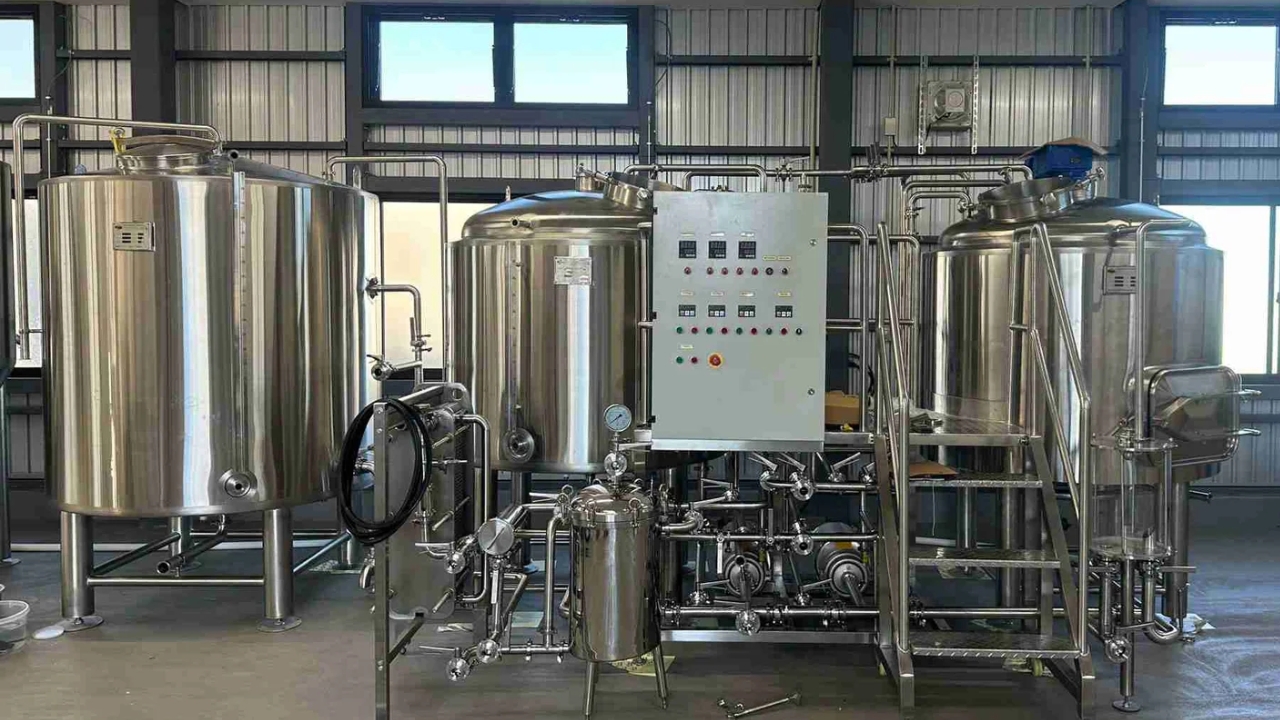
If you want to expand your brewery or construct a new one, it is essential to understand the functions of each unit. One of the tanks that directly influences the quality and speed of beer production is the Hot Liquor Tank (HLT). This article will help to understand the necessity of a hot liquor tank and the extent to which it influences every aspect of your brewing process.
What Is a Hot Liquor Tank?
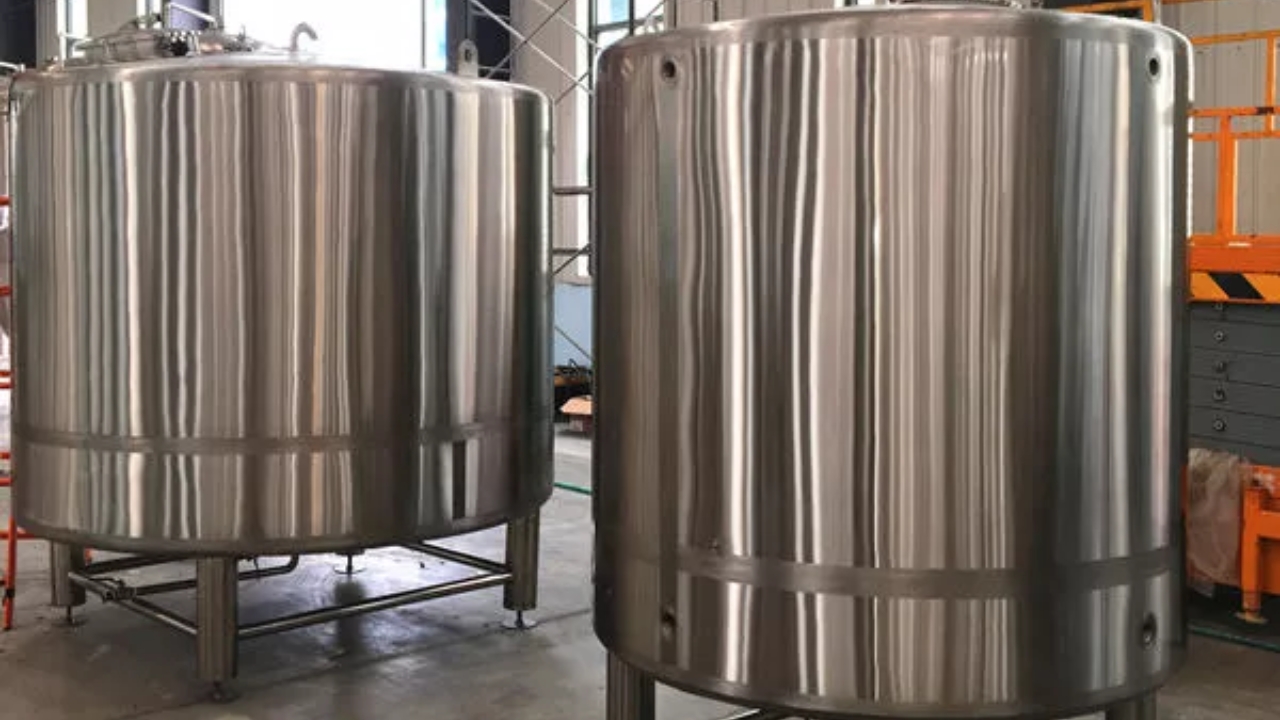
Hot liquor, also known as “liquor” for brewing water. A Hot Liquor Tank (HLT) is a special stainless steel container that keeps the liquid at the optimum temperature for mashing and sparging. In contrast to a regular water heater, an HLT keeps water temperatures precisely between 110°F and 180°F. It’s your brewhouse’s dedicated water control hub, making sure you always have the right amount of water at the right temperature.
The Role of HLT in the Brewing Process
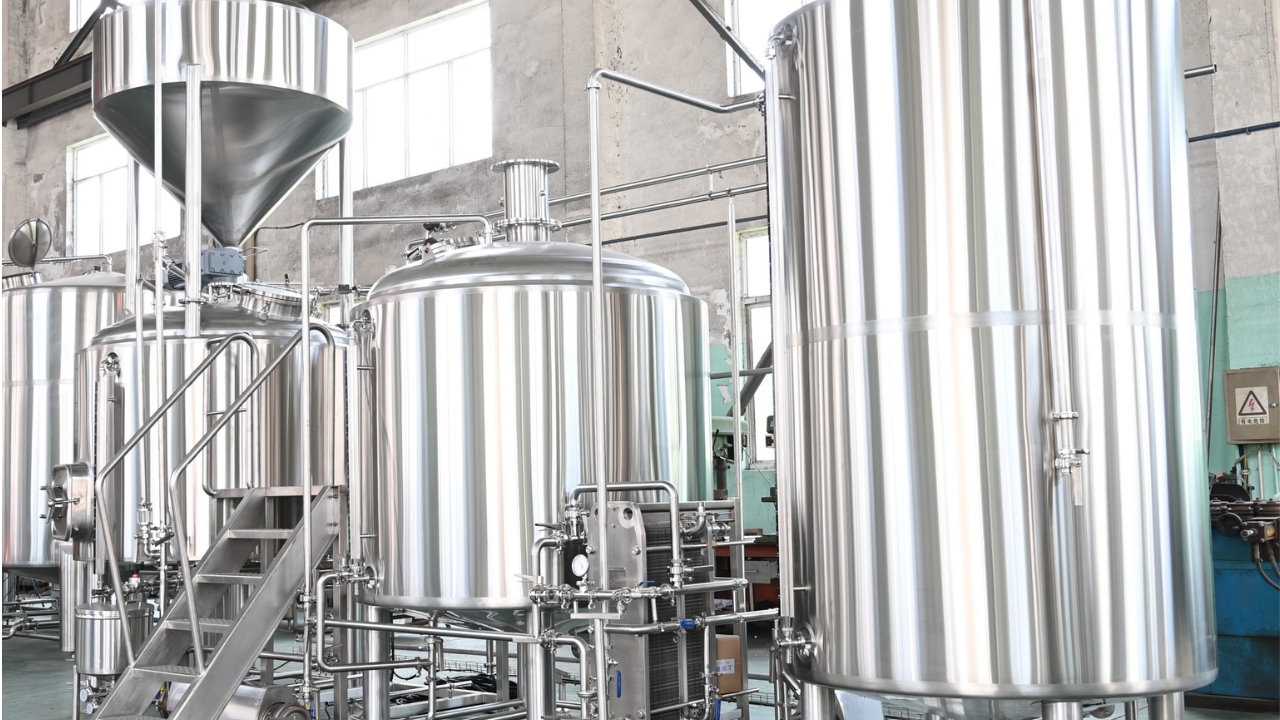
Brewing Context: Mashing & Sparging
During brew day, your HLT does two very important things, it provides strike water for mixing and sparge water for lautering. A lot of breweries also use the HLT to get hot water back from the heat exchanger while the worth is cooling. This saves energy that would have been wasted otherwise.
Mashing Process
When you are ready to mash in, the HLT delivers “strike water” at the precise temperature you require. Depending on your process, this temperature ranges between 145°F and 165°F. In the mash tun, boiling water interacts with ground grain to activate enzymes that convert starches into fermentable sugars using different types of fermenters. If you set the strike water temperature correctly, those enzymes will either perform properly or be shocked into inaction.
Sparging
Your HLT usually gives you “sparge water” (about 168°F to 170°F) to rinse the leftover sugars off the grain bed after the mash rest. As the grains drain, this water is lightly sprayed over them to get as much fermentable sugar as possible. Should it be too cold or too hot? If it’s too hot, the strong tannins in the grain husks could be extracted.
Temperature Control & Quality
Controlling temperature isn’t just about getting the numbers right; it’s also about keeping your workers and products safe. If the water is too high, the enzymes can be killed, which stops the conversion for good. If the amount is too low, the change will never finish and you will end up with weak, watery beer. In either case, the grain, hops and labor of a whole brew day are wasted.
Why Temperature Matters
For each type of beer, the mixing and sparging temperatures need to be different. For example, enzymes that are needed for a strong stout are not the same for a light beer. With your HLT, you can fine-tune exactly what each recipe calls for, batch after batch. Temperature control also makes sure that your brand’s taste profile stays the same, which is important for keeping customers coming back.
Indirect Heating in Advanced Systems
The HLT does two jobs in complex systems like HERMS (Heat Exchanged Recirculating Mash Systems). A stainless steel coil immersed in the HLT lets the wort from the mash tun move through the hot water, slowly raising the temperature of the mash without using direct heat. This secondary method gets rid of the risk of burning and gives you very accurate control over the mashing steps. It is safe to “set it and forget it” because the Wort temperature can never go above the HLT water temperature.
Key Components of a Hot Liquor Tank
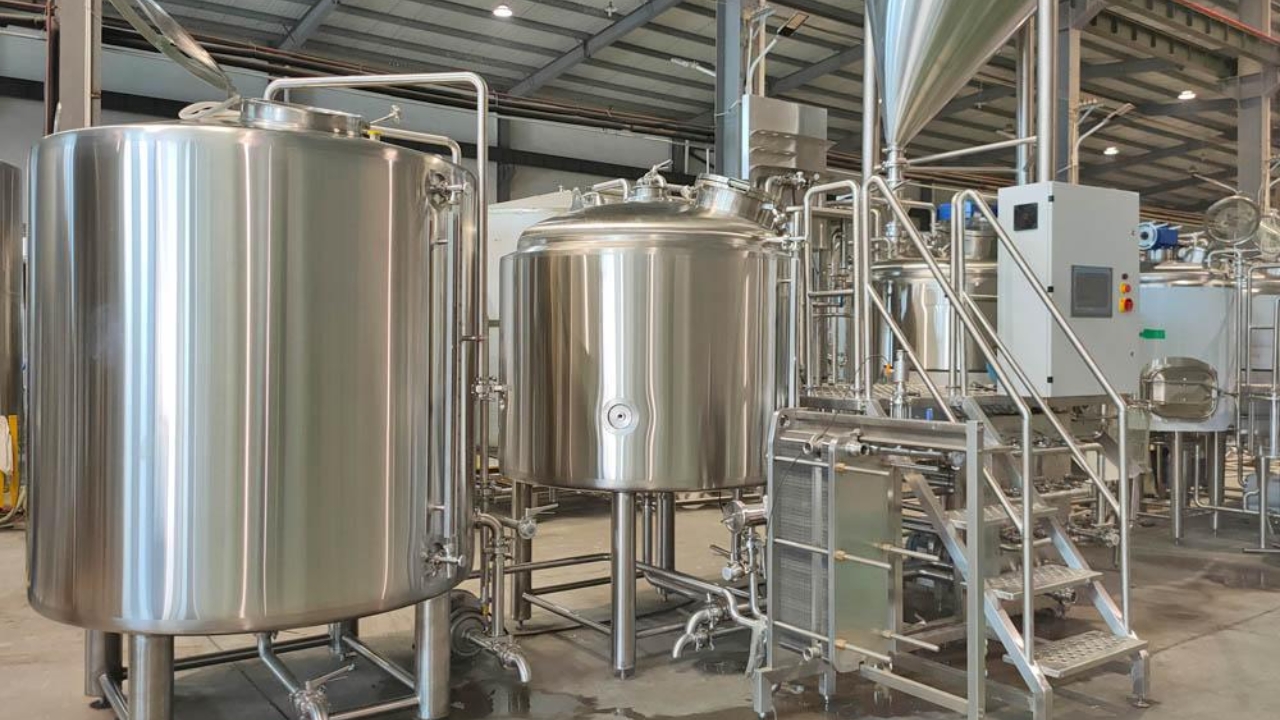
| Component | Función |
| Heating Elements | Heat the water to your target temperature. Options include electric immersion elements, steam jackets, or direct gas burners, depending on your utility setup. |
| Temperature Sensors & Controllers | Monitor water temperature and automatically maintain your set point. RTD probes and digital controllers ensure precision within ±1°C. |
| Valves & Ports | Control water flow in and out of the tank. Tri-clamp ports are standard for sanitary connections to pumps, hoses and other vessels. |
| Sight Glass and Level Indicators | Allow visual confirmation of water volume inside the tank. Critical for knowing exactly how much strike or sparge water remains. |
| Coils & Heat Exchangers | Enable HERMS (Heat Exchanged Recirculating Mash System) functionality. Wort circulates through a stainless steel coil submerged in the HLT for gentle, indirect mash temperature control. |
Hot Liquor Tank Process (Step-by-Step)
Water Heating
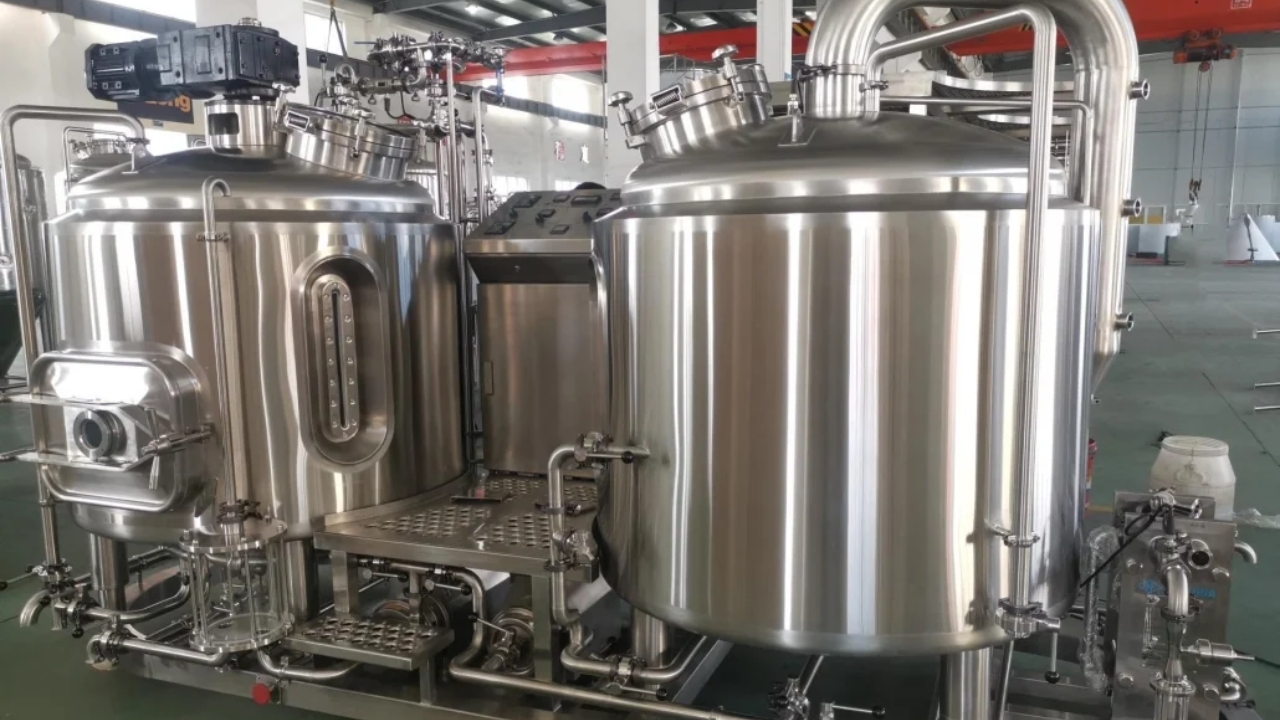
You finish your brew day by shutting off the source of heating and pouring fresh water into the HLT. Depending on the size and capacity of your system, it can take between 60 and 90 minutes to attain your desired temperature. Some brewers heat their systems themselves overnight in order to be ready to mash-in in the morning.
Maintaining and Holding Temperature
When the HLT is heated, the water in the system is kept at the predetermined temperature, usually 170 degrees celcius with sparge water, until it is used. This guarantees uniformity and money savings while being stable without the need to continuously feed it with energy due to quality insulation and accurate controllers.
Delivery to Mash Tun
At the mashing-in stage, the outlet valve is opened, and the strike water is pumped to the mash tun. The sparge water is later added during lautering at the exact flow rate necessary to remove sugars in the cereal bed without extracting tannin or channelizing.
Control & Monitoring
The temperature and volume are also checked during the brew day with digital displays and sight glasses. Modern systems allow automated temperature manipulations and the use of the pump, which makes the matter of repeatability and the exclusion of manual control.
Types of Hot Liquor Tanks
By Heating Source
Steam-Heated Tanks:
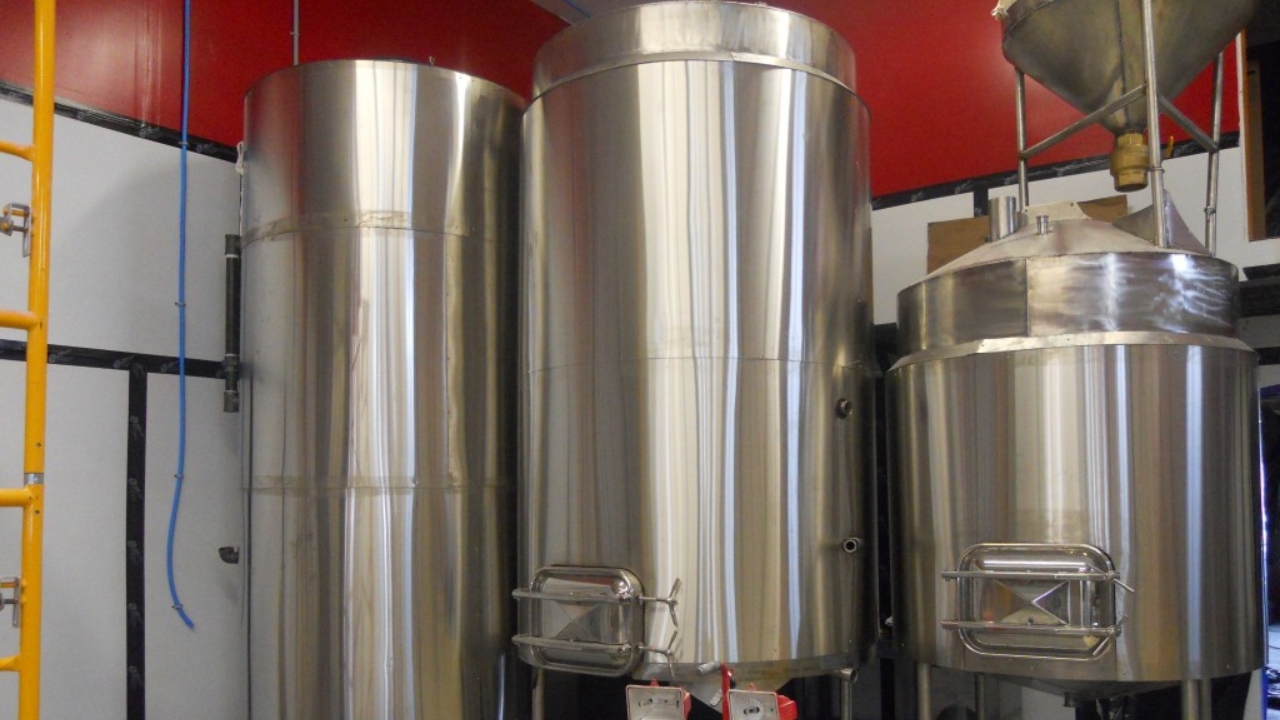
The heating of these tanks is done in an external steam furnace, and the steam is circulated around the tank in a dimple jacket. They are common in bigger production breweries, where steam is already accessible on other vessels and can heat quickly and uniformly.
Electric Immersion Heated Tanks:
The electric elements are placed in the water, and they heat it internally. They are better suited to nano systems and smaller breweries due to their control of temperature, easy installation, and lower initial expenses.
Direct Fire Heated Tanks:
Gas furnaces are placed under the tank to directly heat the water. They are not as efficient as steam or electric versions and require careful attention to avoid excessive temperature, despite being effective.
By Configuration
Single-Tank Systems:
All the hot water requirements are met by a single insulated vessel. It is the most common and affordable type of distillery configuration for small to medium-sized.
Dual-Tank or Multiple Tanks:
The overlapping of brew regimens can be used when two or more HLTs are used, and in this case, one HLT could be mashing while the other is utilized to heat sparge water. This causes the high-volume production to increase throughput, although the cost of equipment increases as well.
HLT Recirculation (HERMS):
These drums have a stainless steel coil inside the drum. The worth of the mash tun pumps through the coil, where it picks up heat in the HLT water. This removes the chances of scorching and allows easy pounding of steps.
By Size (Commercial vs Homebrew)
| System Size | Typical HLT Capacity | Solicitud |
| Homebrew / Pilot | 5–20 gallons | Small batch experimentation, brewpubs testing recipes |
| Nano Brewery (1–3 BBL) | 3–6 BBL | Startup craft breweries, taproom-focused production |
| Microbrewery (5–7 BBL) | 7–10 BBL | Growing regional breweries with distribution |
| Regional Brewery (15+ BBL) | 20+ BBL or multiple tanks | High-volume production, multiple batches daily |
Sizing Note:
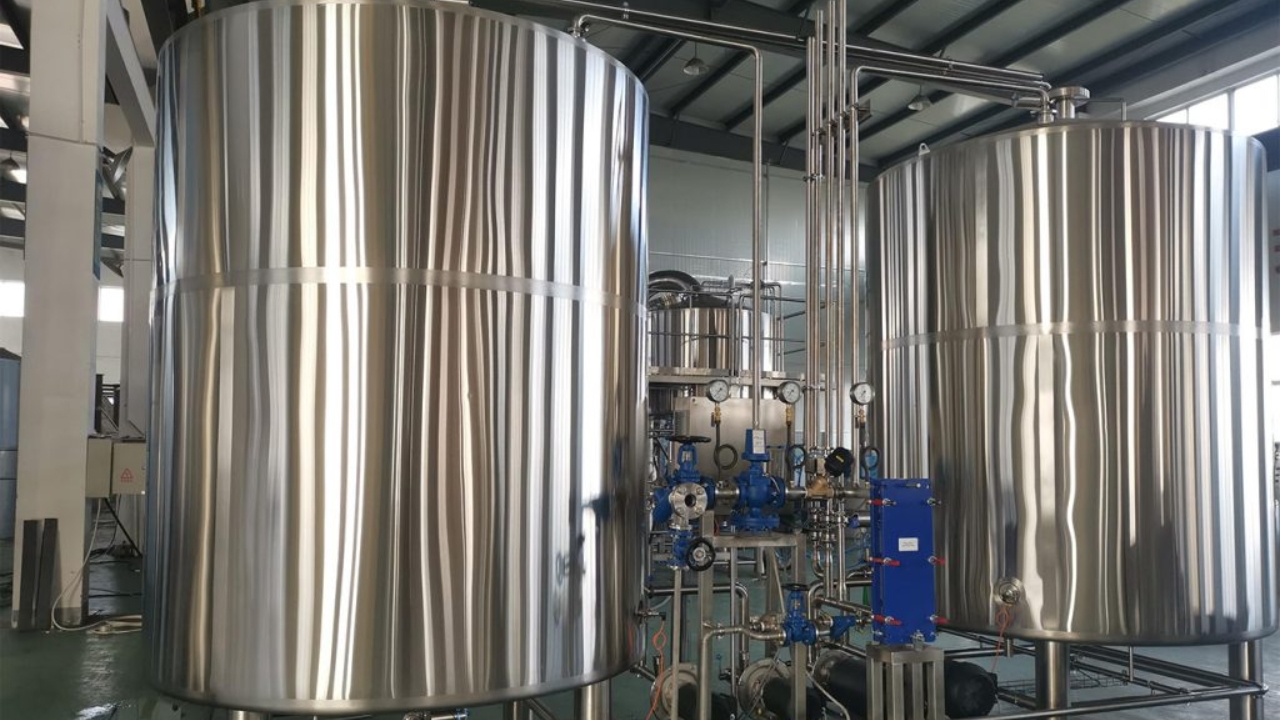
To take into consideration the thermal losses, the strike water and the sparging water, your HLT must be 1.5-2 times your batch size. To ensure that the system can operate continuously and that it has the capacity to buffer, it is recommended that a 5 BBL system have a 7 BBL HLT.
Benefits of Using a Hot Liquor Tank
Process Efficiency
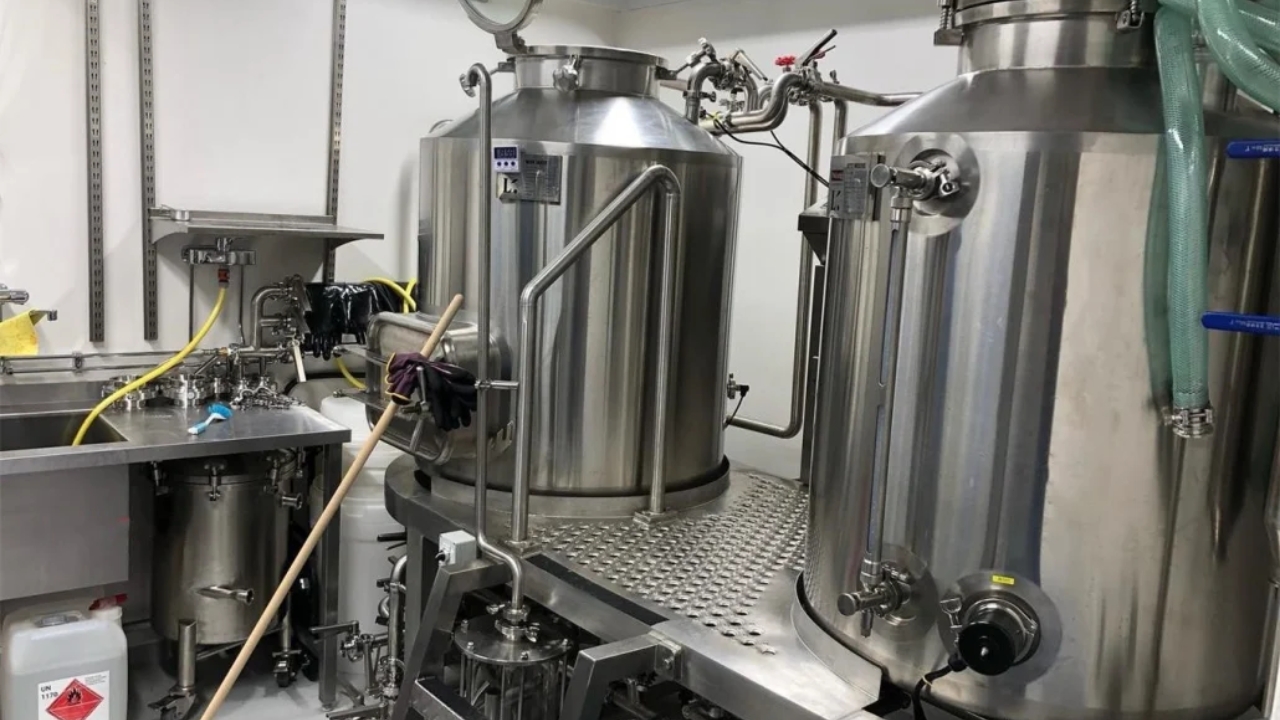
An HLT removes the need to have water heat up and makes the brew day easier. It takes less time to run the entire cycle, and batches per day are also more since the hot water is ready to be used in mashing and sparging in the next instant you prepare it.
Energy Savings
Insulations of high quality can ensure the temperature of water is maintained longer without consuming much energy. Also, many breweries reuse the heat energy that goes to waste by taking hot water out of their heat exchanger and pumping it back into the HLT.
Quality and Consistency
The accuracy of the temperature control ensures the same strike and sparge conditions per batch. This repeatability protects the flavor profile of your brand and eliminates the possibility of expensive variance in product between orders.
Flexibility & Storage
Only one HLT is needed to hold all the water needed to make one brew day, of the strike and sparge. This buffer capacity would make sure that you do not need to hurry up to warm the water in the middle of the procedure, and as such would give you a buffer during lautering.
Larger Breweries’ Scalability
When you scale out, you will be able to support the overlapping brew times through the use of multiple HLTs or larger vessels. Just to produce as much as possible without reducing the quality, one can mash one amount of potatoes at the same time and prepare water to boil the next.
Key Features to Consider When Buying
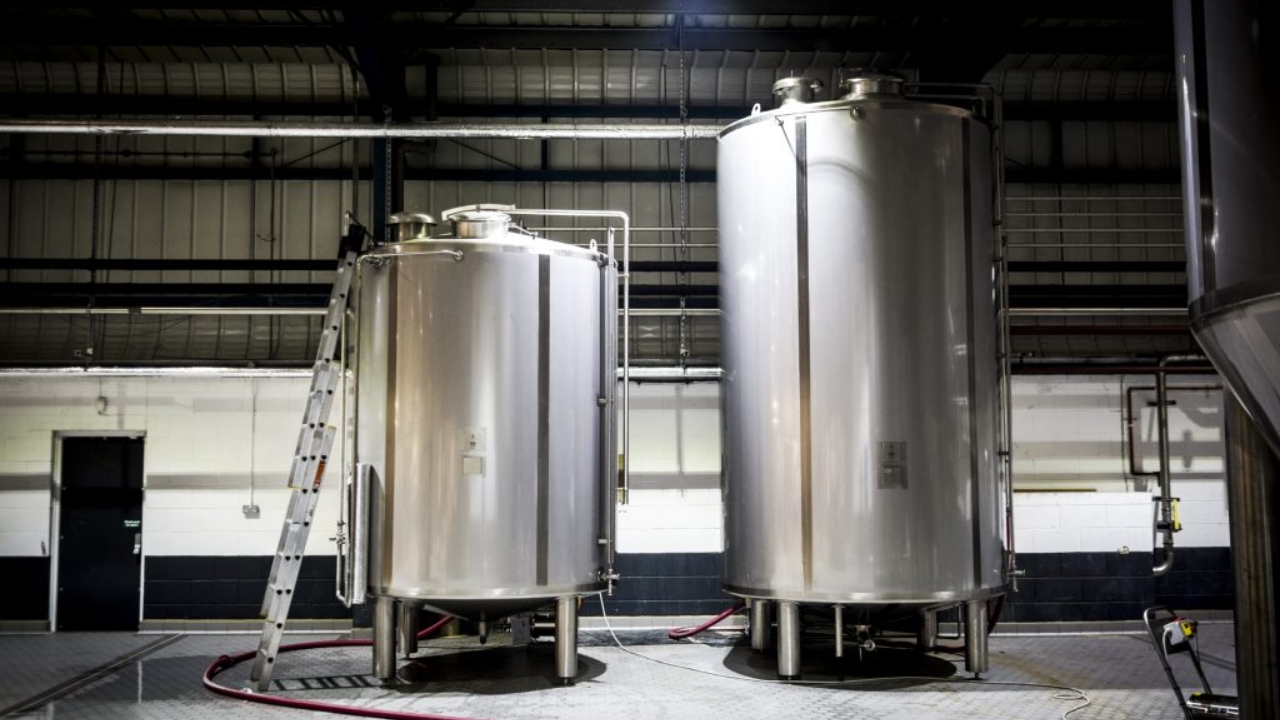
Capacity & Size
The HLT must have the capacity to hold 1.5 -2 times your batch. A five BBL system may be used with a 7 BBL HLT so that the use of strike water, sparge water, and thermal buffer could be used without the necessity of constant replenishing.
Materials and Construction
The 304 standard stainless steel reactors is that which is food-grade. To provide long service, ask to obtain tri-clamp fittings which can be easily cleaned and which resist corrosion, have electropolished interiors, and sanitary welds.
Method of Heating
Ensure that your heating source is in line with the utilities available. Large quantities of steam-jacketed vessels are quick to heat, whereas the electric immersion is appropriate in small breweries, because it is simple to install. Direct fire is cheaper; however, it requires greater attention.
Control of Temperature
Digital PID controllers provide accuracy of 1 C with RTD sensors. To reduce the manual control, identify automatic maintenance and programmable set points.
Aislamiento
Closure cell polyurethane or mineral wool insulation that has a stainless steel covering reduces the energy expenses and ensures temperature stability. Poor insulation leads to consistent heating and higher costs.
Additional Features
Recirculation ports, sight lenses, CIP spray balls, and other outlet ports should be considered as part of the HERMS capability, volume verification, and automated cleaning, as well as flexibility in connecting the system to external devices.
Customized Hot Liquor Tank by KDM Steel
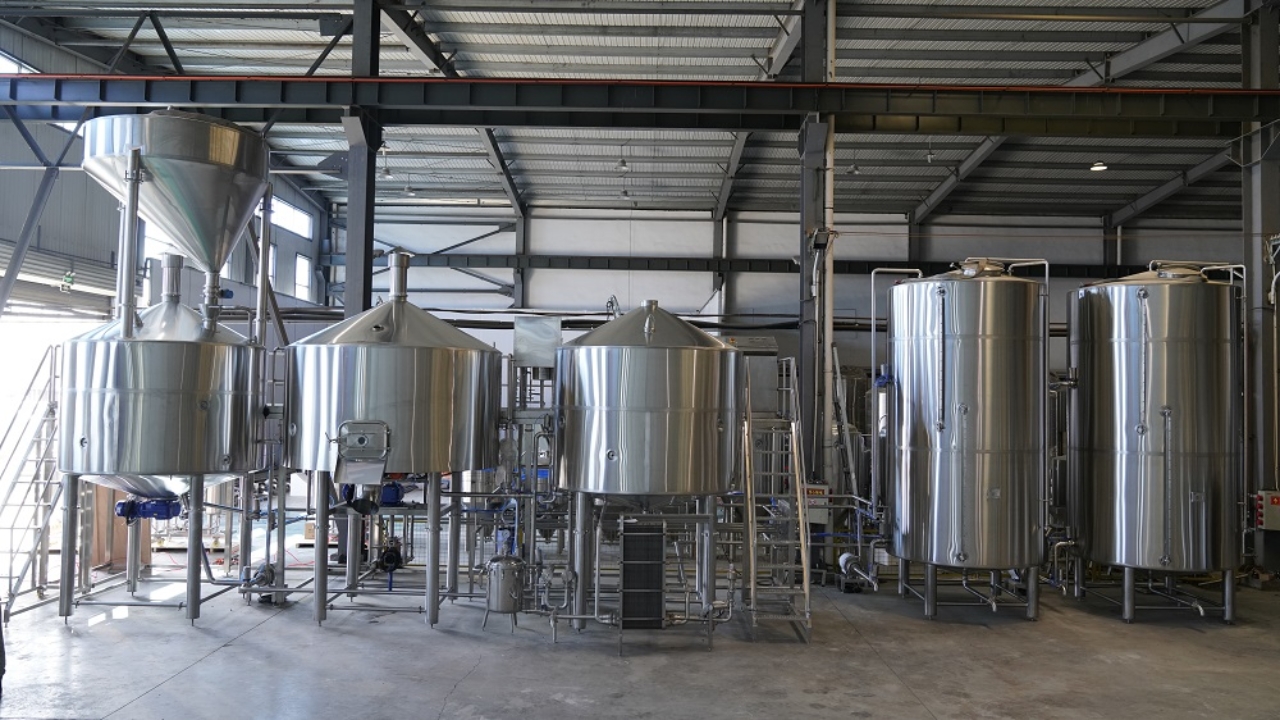
Acero KDM designs HLTs to fit the exact specifications of your brewery, be it a small vertical tank to fit in a small space, or a HERMS-ready tank with internal coils, or a multi-port design to match a complex pipeline design. We not only make it out of 304 stainless steel, but we also use this to make sure that the welds are hygienic, the temperature is carefully monitored, and the insulation is tailored to your climate. Contáctenos today to discuss your needs and receive a quote.
Preguntas frecuentes
Does it mean that a hot water appliance would be equal to an HLT?
No. Normal water heaters do not require sanitary brewing, and they vary in temperature. An HLT is capable of keeping temperatures accurate (within +1 oC), using food-grade stainless steel storage tank, and has brewing-specific design elements like tri-clamp ports and sight lenses.
Can beer be fermented without an HLT?
Yes. But in some cases, small breweries boil water in the kettle or mash tun. This is a good approach with single quantities, but it is especially problematic at a large scale when production is considered, since it leads to energy waste, limitations in temperature precision, and slowdown.
Are all the HLTs to be insulated?
Practically yes. Uninsulated containers constantly need to be reheated, which raises energy expenses as well as the possibility of temperature variations. Besides, the loss of heat is high. The quality insulation will yield profit within months.
Could you expand a hot liquor tank?
Yes. Oversizing provides buffer capacity and room to expand in the future. However, more water requires more initial heating, and thus, it means more up-front cost is incurred. The most appropriate is 1.5-2 times your quantity.
Should mechanical assistance be given when using HLT?
In the case of gravity-fed systems, the response is no. However, when it comes to efficiency and flexibility, the response is positive. A pump provides the capability to place the HLT in any location, apply recirculation to achieve temperature homogeneity, and combine with the HERMS installations.
Can HLT water be a source of contamination?
Yes, the HLT itself may be a source of contamination in case its interior surfaces carry residues, scale, rust, or biofilms, which have not been cleaned and taken care of, and may impact the water quality prior to its use. This can be prevented by regular tank hygiene.
What is the difference between a Hot Liquor Tank and a Cold Liquor Tank?
Usually, an HLT is filled with heated water that is used to brew and has a temperature between 110 F and 180 F. Frequently treated or filtered cold/ambient water is stored in a cold liquor tank to fill the HLT or to clean. At the other ends of the temperature range, they are used for different purposes.
Is it better to purchase a complete HLT or one that is designed?
The unique layout or expansion jobs require custom-built tanks manufactured by KDM Steel. They are made to fit your exact space, can be integrated with other equipment, and they have features that are specifically designed to fit your brewing process.
 Spanish
  English
  Arabic
  French
  Russian
  Japanese
  Korean
  Portuguese
  Indonesian
  Chinese