


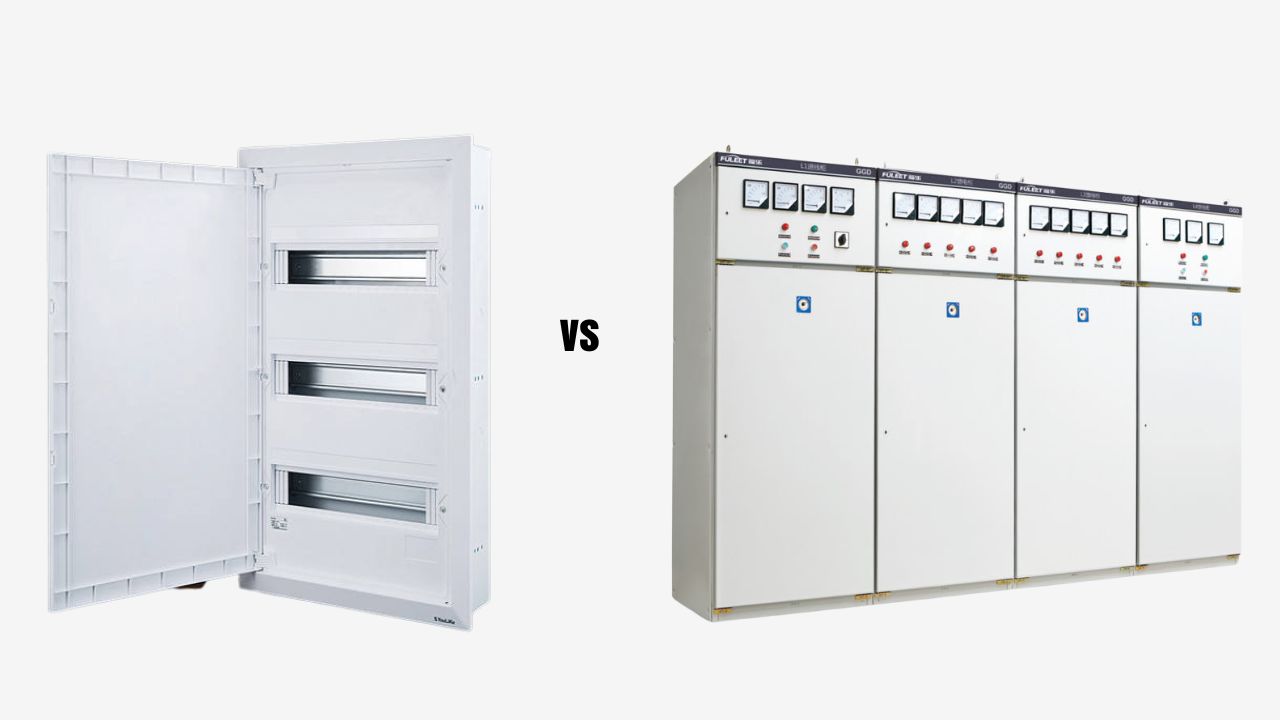
The panelboard is the center of the power distribution system, which is used to safely distribute and control electrical power to the facility. Both single-phase and three-phase panelboards are used for power distribution, but they differ substantially in power delivery, efficiency, and cost. This article can effectively help you choose the panelboard suitable for your application.
What is a Single-phase Panelboard?
A single-phase panelboard can also be called a single-phase distribution board or a panel de interruptores. It is an electrical panel used for managing and distributing single-phase electrical power within buildings or facilities.
The single-phase panelboard is mainly used to manage the power for systems that use single-phase alternating current(AC) waveforms. It distributes the current from the main service panel(or electrical meter) to various circuits within the building. A single-phase panelboard is usually equipped with two or three wires and has a relatively simple configuration, making it more suitable for low-power requirements.
The single-phase distribution panel interior mainly consists of main circuit breakers, individual circuit breakers, busbars, and other components that work together. Individual systems typically operate at 120V or 230V, depending on the geographic region, with variations in voltage across countries and regions.
What is a Three-phase Panelboard?
A three-phase panelboard is an electrical distribution panel used for managing and distributing three-phase electrical power within buildings, facilities, or industrial sites. Compared to single-phase panelboards, three-phase panelboards have a greater power capacity and provide a more stable voltage.
In a three-phase system, electrical power is supplied through three separate conductors (A phase, B phase, and C phase), with each conductor carrying alternating current that is offset by 120 degrees. This makes the energy distribution more efficient and is highly suitable for your application in places with high power demands.
The three-phase panelboard structure is more complex. It has larger busbars, main circuit breakers, branch disyuntores, and grounding systems. It usually has three or four wires, the difference being the presence or absence of a neutral wire. In regions like India, the standard voltage for three-phase panels is 415V. You can apply it in commercial, industrial and large residential areas that require higher electrical loads.
Key Differences Between Single-Phase and Three-Phase Panelboards
Power Delivery
Single-Phase Panelboard: The single-phase panelboard power is transmitted as an AC waveform. The power output is not constant but pulsates at twice the frequency of the power supply. When the voltage and current cross zero, the instantaneous power is zero.
Three-Phase Panelboard: The three-phase panelboard power is transmitted in the form of three waveforms with the same frequency and phase differences of 120 degrees. Due to the time offset of the peak values of the three waveforms, their total instantaneous power is constant and without pulsation. The three-phase panelboard provides various voltage combinations, such as 208V, 480V, or higher.
Efficiency
Single-Phase Panelboard: The power provided by a single system will fluctuate. If you run multiple loads at the same time, it will lead to inefficient power transfer. Therefore, single-phase is more suitable for basic tasks.
Three-Phase Panelboard: The power supply of the three-phase system is continuous, so the operation is more stable. Three independent phases provide electricity for more efficient power transportation. At the same time, the three-phase system can also achieve lower line losses and reduce the possibility of voltage drop or fluctuation. Therefore, you can achieve a more reliable and stable power supply in heavy-duty and industrial applications.
Load Capacity
Single-Phase Panelboards: The single-phase panels are specifically designed for smaller loads, such as household appliances, lighting, HVAC systems, and small machinery. Their load capacity is usually limited to 10-20kW.
Three-Phase Panelboards: The load capacity of three-phase electric panels is stronger than single-phase, typically over 100kW or higher. The three-phase systems are primarily designed for high-power applications. Therefore, you can use it for heavy machinery, large motors, and industrial lighting power. It can achieve higher efficiency and more stable operation.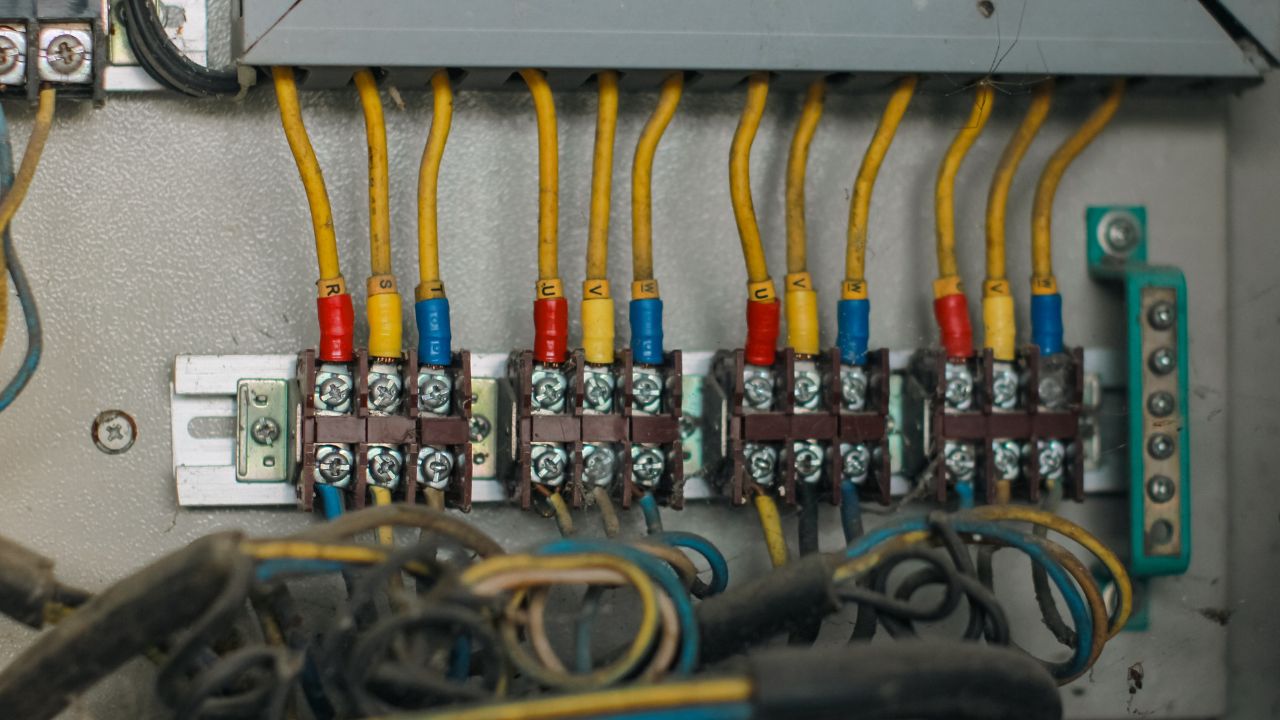
Wiring Configuration
Single-Phase Panelboards: Single-phase panels usually use two wires (L+N). Usually, there is one live/hot wire and one neutral wire. In some configurations, your single-phase panel may also use a grounding wire.
Three-Phase Panelboards: The three-phase panel usually uses three live/hot wires and one neutral wire. A separate ground wire is mainly used to protect your personnel and property safety.
Costo
Single-Phase Panelboards: Single-phase panel equipment costs low mainly because of its simpler structure and fewer internal components. Single-phase service panels have lower wiring costs. This is your ideal choice for small residential or light commercial applications. But for large power equipment, its operating efficiency is low. In the long run, its electricity bill and expansion costs are higher.
Three-Phase Panelboards: The three-phase panel has more expensive equipment and a more complex installation due to additional conductors, circuit breakers, and motherlines. The three-phase panel‘s wiring and system setup are more complex, and installation costs are higher. But for larger facilities, the three-phase system has lower maintenance costs and longer service life. Besides, its future expansion costs are also lower for you.
Voltage and Current Characteristics
Single-Phase Panelboards: Three-phase panel voltage alternates between simple sine wave peak and zero. Each cycle generates a single peak voltage. This can cause fluctuations in the power supply during each cycle. The rated voltage of a single-phase system is usually 120V or 230V. The specific voltage depends on your region.
Three-Phase Panelboards: In a three-phase system, the three phases are spaced 120 degrees apart, which enables it to provide a more stable and reliable power supply for you. This also reduces the risk of power fluctuations and drops. Therefore, you can use it for heavy machinery or sensitive equipment. The rated voltage of the three-phase distribution panel is usually 208V, 400V, or 480V. The specific voltage depends on your application.
Seguridad
Single-Phase Panelboards: Single-phase panels are simpler and safer for use in small applications. If the single-phase system is overloaded, this may cause circuit breaker failures, fire risks, or electrical appliances damage. Therefore, you need to carry out appropriate circuit protection.
Three-Phase Panelboards: Three-phase systems need to balance all three phase loads to avoid overloading one phase. Although three-phase panels are more stable and reliable than single-phase panels, any imbalance in the load can lead to overheating or electrical failures. Therefore, you need to conduct regular inspections and maintenance on it.
Motor Performance
Single-Phase Panelboards: You can use a single-phase panel for small motors. Compared to three-phase motors, single-phase motors have lower operating efficiency. This may lead to potential issues such as heat accumulation or shortened high-demand equipment lifespan.
Three-Phase Panelboards: You can use the three-phase panel for large industrial machines, compressors, or motors with a rating above 5-10 horsepower. The three-phase power can provide continuous and stable power for them, and also reduces wear and tear. This also ensures that your motor operates more efficiently.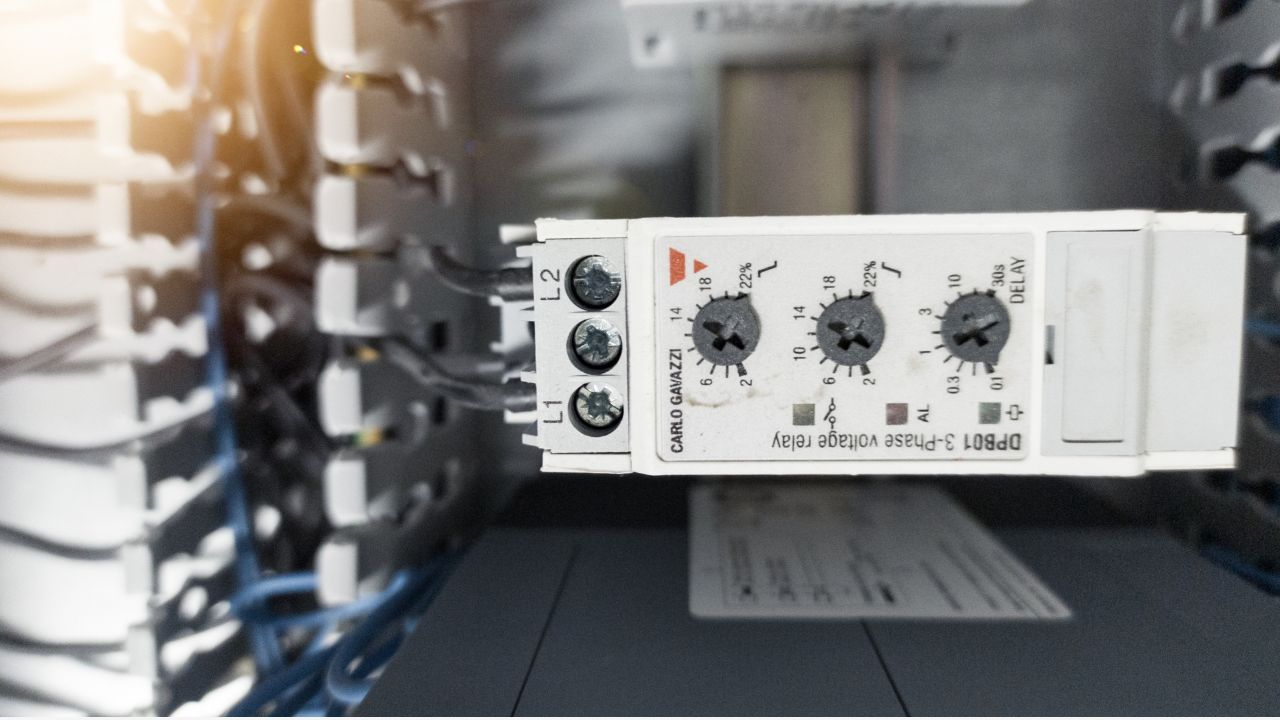
Aplicaciones
Single-Phase Panelboards: Single-phase panelboards are mainly used to provide daily power for low-load and low-voltage end users, such as residences and small businesses. These applications usually have a single type of load and low power requirements. Besides, the demand for power supply continuity in these scenarios is not high. You can operate them more simply.
Three-Phase Panelboards: The three-phase panelboards are mainly designed to provide efficient and stable power and lighting for heavy-duty, commercial, and industrial facilities. It can be applied in places such as factories, data centers, and subways where the load types are complex and the power demand is high. These places have high requirements for power quality and continuity. You need a professional electrical engineer to maintain and manage it.
How to Choose Between Single-Phase and Three-Phase Panelboards?
Load Requirements
Firstly, you need to list all the electrical equipment. What’s more, you also need to add the rated power (kW or kVA) of all the devices. Generally speaking, if your total connected load is below 10-15kW, the single-phase panelboard can meet your usage requirements. If your load exceeds 15-20kW, a three-phase panel is your preferred choice.
Types of Equipment Used
Apart from the connected load calculation, you also need to think about your device type and total power. Single-phase panelboards are more suitable for residences, light commercial use, and small air conditioning equipment. Three-phase panels are better suited for large HVAC systems, industrial machinery, data centers, etc. If you use heavy-duty motors, three-phase panels perform better and have higher efficiency.
Budget Considerations
Of course, cost is also a key factor influencing your choice. The single-phase panelboards have simpler and smaller cables. And they also have fewer protective devices. As a result, single-phase panels also have a lower initial cost and are easier to install.
The three-phase panel has more complex wiring and larger switchgear. Consequently, it also has a higher initial cost. However, for high loads, the three-phase panelboards can reduce the conductor size, improve efficiency, and lower long-term energy losses. In the long run, the three-phase panel is a more economical choice.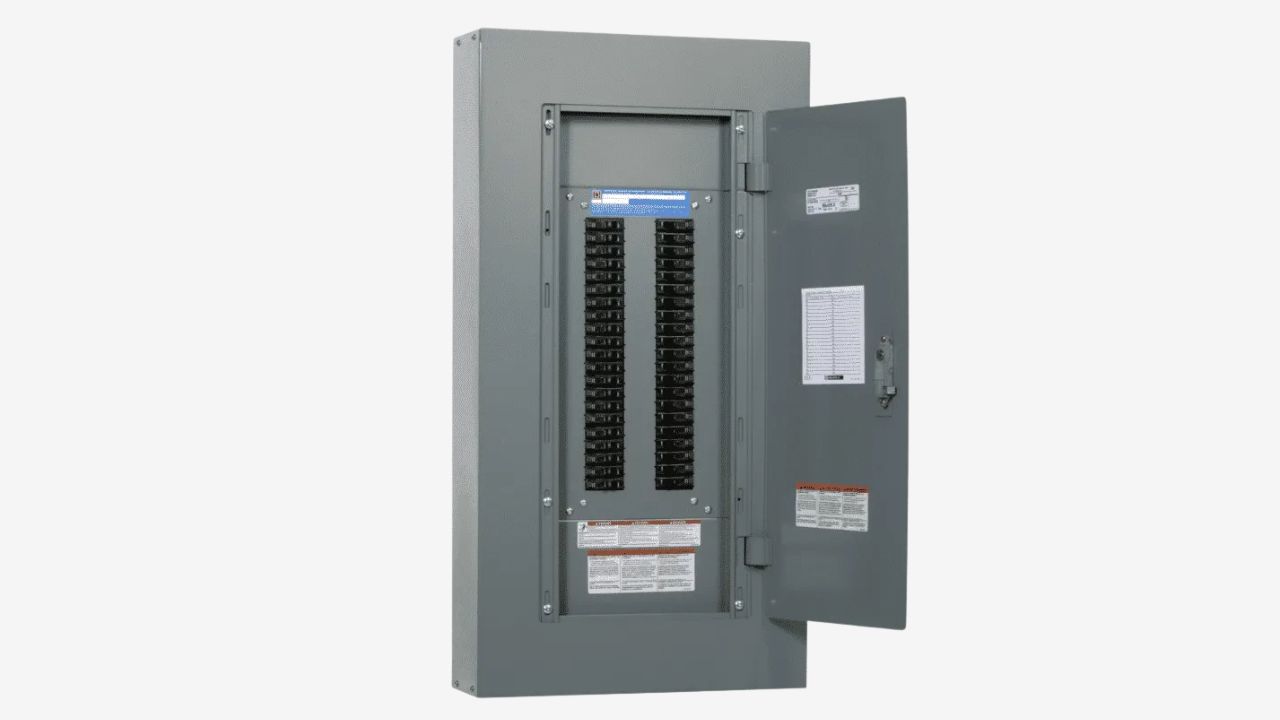
Future Expansion Plans
When making the choice, you also need to consider future expansion requirements. For instance, will your equipment increase in the coming years? Will your production capacity expand? If there is a high possibility that you will need to expand, you can initially choose a three-phase distribution board. This can effectively avoid subsequent expensive system upgrades and reduce downtime during future renovations.
Utility Supply Availability
Apart from the above-mentioned factors, checking the power supply condition is equally important. Most residential areas usually provide a single-phase supply. Commercial and industrial areas provide a three-phase power supply. If the utility provider is unable to provide a three-phase supply, you may need additional transformer capacity during installation. This will also increase connection costs and project timeline.
Preguntas frecuentes
What Voltage Levels are Used in Single-phase and Three-phase Panelboards?
The voltage levels of single-phase and three-phase distribution panels have different standards in various countries and public utilities. However, there are common global standards for residential, commercial, and industrial systems. For instance, the voltage of single-phase distribution panels in North America is 120V/240V, while in Europe it is 230V. Three-phase panel voltage levels are 208V/480V in North America and 400V in Europe.
Are Three-phase Motors Better than Single-phase Motors?
Which one is better mainly depends on your specific application scenario. In high-power and industrial applications, three-phase motors have more advantages over single-phase motors. At the same power level, three-phase motors have a smaller current, lower copper loss, and higher energy efficiency. Besides, they can achieve continuous torque with no obvious pulsation. In comparison, a single-phase motor power supply is easier, has lower equipment costs, and is simpler to install.
Can I Upgrade from Single-phase to Three-phase?
Yes. Your upgrade mainly depends on the availability of your power supply, your infrastructure capacity, the cost, and your load requirements. When there is a circuit breaker trip, conductor overheating in your single-phase system, or if you need to add large power equipment, you can upgrade to a three-phase system. Upgrading involves the entire distribution system rather than just replacing the distribution panels. You can consult a professional engineer to guide your better upgrade.
Final Thought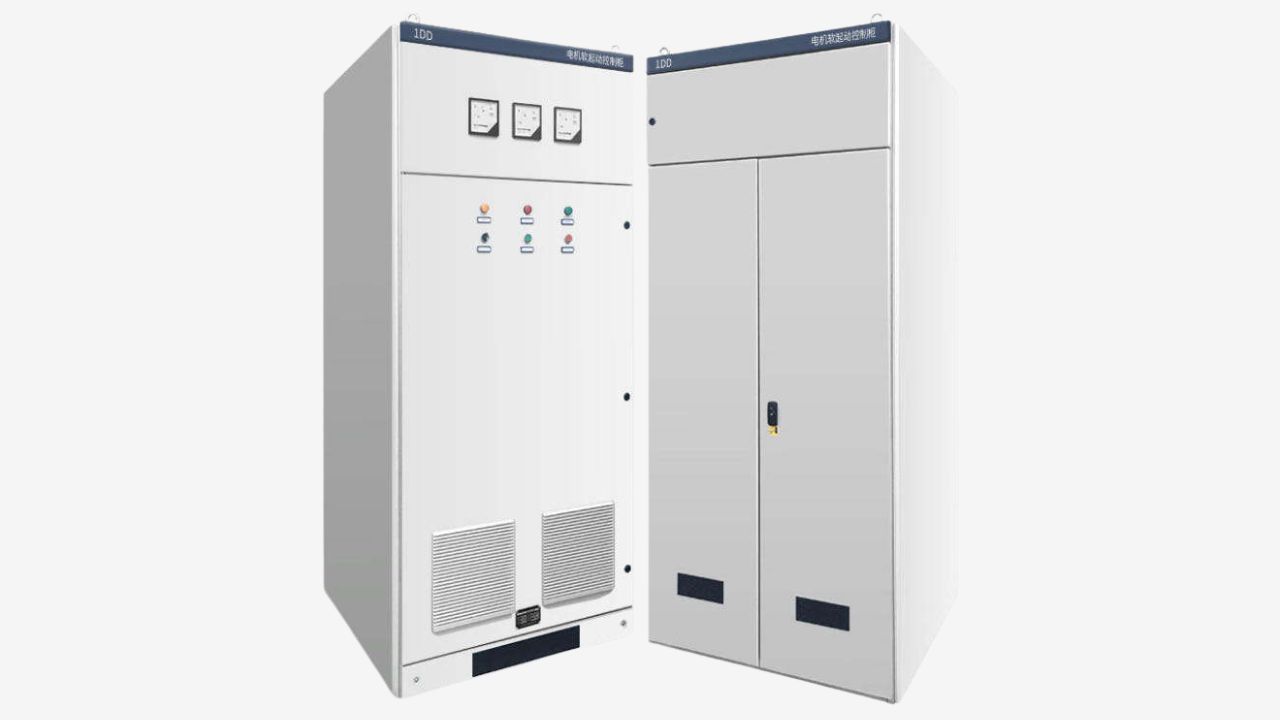
KDM is a professional manufacturer of electrical enclosures. We provide panelboards that can meet your various application needs. No matter what panelboard size you need, we use high-quality materials and advanced production processes. We also provide a one-stop custom service, from concept design to final production. If you have any custom needs, please feel free to Contáctenos.
 Spanish
  English
  Arabic
  French
  Russian
  Japanese
  Korean
  Portuguese
  Indonesian
  Chinese