


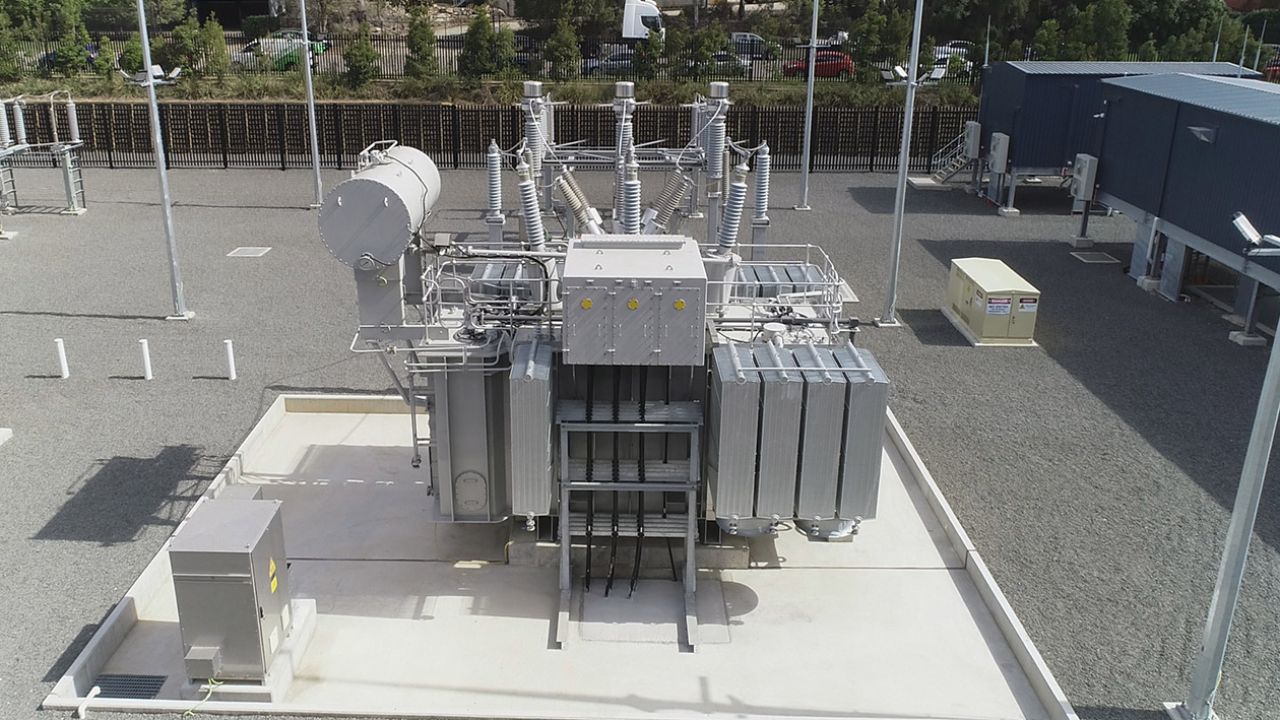
What is the role of electrical substations in modern power systems? What types exist? This article is intended to help electrical engineers and industrial facility managers understand how electrical substations work, their key components, and the different types, helping you make the right choice for your project.
What Is an Electrical Substation?
Electrical substation is a facility in the power system specifically designed to convert voltage levels, control circuits, and regulate the flow of electricity between power plants and end users. It primarily converts the extremely high voltage used for efficient long-distance power transmission into the lower and safer voltage required for your equipment to operate.
Subestações also distribute power to different distribution lines, detect and isolate faults through circuit breakers, and use automation to manage power flow and system performance. It plays an important role in keeping the stability of the grid voltage and frequency.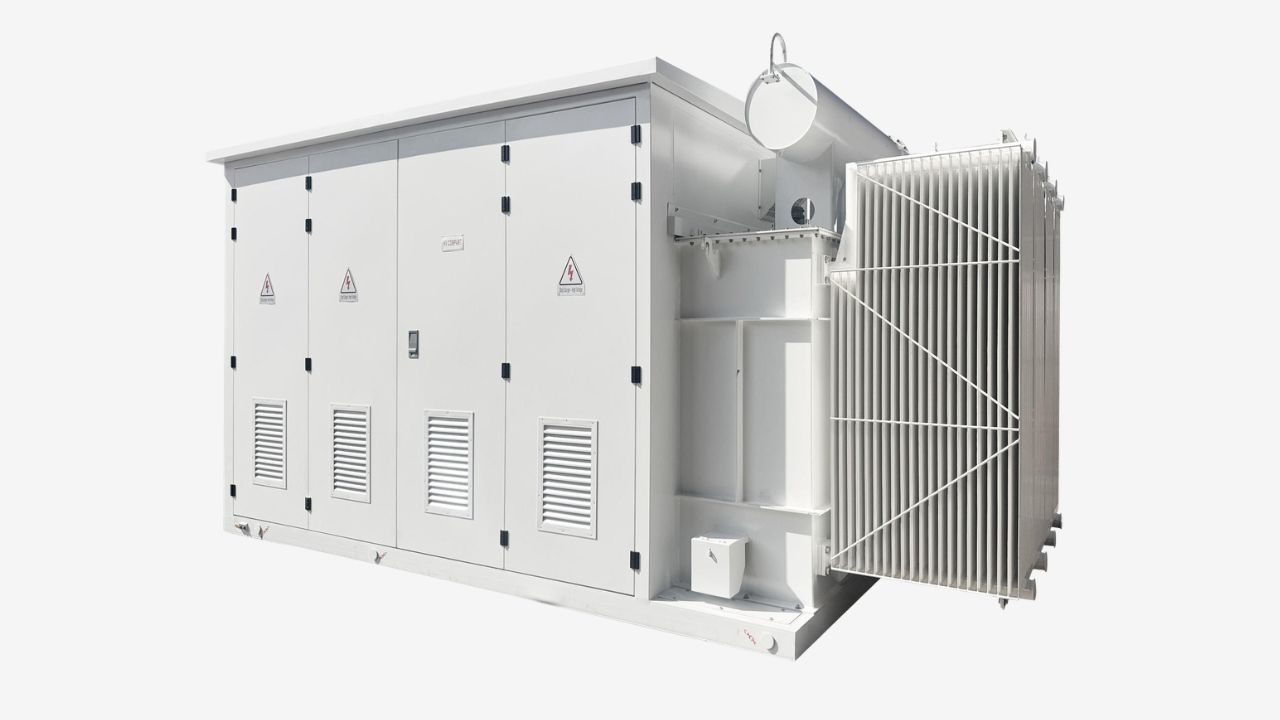
Main Components of an Electrical Substation
Power Transformers: Transformadores are the core equipment of an electrical substation and are classified as step-up or step-down. Depending on the function of the substation, the transformer either step-up or step-down the voltage to match the requirements of your connected load.
Aparelhagem de manobra: Responsible for switching, protecting, and isolating circuit switch equipment. It mainly consists of circuit breakers, disconnect switches (isolators), and load switches.
Barras de ônibus: The busbars are conductive systems that collect and distribute electricity throughout the substation. It needs to withstand high currents while keeping low voltage drop and heat generation.
Protection Relays and Control Systems: The protection system can detect abnormal conditions and trigger corrective actions, including overcurrent, arc flash, and rapid fault-isolation protection.
Transformadores de Instrumentos: Transformers are divided into current transformers (CTs) and voltage transformers(VTs/PTs). The former is responsible for step-down current for relays and measurement, while the latter steps down the voltage to a safe level. Both are used to measure, protect, and control current or voltage signals.
Control and Monitoring System (SCADA): Advanced electrical substations can use SCADA systems for real-time monitoring and remote control, collecting data on voltage, current, load, and equipment status. It supports automation and predictive maintenance.
Auxiliary Systems: The auxiliary systems include the station service power, fire protection system, cooling system, and communication system. These devices support the operation of the substation.
Types of Electrical Substations
By Function:
Step-Up Substations
The step-up substation raises the voltage from the generator level to the transmission level and is usually located near the power plant. It can reduce losses during long-distance transmission and is commonly used in thermal power and hydropower generation.
Step-Down Substations
This type of substation reduces the transmission voltage to the usable distribution voltage level and supplies power to end users. It is usually located near cities and industrial areas and is widely used in urban and industrial distribution networks.
Switching Substations
The switching substation does not alter the voltage level. It is used for switching, routing, and controlling power flow. It can effectively isolate faults and manage load distribution, providing flexibility and redundancy for your power grid.
Converter Substations
The converter substation is used in high-voltage direct current (HVDC) transmission systems to convert between alternating current (AC) and direct current (DC). It is vital for long-distance power transmission and for interconnecting different power grids.
Collector Substations
The collector substation can step up the generated voltage to transmission level and collect power from multiple power generation units. You can apply it in renewable energy projects.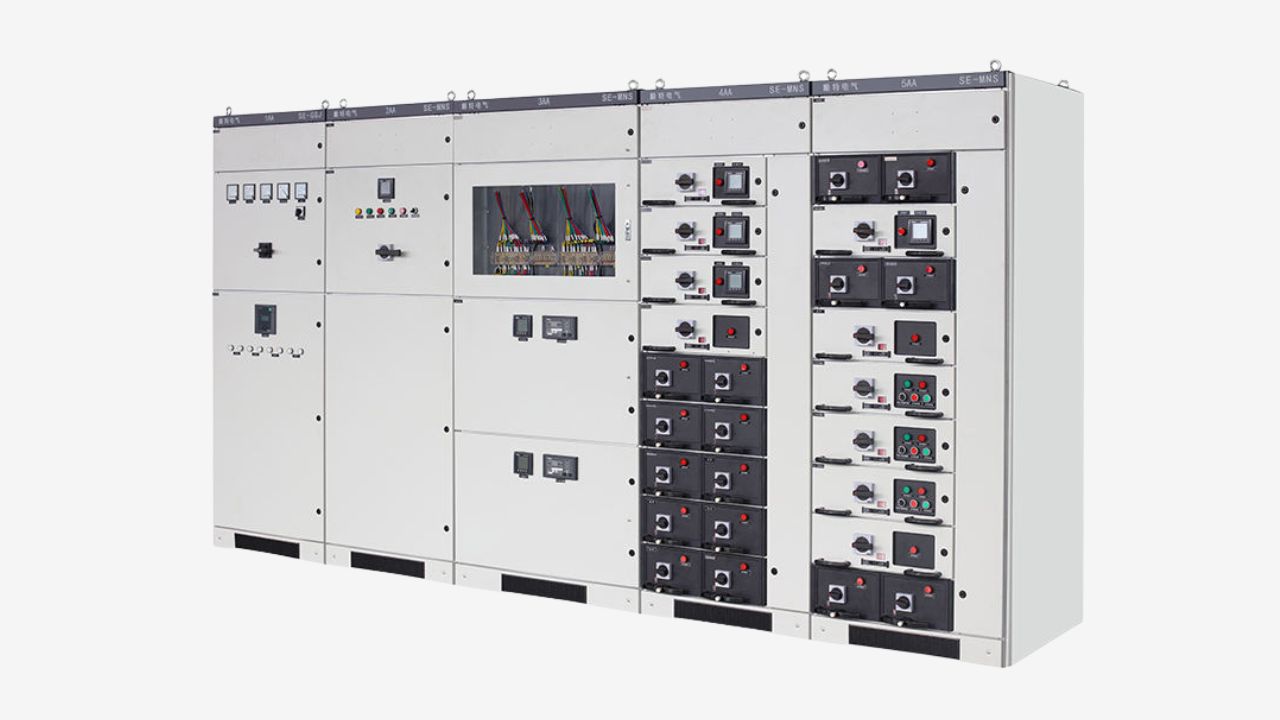
By Voltage Level:
Distribution Substations
The distribution substation voltage is below 69kV, which is suitable for most of your industrial facilities, but transmission losses are higher compared to higher voltage levels.
Sub-Transmission Substations
Sub-transmission substations are rated at 69-230kV and are suitable for your medium- to large-sized facilities. It has higher reliability, but requires more space due to larger equipment.
Transmission Substations
The voltage of the transmission substation is above 230kV and is usually used in large industrial complexes. It can be connected directly to utilities, but you would incur high costs and complex maintenance.
By Installation Type:
Outdoor Substations
An outdoor substation requires you to install it in an open environment. It has lower cost but requires more space. The outdoor substation uses air as the main insulating medium and is commonly used in high-voltage power transmission systems.
Indoor Substations
The indoor substation must be installed in an enclosed structure to avoid environmental effects. It is suitable for urban and industrial environments.
Underground Substations
An underground substation is named for its location. The purpose is to save the surface space in densely urban areas. But this requires you to pay higher construction and maintenance costs.
How Does an Electrical Substation Work?
Electricity enters the substation through transmission lines or power sources at a specific voltage level. Depending on the type of the substation, transformers can either step-up the voltage for long-distance transmission or step-down the voltage to supply directly to end users.
Throughout the system, switchgear and protection systems continuously monitor electrical parameters and can automatically isolate faults to prevent equipment damage and grid disturbances.
When the voltage is adjusted, the power is transmitted through the bus. The busbar acts as a central distribution point, delivering the electricity to the output feeders. After that, the power is transmitted to substations downstream or directly to industrial, commercial or residential areas.
Simply put, the substation’s main function is to receive electrical energy, convert it to the appropriate voltage level, and safely transmit it to the next link in the power system. This guarantees that each link of electricity transmission is reliable, efficient and protective.
Advantages of Electrical Substations
Improved Reliability and Automation
The substation acts as the central hub of the power system, distributing power to multiple feeders and locations. The substation guarantees the stability of your power supply network and supports load balancing between different regions. Substations are very important to keep the continuous and stable operation of industry and utilities.
Remote Monitoring
Electrical substations can use digital systems to provide advanced control capabilities. It can monitor system performance in real time, perform remote operations via SCADA, and utilize and analyze data for predictive maintenance. Substations can help you improve operational efficiency and reduce the need for manual intervention.
Enhanced System Protection
The electrical substation is equipped with an advanced protection system that can detect faults such as short circuits and overloads, automatically isolate the affected parts and prevent cascading failures in the power grid. It also substantially reduces the damage to your equipment and downtime.
Improved Grid Stability and Control
The electrical substation also helps you to keep stable voltage and frequency levels. The substation can regulate the power flow within the network, support system synchronization and prevent voltage fluctuations.
Integration of Renewable Energy
The substation enables the integration of renewable energy into the power grid, and it can also step up the voltage from solar and wind farms for grid integration, manage variable power generation, and verify a smooth grid connection for you.
Optimized Power Quality
The substation provides you with a high-quality power supply and reduces voltage fluctuations. It also utilizes capacitor banks to elevate the power factor, which is vital for your industrial processes and precision equipment.
Applications of Electrical Substation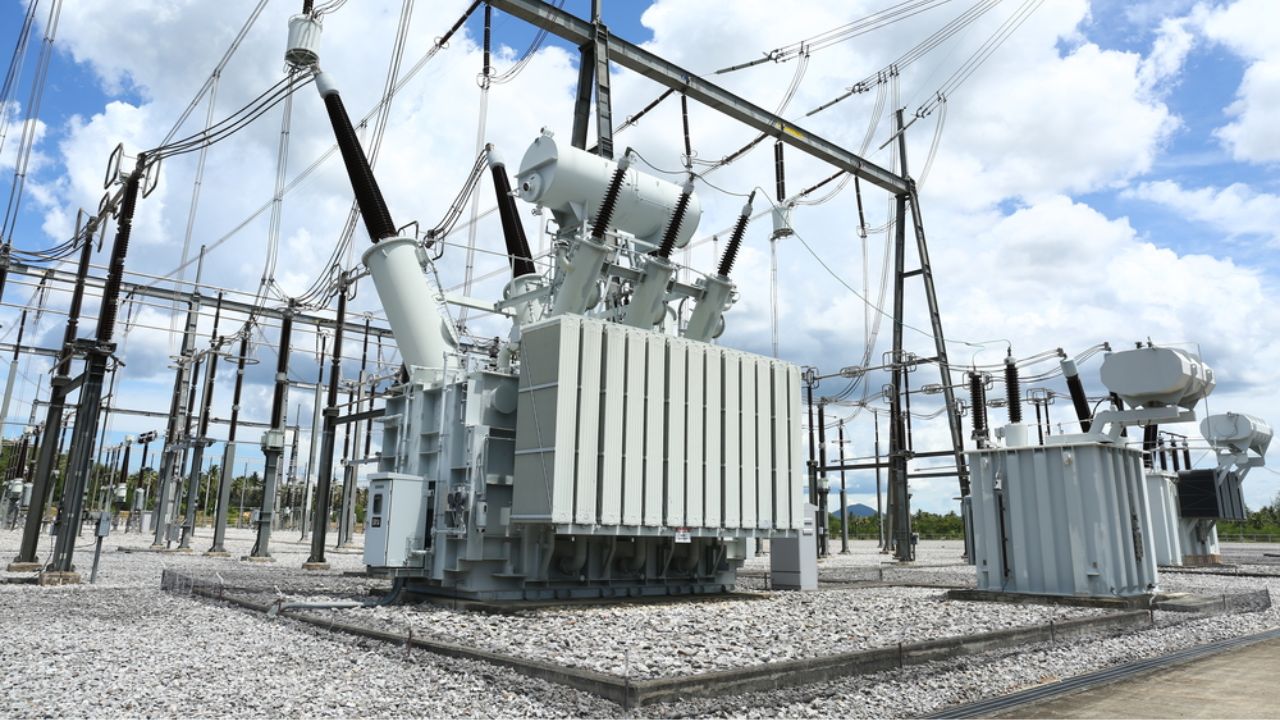
Utility Power Grids
Substations are the foundation of national and regional power grids. It can be applied in power plants to increase voltage for long-distance power transmission for you. It can be applied in cities and load centers to reduce distribution voltage and enable interconnection between different power grid areas.
Industrial Plants
If you operate large-scale industries, such as manufacturing plants, oil and gas facilities, or chemical processing plants, you may need to rely heavily on dedicated substations. These substations can provide stable power for your heavy machinery operations and production lines. Electrical substations also handle high and variable load demands, providing security for your operations to prevent potential disruptions from faults.
Renewable Energy Projects
Common renewable energy projects include hydropower stations and solar farms. Renewable energy requires substations to be connected to the grid. The substations collect electricity from solar panels or wind turbines, increase the voltage, and transmit it. The substations also manage the fluctuating power output.
Commercial Infrastructure
If you operate data centers, airports, hospitals, and office complexes, the high-demand commercial environment requires substations to support it. Electrical substations can provide reliable power to large buildings and complexes, guaranteeing a stable supply for your important operations. What’s more, substations can also prevent substantial financial and operational impacts from power outages.
Perguntas frequentes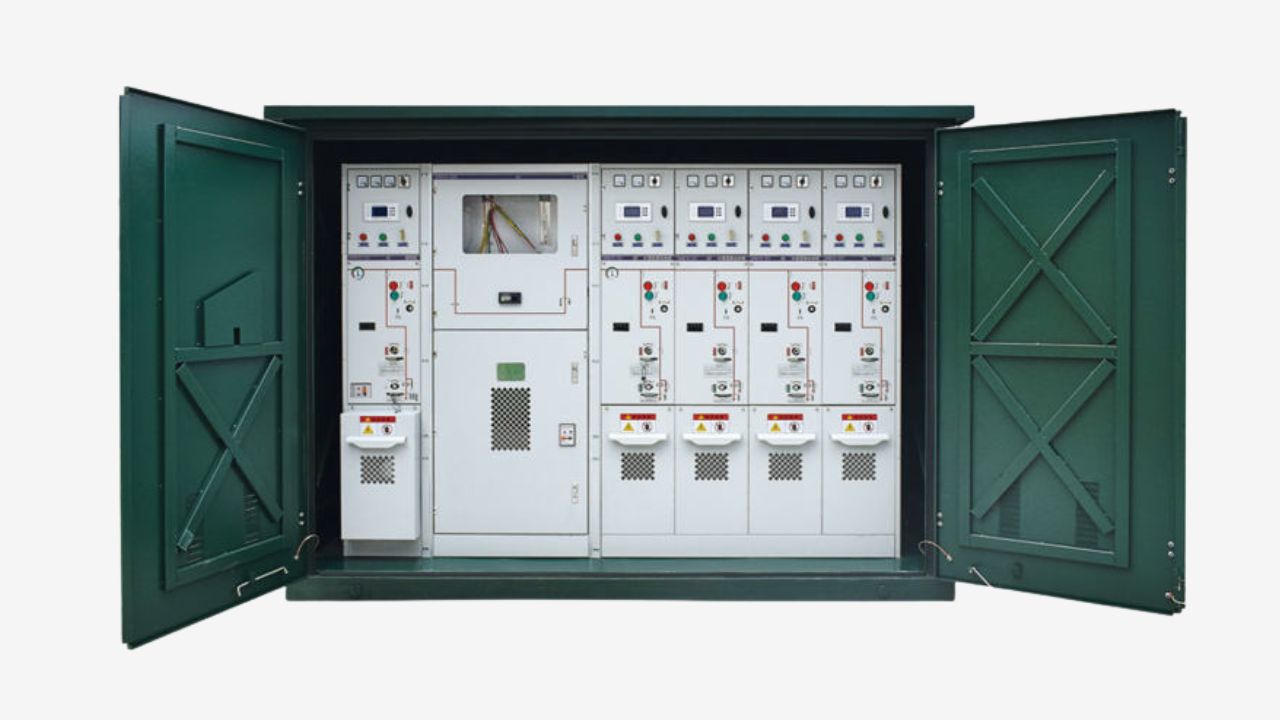
What is the Difference Between Electrical Substation and Transformer?
The substation is used as a complete system to manage the power flow in the grid. The transformer is a single device within the substation and is used to change the voltage level.
In other words, the transformer is mainly responsible for voltage rise and reduction. At the same time, the substation integrates transformers, switchgear, protection devices, and control systems to handle voltage transformation, power distribution, fault protection, and overall system control.
What is AIS vs GIS? What’s the Difference Between Them?
AIS(Air-Insulated Substation) uses air as its main insulating medium. Therefore, AIS installation requires a larger land area and is often built outdoors. Its initial cost is relatively low and it is easy to service.
In contrast, GIS uses SF₆ (sulfur hexafluoride) as the insulating medium and has excellent insulation performance. The equipment features a more compact, enclosed design. However, its initial cost is higher and the maintenance is more complex.
Therefore, the main differences between AIS and GIS are cost, space and performance.
What is the Difference Between Greenfield and Brownfield Substation Projects?
The greenfield substation project involves constructing a new substation on undeveloped land. Engineers can design the layout, select equipment and configure the system more flexibly. However, it requires a higher initial cost and longer development timelines.
The brownfield substation project involves upgrading, expanding or refurbishing existing substations. The project needs to operate within the existing infrastructure, space constraints and operational limitations. But it is usually more cost-effective and can be constructed more quickly.
What Factors Should Be Considered When Designing a Substation?
When designing and constructing a substation, you need to consider the voltage level, capacity and future expansion requirements to make sure that the system can develop as the demand increases.
Besides, site conditions and available space are key factors that will affect your layout and determine the substation type. You also need to select appropriate protection systems and grounding to meet standards and verify the system reliability and safety.
Final Thought
As a professional electrical enclosures manufacturer, KDM can provide you with transformers, circuit breakers, painéis elétricos and enclosures installed in substations. Our products use high-quality materials and advanced production processes. We have a professional team that provides one-stop, customized services. If you need, please feel free to Contate-nos.
 Portuguese
  English
  Arabic
  French
  Spanish
  Russian
  Japanese
  Korean
  Indonesian
  Chinese