


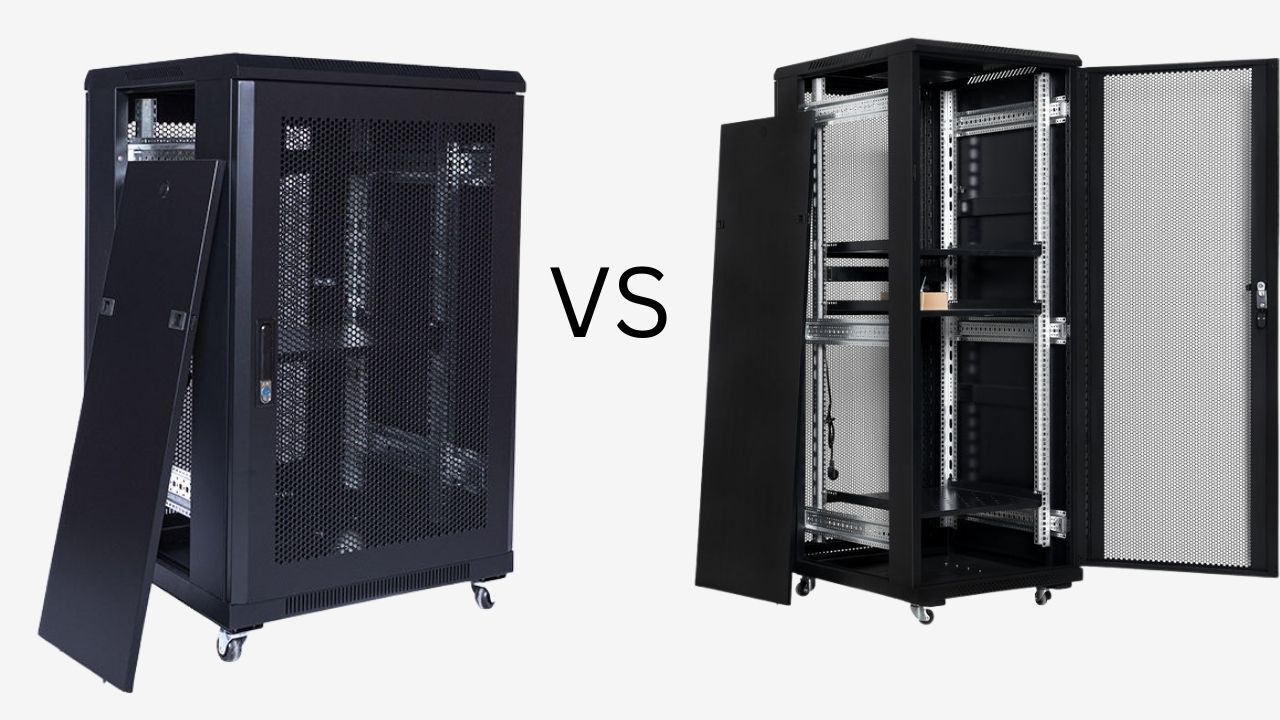
Servers and network cabinets have similar appearances, but they have different structures, purposes and cooling methods. Distinguishing their differences is crucial for you to select the right cabinet for IT facilities or system integration. This article explores the detailed differences between them and selection guidance. Hope this article can help you choose the appropriate cabinet for your IT infrastructure or system integration.
What Is a Server Cabinet?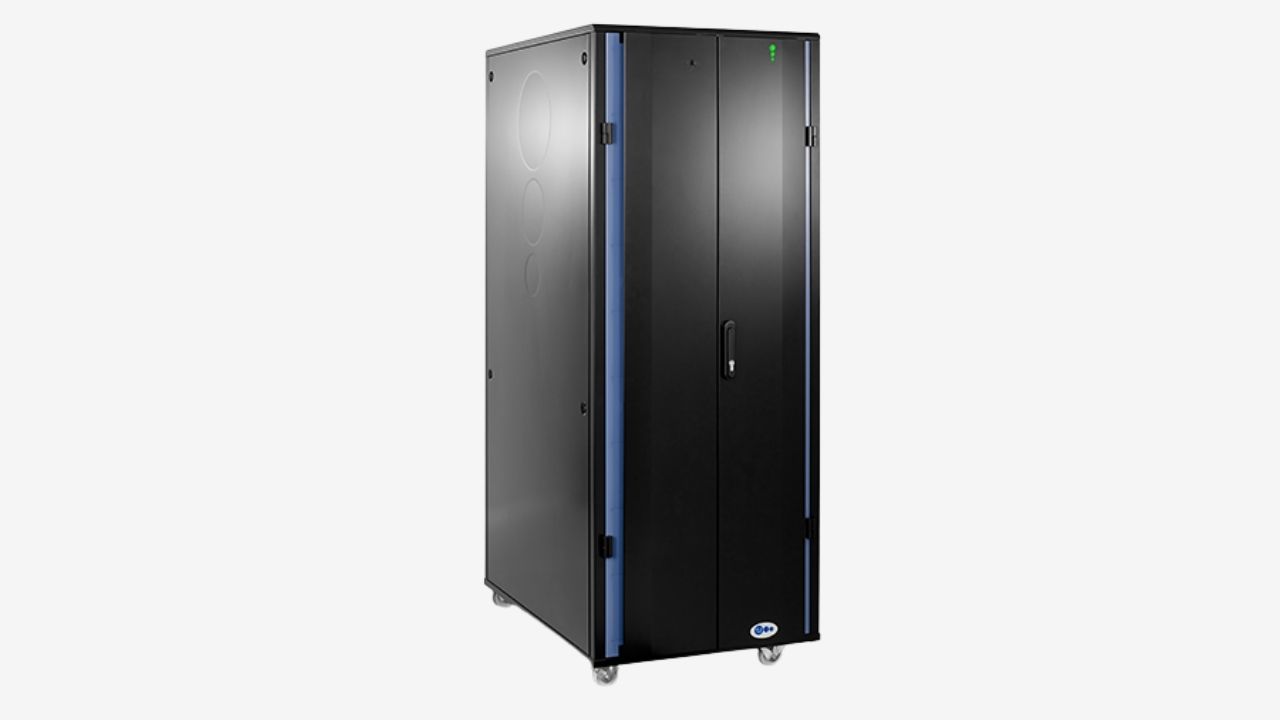
O gabinete de servidor is a specially designed and reinforced metal rack-mounted enclosure.IT is mainly used for centralized installation and protection of high-density, high-weight IT equipment. It can provide a safe, stable, controllable and scalable operating environment for critical equipment within a limited space.
Características: The frame has a high load-bearing capacity and can safely support multiple devices. The U-position and square hole columns can flexibly and firmly fix the equipment, facilitating its installation and adjustment. The depth is sufficient to accommodate full-sized servers and reserve ample space for airflow circulation. The cabinet can also achieve integrated power supply and professional cable management.
Server cabinets are mainly used in enterprise data centers, high-performance computing clusters, and centrally managed IT equipment rooms, etc.
What Is a Network Cabinet?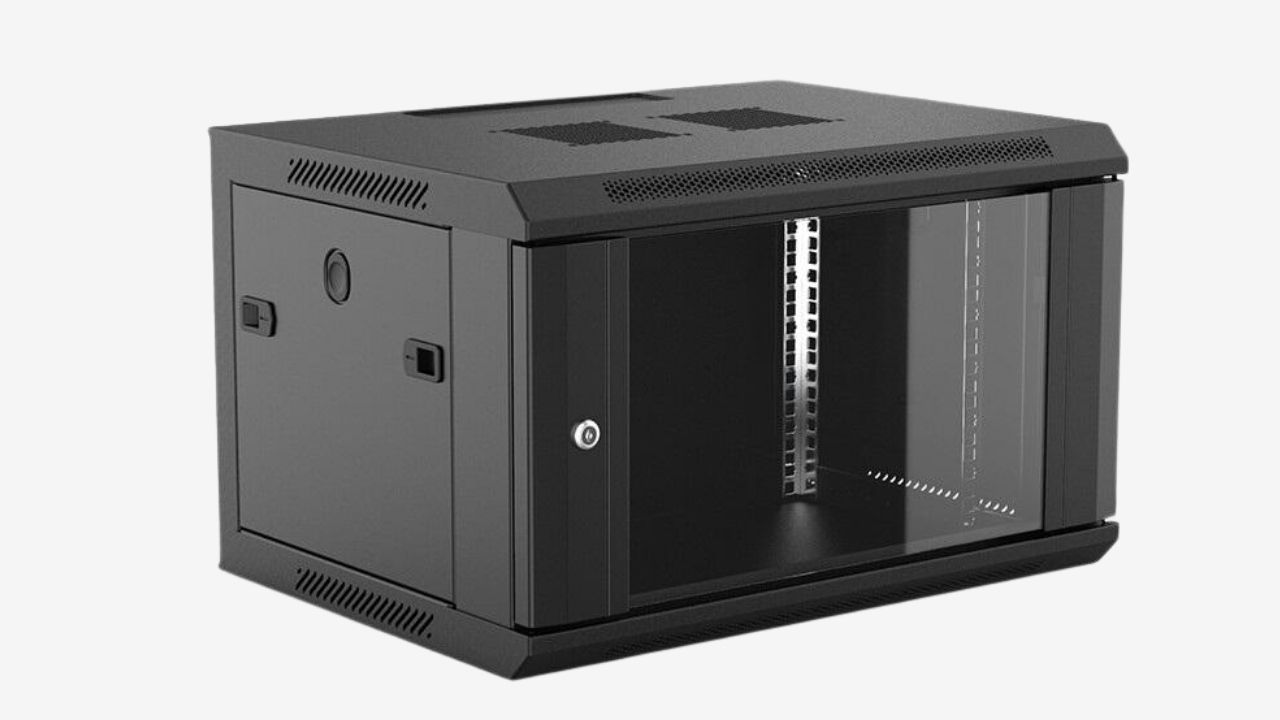
UM network cabinet is a lightweight metal cabinet designed for the installation, organization and management of network communication equipment and cable systems. It is mainly used to standardize the management of cables and compactly place equipment. It can also achieve the safety and aesthetics of the connected devices.
Características: Relatively shallow depth, light load-bearing capacity, mainly connected to mainstream network devices. Heat dissipation mainly relies on natural convection or air conditioning. Cable management and access are very convenient. The standard height is highly compatible with all standard network devices.
It is mainly used in telecom rooms, network closets, offices and other places.
Differences Between Server Cabinets and Network Cabinets
Equipment Type and Application (Main Difference)
Gabinetes de Servidor
Server cabinets are mainly used for installing and operating equipment with extremely high requirements for computing, storage and processing capabilities.
The interior mainly houses rack-mounted servers, storage area networks, network-attached storage devices, and large uninterruptible power supply (UPS) that provides temporary backup power during outages.
It is mainly applied in scenarios that require centralized and high-density deployment of equipment and the processing of critical business data.
Network Cabinets
Network cabinets are specifically designed to accommodate and manage the equipment that constitutes the framework of a network, including such routers, network firewalls and fiber optic converters, etc.
It is mainly applied in telecommunications rooms, edge networks and intermediate distribution frames, etc. It mainly deals with the orderly connection, jumper connection and management of a vast number of cables.
The server cabinet is a computing unit, mainly processing the data itself. The network cabinet is responsible for communication scheduling to guarantee smooth data flow.
Load Capacity and Structural Design
Gabinetes de Servidor
Server cabinets are usually designed with heavy industrial grade structure. Its frame is constructed from cold-rolled steel sheets through welding or high-strength bolts. Its vertical columns can withstand tremendous vertical pressure.
The static load-bearing capacity of server cabinets is usually between 800 kilograms and 1,500 kilograms, or even higher. It can safely support multiple servers and heavy storage arrays, and guarantee no deformation or toppling over during long-term operation.
Network Cabinets
Network cabinets mainly adopt lightweight to medium-duty structural designs. The steel of the rack is relatively thin, and its structure is mainly designed to meet the lightweight requirements of your network equipment. Its design mainly focuses on flexibility and convenience rather than extreme load-bearing capacity.
The static load-bearing capacity of network cabinets is typically between 200 kilograms and 500 kilograms. However, you should note that it cannot fully bear the weight of the server cluster.
Size and Depth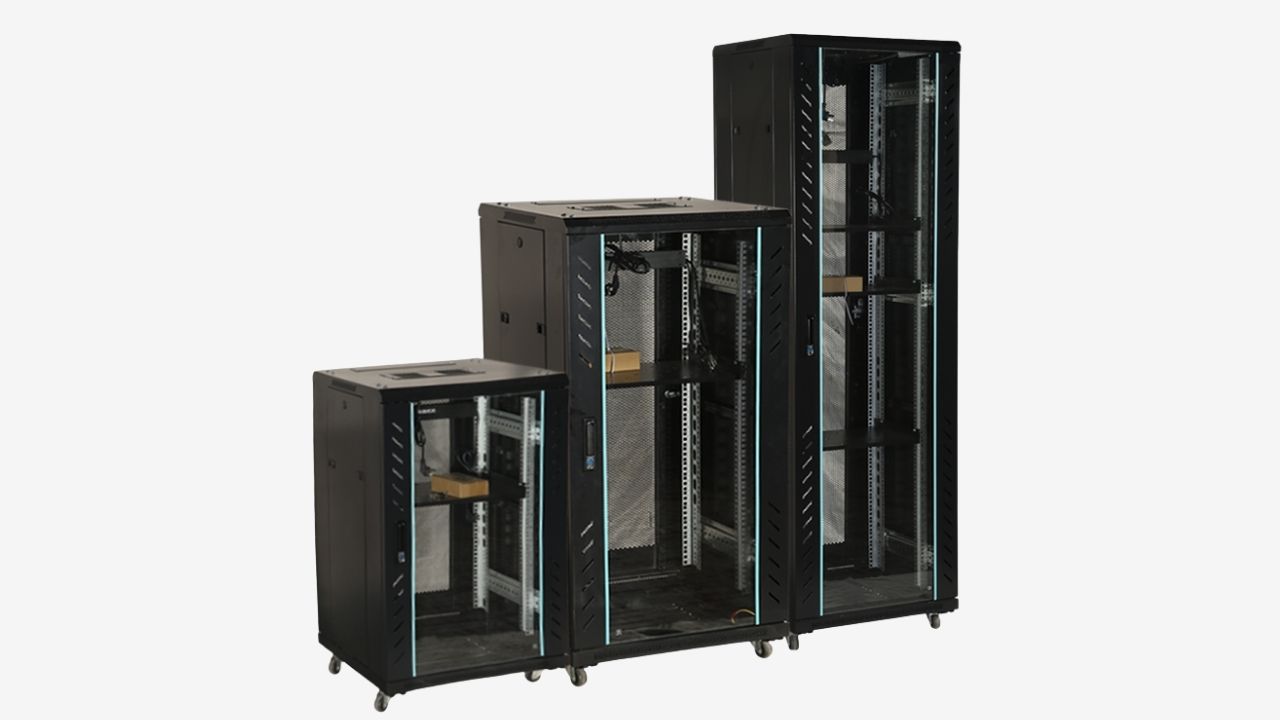
Gabinetes de Servidor
The standard depth of the server cabinet is deeper. The common specifications range from 1000 mm to 1200 mm. It supports accommodating full-size rack servers and storage devices. Besides, the server cabinet should also reserve sufficient cable management space and necessary cold air channels for the back of the device to guarantee smooth air flow.
Network Cabinets
The depth of the network cabinet is shallower. The mainstream depth ranges from 600 mm to 800 mm (24 inches to 31 inches). It can accommodate most of your network devices such as network switches and routers. The shallow depth allows you to easily install telecommunications rooms and offices with limited space.
The depths of the cabinets vary, but both servers and network cabinets use standard 19-inch width racks, which ensures their wide compatibility of equipment. The main difference between them lies in that server cabinets give priority to vertical installation and the air flow of dense equipment. While network cabinets need to reserve space for cables and ports management.
Refrigeração e Ventilação
Gabinetes de Servidor
Efficient heat dissipation is the core objective of server cabinet design. The front and rear doors of the cabinet usually adopt perforated doors to maximize your ventilation area and guarantee that hot and cold air can flow in and out smoothly.
You can install the internal fans in the cabinet to support active cooling when the equipment density and heat generation are extremely high. Besides, the server cabinet is convenient for you to install airflow blanking panels, which can prevent the mixing of hot and cold air.
Network Cabinets
The ventilation design of the network cabinet is more flexible. Because the heat generated by the network equipment is small, it mainly relies on the built-in fan and natural convection to dissipate heat. The cabinet is less likely to be equipped with cooling fans. Ventilation holes may be provided on the top and side panels. The overall ventilation capacity requirement is relatively low.
Gerenciamento de cabos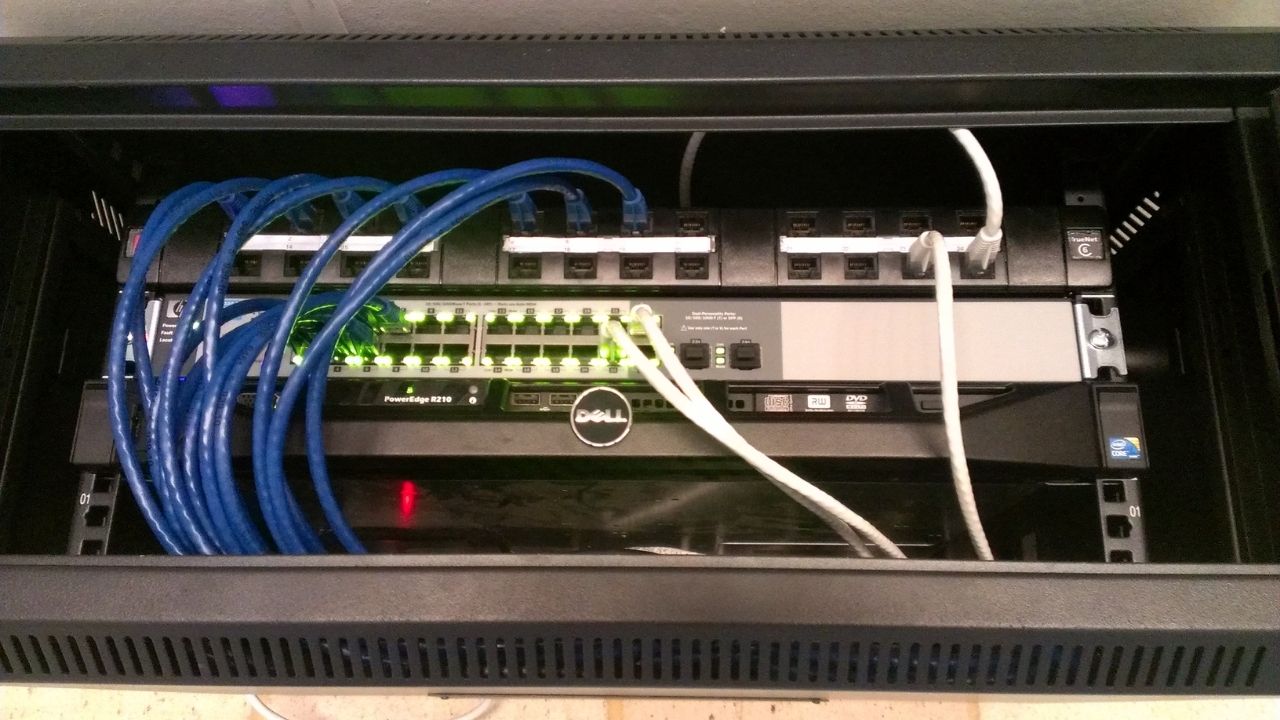
Both the servers and the network cabinets are subject to cable management, but the objects they manage, the scale and complexity of the management differ.
Gabinetes de Servidor
The server cabinet can help you manage a large number of heavy power cables and high-density data cables simultaneously and orderly. Its cable management system is extremely crucial and complex, including wide vertical cable manager and high-density horizontal cable manager racks. It mainly guarantees that the airflow is not blocked while achieving clear paths and maintainability for all cables.
Network Cabinets
The core of network cabinet cable management lies in the vast amount of data cables. The core components for cable management are patch panels and fiber spools, which are used to organize your short patch leads from the port of the patch panel to the port of the switch. The key point of management is to guarantee that your short patch leads are neatly arranged, the labels are clear, and it is convenient for your frequent adjustments and changes in the future.
Power Distribution
The fundamental difference in power distribution lies in the significant disparity in power demands between servers and network cabinets.
Gabinetes de Servidor
The server cabinet consumes an enormous amount of power. It requires the installation of a vertically-mounted intelligent power distribution unit (intelligent PDU).
This DPU not only provides a large number of IEC power sockets, but also allows you remote monitoring, load calculation, environmental detection, and even independent switch control functions for each port. It is crucial for you to calculate the total power consumption, prevent circuit overload, conduct energy efficiency management, and perform remote fault diagnosis.
Network Cabinets
The power requirements for network cabinets are simpler. A basic PDU is usually sufficient to meet the needs. It has a relatively small current capacity and only provides you a power interface. The power consumption of network devices is low, and detailed power monitoring and management are rarely necessary.
Security and Access Control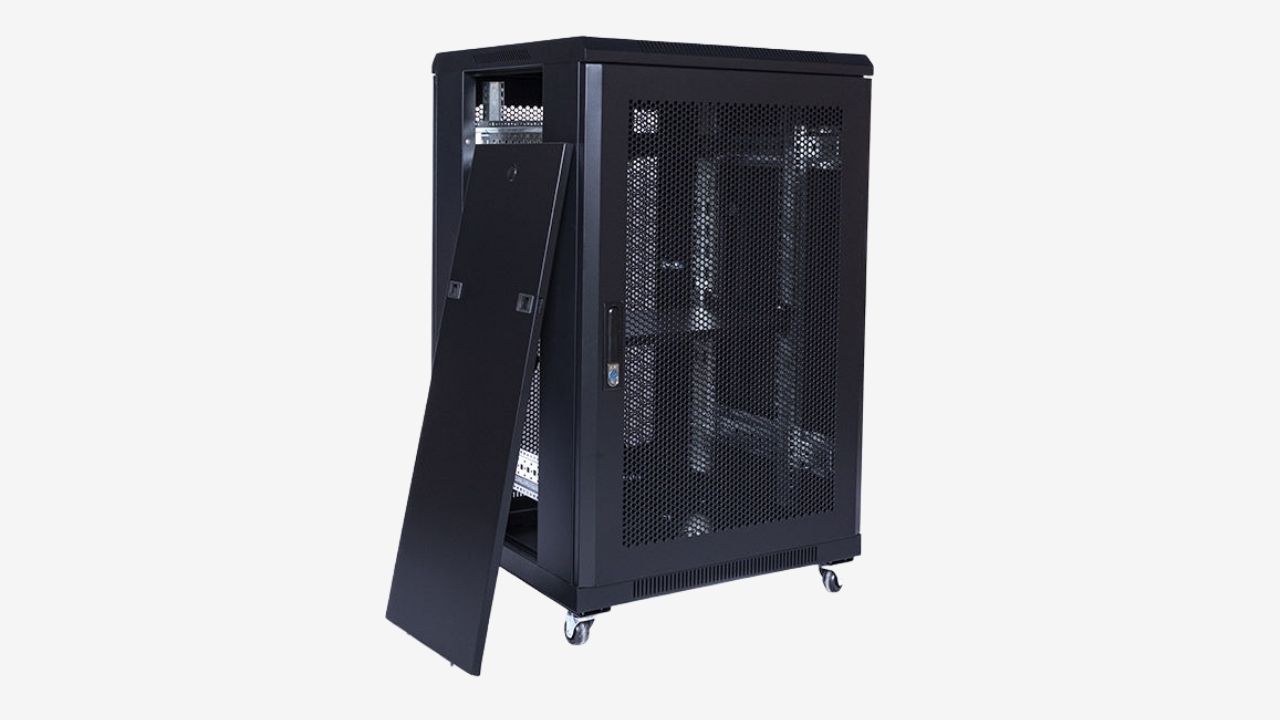
Gabinetes de Servidor
Server cabinets are usually equipped with more robust and reliable locking mechanisms. The front and rear doors need three-point or more complex locks, and can support the integration of centralized electronic access control systems. You can also lock the side panel. The extremely high security design stems from the extremely high value of your internal equipment and the sensitive nature of your stored data, which requires strict physical access control.
Network Cabinets
The security design of network cabinets is relatively basic. The cabinets are usually equipped with basic locks, the main purpose of which is to prevent unauthorized personnel from casually shutting down the equipment. In network cabinets located in office areas, the security of your cabinets focuses more on convenience rather than high security.
Installation Environment Difference
Gabinetes de Servidor
The server cabinets are mainly installed in professional data centers or computer rooms. These environments usually have sophisticated environmental air conditioning systems, strict dust control measures, and specialized fire protection systems. The cabinet is also a standardized unit in this type of controlled environment.
Network Cabinets
The network cabinet can adapt to a wider range of environments. You can install it in telecom rooms and offices, etc. The environmental temperature, humidity and cleanliness control in these places are not as good as those in professional computer rooms.
Cost and Maintenance Differences
All the differences between the two will eventually be reflected in the procurement cost and daily maintenance.
Gabinetes de Servidor
The initial purchase cost and maintenance complexity of server cabinets are higher. They are expensive and require the installation of intelligent DPU, advanced wiring accessories, etc. In terms of maintenance, you also need to pay attention to the load-bearing condition, PDU load, the operation status of active cooling fans, and the tidiness of the complex cable system.
Network Cabinets
Compared to server cabinets, network cabinets have a lower total cost and are easier to maintain. Their cabinets and necessary accessories are cheaper. The daily maintenance you need to implement usually focuses on cord management, observing the status of device indicator lights, and regular cleaning and dust removal. It does not require monitoring complex power data and active cooling systems.
Comparison Summary Table
Based on the comparative analysis of the above server cabinets and network cabinets, the key points are summarized as follows for your quick reference:
| Recurso | Gabinete do servidor | Network Cabinet |
| Primary Purpose | Houses servers, storage systems and heavy IT equipment | Houses networking equipment such as switches, routers,and patch panels |
| Typical Equipment | Rack servers,storage arrays, UPS | Switches, routers, patch panels, firewalls |
| Load Capacity | High load capacity(often 800-1500 kg or more) | Lower load capacity(generally 200-500 kg) |
| Cabinet Depth | Deeper cabinets(1000-1200 mm) to support full-depth servers | Shallow to medium depth(600-800 mm) |
| Projeto Estrutural | Heavy-duty steel frame, reinforced mounting rails | Lighter frame optimized for cable access |
| Cooling & Airflow | Advanced airflow design, perforated doors, fan trays | Passive ventilation or basic fan units |
| Power Distribution | Support intelligent PDUs, redundant power supplies | Simple power strips or basic PDUs |
| Gerenciamento de cabos | Designed for high-density power and data cabling | Optimized for patch leads and network cable routing |
| Security Level | High security with multi-point locks and optional electronic access | Basic locking for general access control |
| Installation Type | De chão | Floor-standing or wall-mounted |
| Typical Environment | Data centers, server rooms, enterprise IT facilities | Offices, telecom rooms, retail and edge locations |
| Cost Range | Higher cost due to size, strength, and cooling features | More cost-effective and compact |
How to Choose Between a Server Cabinet and a Network Cabinet?
List Your Core Equipment Inventory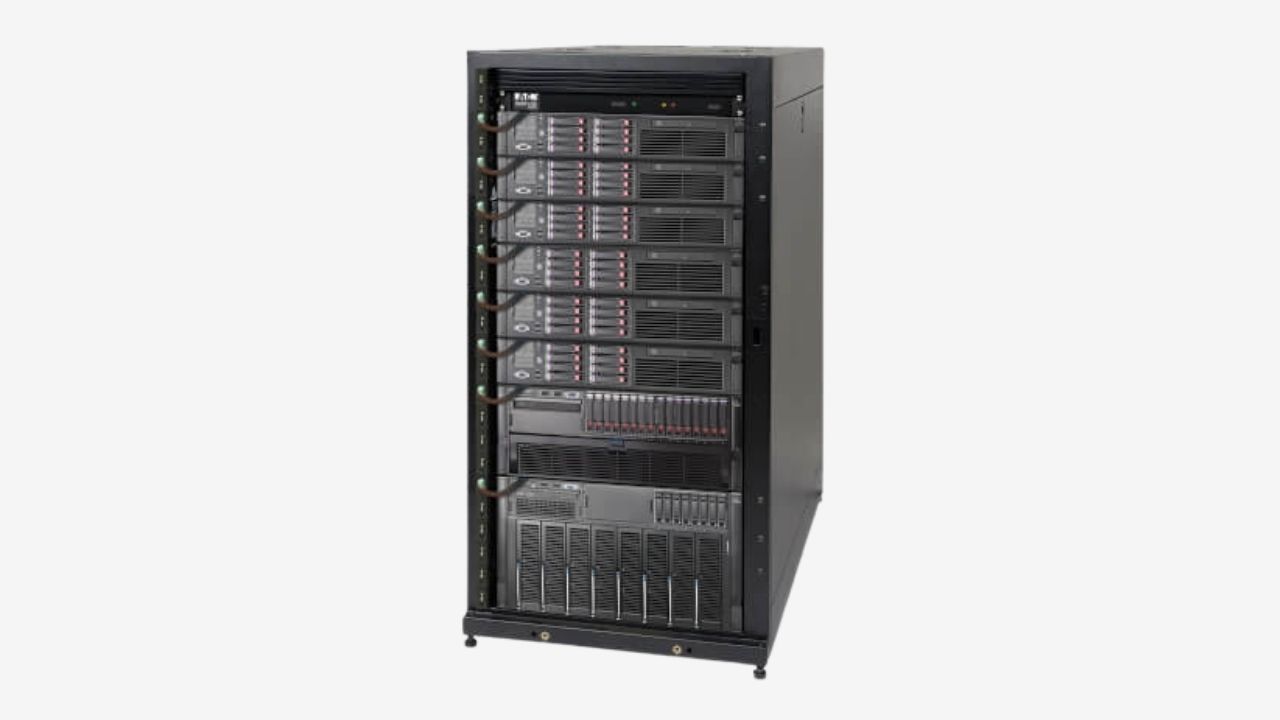
First, you need to list all the devices that you need to put in the cabinet.
Choose a server cabinet if: The main equipment you put in is rack servers, storage devices (SAN/NAS), large UPS to power the equipment
Choose a network cabinet if: The equipment you plan to install is router, firewall, distribution frame, fiber box.
Mixed Situation: If you plan to install both servers and network equipment in the cabinet, you need to base your decision on the heaviest, hottest and deepest core equipment. You can also choose a hybrid cabinet configuration.
Evaluate Physical Indicators
Peso: Add up the weights of all the devices. If it exceeds 500 kg, you must choose a server cabinet.
Profundidade: Measure the deepest part of your equipment. If the equipment exceeds 600mm, you need to choose a server cabinet with a depth of 1000mm or more, which can leave space for the cables and cooling at the back of the equipment. If the equipment is all shallow and the total weight is light, you can consider choosing a network cabinet.
Cooling: If the total power consumption of all the devices exceeds 3 kilowatts, or if the devices are dense, you need to choose a server cabinet with high ventilation rate, and blanking panels can be installed. If the power consumption is low, network cabinets usually can meet the requirements.
Consider Power and Installation Environment
Power Distribution: If you need to power multiple devices and want to monitor power consumption and remotely control sockets, you need to configure an intelligent PDU for the cabinet. This is more suitable for installation on the wide side columns of the server cabinet.
If you only need to power the switch, a basic PDU can be configured. The network cabinet can meet the requirements.
Installation Environment: The server cabinets need to be placed in the data center room. The network cabinets can be placed in non-professional environments such as the office area or the telecom room.
Consider the Future and Budget
Expansion Space: You need to reserve at least 20%-30% of space (U), power and load-bearing margin for the future. Server cabinets have more advantages in expansion.
Total Cost: You not only need to consider the price of the cabinet itself, but also need to comprehensively consider the cost of its accessories. Usually, the cost of server cabinets is higher. If you are using it to protect the core IT, this investment is necessary.
Common Selection Misconception
- A 42U rack can accommodate 42 units of 1U servers.
“U” typically refers to height, with 1U being approximately 1.75 inches. Generally, depth is a more important consideration than the U number. You must guarantee that the rack depth is greater than the depth of your deepest equipment and the space for cable management. Otherwise, it may cause problems such as preventing the rear door from closing, bending and damaging cable connectors, or blocking airflow for cooling.
- To save costs, no cable management accessories were purchased.
Cable management is a crucial part of the infrastructure. The absence of cable management accessories may lead to a significant drop in heat dissipation efficiency. When troubleshooting, it is difficult to plug and unplug the cables, which can easily result in operational errors or service disruptions. This will also increase the time cost and risks for later maintenance.
- Ignoring the differences of PDUs, purchase cheaper PDUs.
If you use basic power strips to power multiple servers, it is easy for the circuit to overload and cause a fire. Moreover, it cannot monitor the energy consumption of the server cabinet, which is not conducive to energy efficiency management and capacity planning.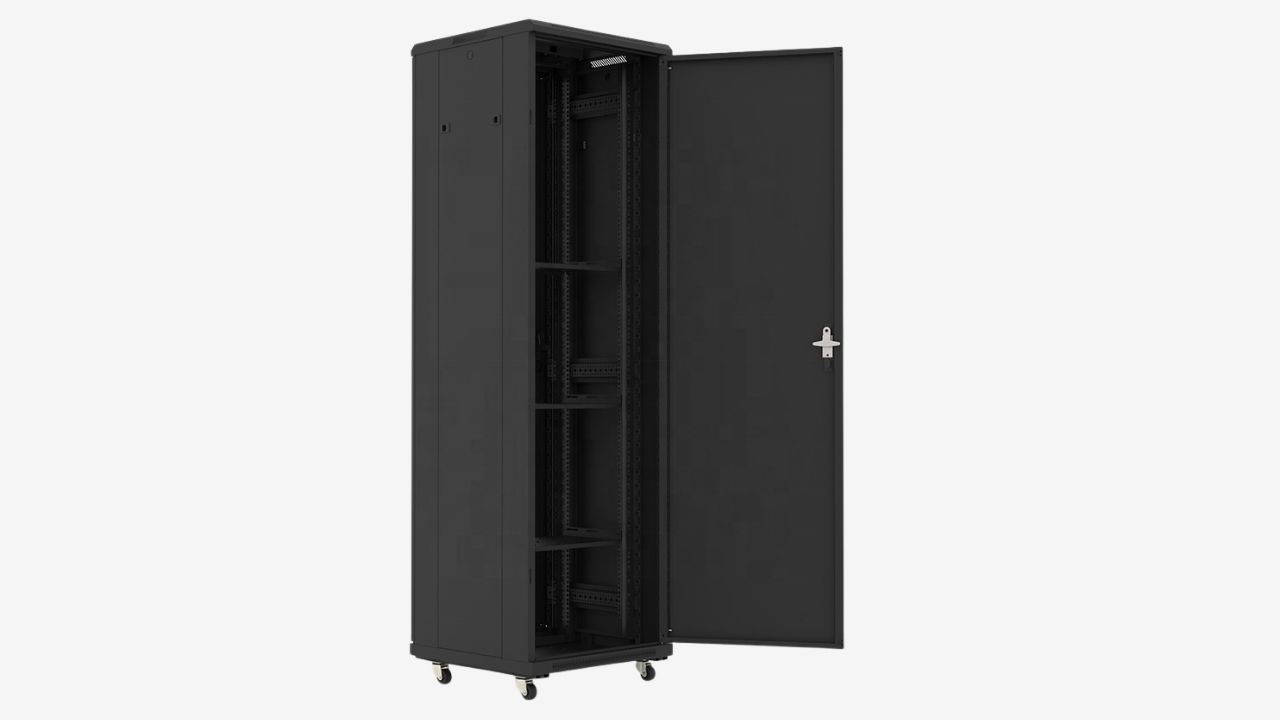
Perguntas frequentes
Can Network Switches, Routers and Other Devices All Be Placed in the Server Cabinet?
Sure. This is also a common and recommended approach. The server cabinet can be compatible with all standard network devices, and its load-bearing capacity, heat dissipation performance, and structural strength all exceed the requirements of the network devices. This can provide a more stable and cooler operating environment for the network devices. This placement can also simplify wiring and facilitate centralized management.
Does the Cabinet Need to be Placed on a Dedicated Anti-Static Floor in the Computer Room?
This usually depends on the type of cabinet, its weight, and the environment of the server room. For heavy-duty, high-load server cabinets, you must use them. This is beneficial for eliminating static electricity and preventing ground subsidence. For lightweight, low-load network cabinets, you can choose not to use them.
In What Circumstance Should You Not Use a Glass Door?
You cannot choose glass doors when installing high-power heat-generating equipment, when the total power of the cabinet is high, when the environmental heat dissipation conditions are poor, or when high physical security or privacy requirements are needed. In general, when your cooling needs outweigh the aesthetic needs, you should choose a perforated door.
How to Decide Whether to Choose an Open Rack or A Closed Cabinet?
This is mainly based on your installation environment and core requirements. Closed cabinets mainly provide protection, safety and controllable airflow. But its cost is high. Open racks can offer you the best heat dissipation and accessibility, but they require an ideal installation environment. If you install the cabinet in a non-professional environment, we recommend that you choose a closed cabinet.
Final Thought
As a professional custom manufacturer of electrical enclosure, KDM has many years of production experience and has cooperated with many well-known brands. We control multiple aspects such as raw materials, production processes and quality inspection to provide you with high-quality enclosures. We can meet any of your customized production needs and quickly provide you with practical customized production solutions. Contate-nos now.
 Portuguese
  English
  Arabic
  French
  Spanish
  Russian
  Japanese
  Korean
  Indonesian
  Chinese