


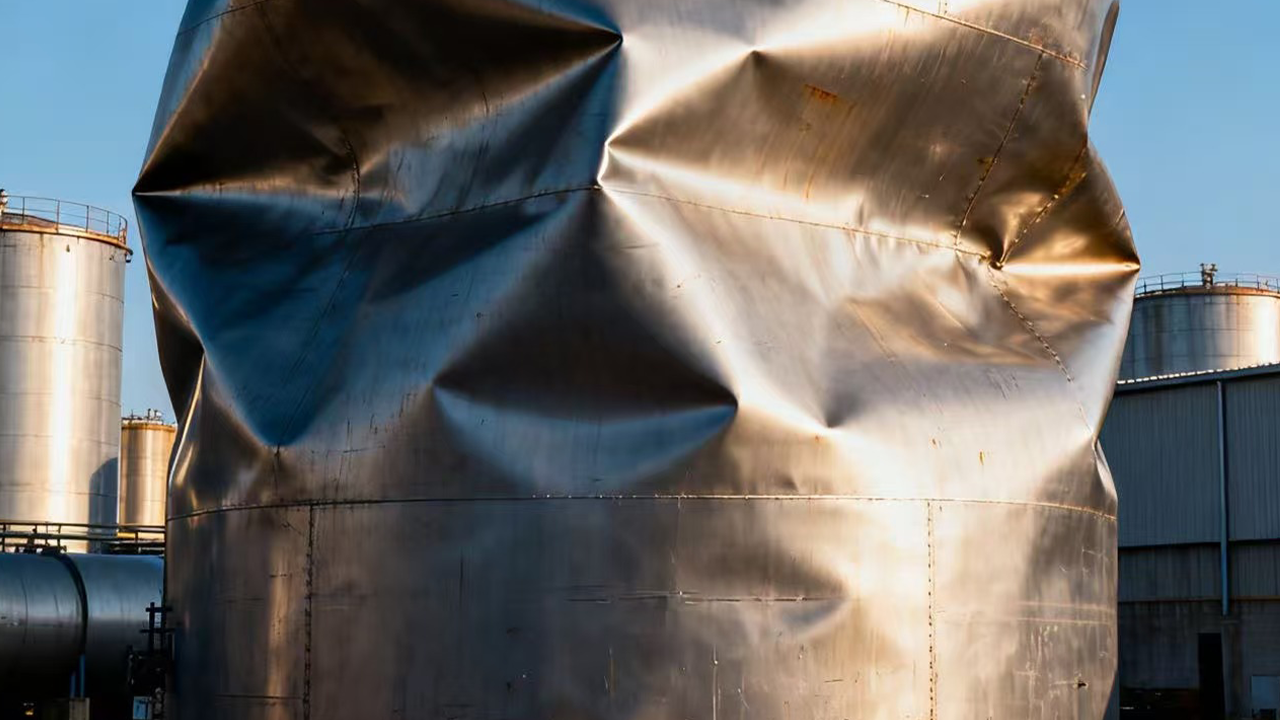
Tanks and pressure vessels are very common equipment in the chemical, food and beverage, pharmaceutical, brewing and other industries, especially when using stainless steel storage tanks for raw material or process media handling. They are mainly used to store raw materials, fermentation, or cleaning and processing operations, and many users will choose custom stainless steel tanks to match their specific process.
However, there is a potential risk – Tank implosion. Although it doesn’t happen often, when it does, it can crush the tank, affect production, and even pose a safety hazard. This article can help you understand the causes of Tank implosion in advance, and give some preventive measures.
Common Causes of Tank Implosion
Cleaning Operations
tank in the steam cleaning process, if the operation is not standardized, the steam inside the tank will be condensed into liquid, so that the tank pressure drops sharply. If the ventilation system can not make up gas in a timely manner, the tank may be extruded by the external atmospheric pressure deformation.
This situation is more common in fermentation tanks and chemical reaction tanks such as stainless steel mixing tanks 或者 stainless steel fermentation tanks, which must be cleaned in strict accordance with the procedures.
Ventilation Design
If the tank’s vents are too small, in the wrong place, or blocked by foreign objects (e.g., plastic bags, construction debris, or even small animals), air cannot enter. In this case, negative pressure can easily build up inside the tank, increasing the risk of implosion.

Operation and Maintenance
If the vent valve is not opened before emptying the tank, or if the operator is not familiar with the process of operating the new equipment, negative pressure may build up inside the tank. In addition, tank valves, exhaust devices and filters that are not maintained for a long time will also increase the possibility of implosion.
Sudden Temperature Changes
Rapid cooling can lead to rapid condensation of vapors, a sudden drop in volume, and the formation of a vacuum inside the tank. If ventilation is inadequate, the tank may be crushed by external pressure.
Therefore, low-temperature tanks and high-temperature process tanks, such as jacketed stainless steel tanks, require particular attention. Temperature changes should be as smooth as possible to avoid violent fluctuations.

Vacuum Risks Under Special Operating Conditions
Certain equipment, such as cryogenic tanks or refrigerated tanks, like cryogenic stainless steel storage tanks, may have gas or vapors trapped inside during start-up or cooling. Negative pressures can also be generated if ventilation is not properly designed or inert gases are not handled properly. These special circumstances need to be considered in advance when designing or modifying such tanks.
How to Prevent Tank Implosion
Optimize Ventilation System Design
When designing the Tank, you need to consider the size, location and type of vents in advance, do not wait for the equipment to be installed only to find that the ventilation is not enough. If necessary, you can add an anti-vacuum device or pressure-vacuum valve, so that once the tank pressure is abnormal, you can make up the gas in time.
For low-temperature tanks or tanks for some special processes, you also have to consider temperature changes and operating methods to ensure that the ventilation system will work properly under all circumstances. Simply put, the sooner you think through the ventilation problem, the less likely you are to have an accident later.

Strict Implementation of Operating Procedures
Operational steps such as cleaning, draining and cooling will affect the pressure in the tank, so the operation must be standardized. Before emptying, make sure the venting valve has been opened. This is particularly important for sealed equipment such as stainless steel buffer tanks 或者 insulated process tanks; when cooling, it should be done slowly according to the process requirements, to avoid the temperature difference being too large for the tank to be stressed. Operator training is also critical, you have to make sure that everyone is clear about the process and the potential risks, so that the possibility of misuse can be minimized.
Regular Inspection and Maintenance
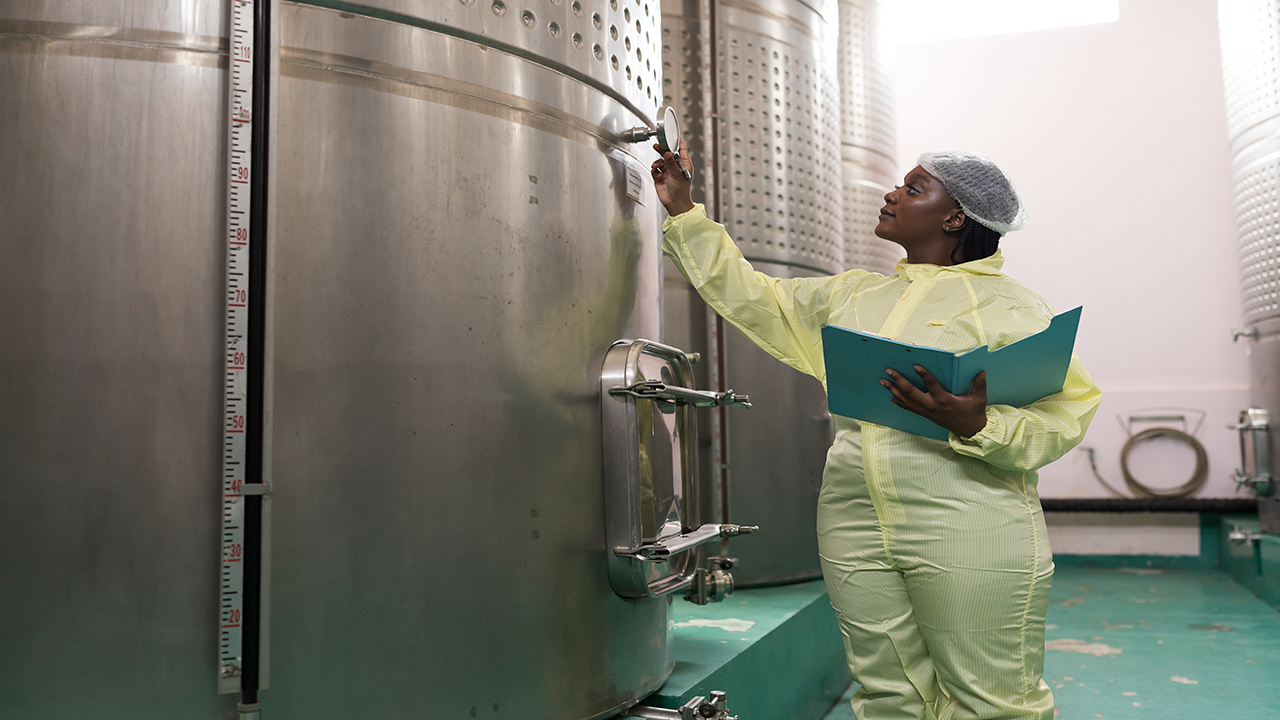
Don’t treat inspection and maintenance as optional steps, especially for large-volume units like a 1000 gallon stainless steel tank 或者 2000 litre stainless steel tank, where negative-pressure force is higher. Vents, valves, and filters all need to be looked at regularly to make sure they are not clogged or damaged. When the equipment has just been constructed or repaired, it is also important to double-check that the ventilation is unobstructed.
The usual inspection is also very important, many problems can be found and solved in the early stage, to avoid small problems becoming big accidents.
Choose a Reliable Manufacturer
Finally, when you choose tanks, it is better to choose an experienced and reliable manufacturer. Professional manufacturers will design the tank structure according to your actual working conditions, whether you need a 304 stainless steel tank, 316L stainless steel tank,or a fully customized solution. They provide a reasonable ventilation program, and also give practical and executable operation and maintenance recommendations.
Experienced suppliers can help reduce equipment failures and make your production more stable and smooth.

Final Thought
Tank implosion is not common, but when it happens, it may bring serious losses. Understanding its causes and taking precautions in design, operation and maintenance is the key to safe Tank operation. If you are planning to purchase a new Tank or retrofit your existing equipment, 卡德姆 can provide you with professional design and customization services for 不锈钢罐, helping you make production safer and more efficient.
常问问题
What is the difference between an implosion and an explosion?
Implosion occurs when the tank’s internal pressure drops too quickly and external air presses the tank inward; explosion occurs when the internal pressure rises too high and forces the tank outward. The two pressure directions are opposite, the trigger conditions are not the same, so they need to be considered separately when identifying risks.
Are there any obvious signs before a tank implosion occurs?
Sometimes there are, but they can easily be overlooked. Common ones include the sound of slightly deformed metal, a brief period of suction on the tank wall that returns, unusual suction at the vents, or a slight sinking of the top of the tank after cleaning. These are all indicators that the pressure inside the tank may have changed abnormally.
Can a new Tank implode?
Yes. Many accidents are not a problem with the tank itself, but are caused by inadequate venting during first use, incomplete run-through of operational procedures, or greater than expected changes in process temperature. The early stages of a new equipment line are often the more concentrated stage of risk.
Does a tank implosion happen quickly or is there a buffer time? Can it be stopped in advance?
It’s basically instantaneous, giving little time to react. Once a tank reaches the limit of what it can handle, it collapses very quickly, making it very difficult to intervene manually on site. Avoiding accidents relies on proper design, appropriate ventilation capacity and standardized procedures, not after-the-fact treatment.
Can I continue to use a tank that has imploded?
Usually not, especially for thin-wall designs such as stainless steel rectangular tanks, where structural deformation seriously reduces long-term safety. The wall of the tank is irreversibly deformed during an implosion, and even if the shape is restored, the strength of the material decreases and cracking or further deformation may follow. For safety reasons, most companies simply stop using them and replace them.
Does using a pressure-resistant tank design prevent implosion?
No, it does not. The structural requirements for resistance to positive and negative pressure are different. Even if a tank can withstand high internal pressures, it does not mean that it can withstand negative pressures caused by external pressures. Preventing implosion requires proper venting and structural design for external pressure, whether the equipment is a stainless steel pressure tank or a standard storage tank.
 Chinese
  English
  Arabic
  French
  Spanish
  Russian
  Japanese
  Korean
  Portuguese
  Indonesian