


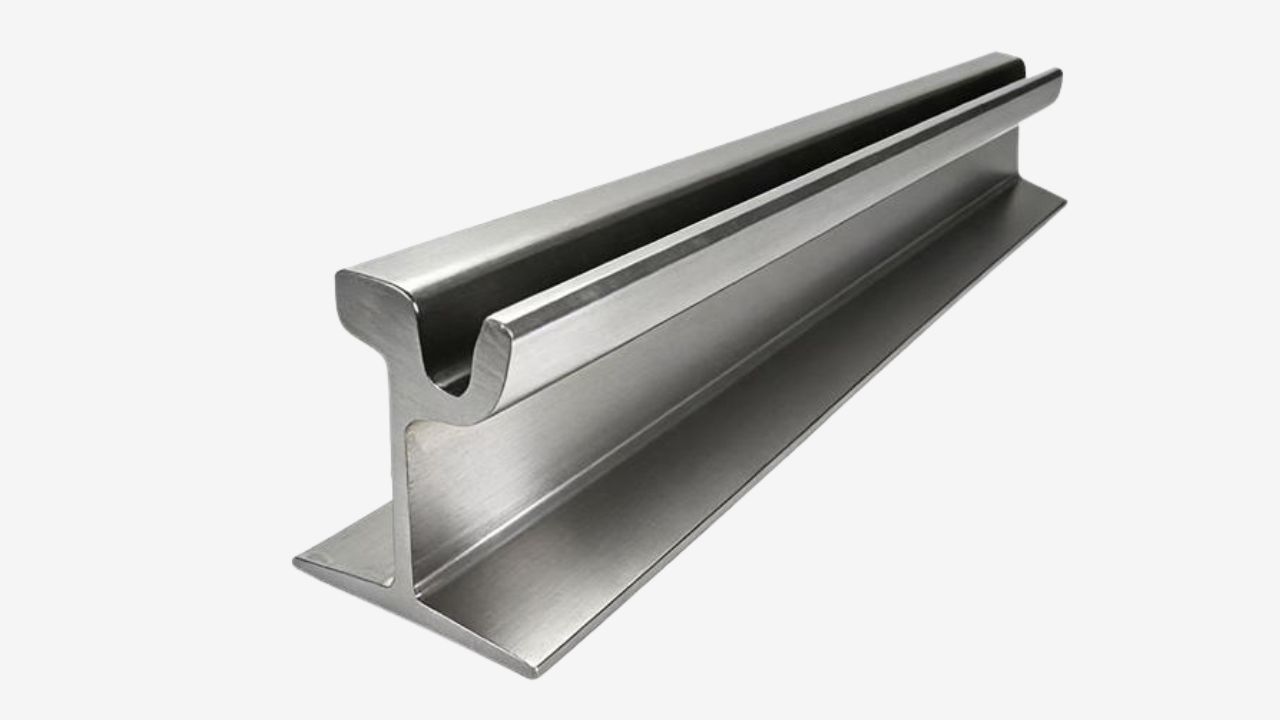
DIN rails provide a standardized, efficient way to install equipment in industrial and electrical facilities. It has versatility and compatibility with international standards. This article details DIN rail types, materials, selection and installation tips, helping electrical engineers and system integrators choose the appropriate DIN rails for electrical system construction.
What Is a DIN Rail?
DIN 레일 are standardized metal rails used to install components in electrical and industrial control systems, such as terminal blocks, circuit breakers, relays, and power supplies.
The concept of DIN rails originated in German standardization and adheres to IEC and EN standards, which specify the dimensions and profiles of DIN rails, facilitating compatibility with components from different manufacturers.
DIN Rail Materials Specification and Finishes
Material and finishes greatly affect the performance, durability and endurance of your DIN rails.
아연 도금 강철
Galvanized steel is made from cold-rolled carbon steel and is the most commonly used material for DIN rails. It has high mechanical strength and rigidity, good load-bearing capacity for heavy components, and good cost-effectiveness for industrial applications.
But this material is not suitable for your application in highly corrosive or outdoor environments. The corrosion resistance of galvanized steel depends on the quality of galvanization (electroplating or hot-dip galvanizing).
알류미늄
The aluminum DIN rail is lighter and easier for you to control. Besides, it is naturally corrosion-resistant and is protected by an anodized layer. This improves the rail’s corrosion and wear resistance. Compared to steel, the aluminum DIN rail is easier to process and cut, but it has lower strength and load-bearing capacity and is prone to deformation.
스테인리스 스틸
Stainless steel DIN rails are usually polished or uncoated. They are used in harsh or corrosive environments, are highly durable and have a long service life, and keep structural integrity under extreme conditions. However, they are more difficult to process and more costly.
Main Types of DIN Rail
Top Hat Rail(TS35)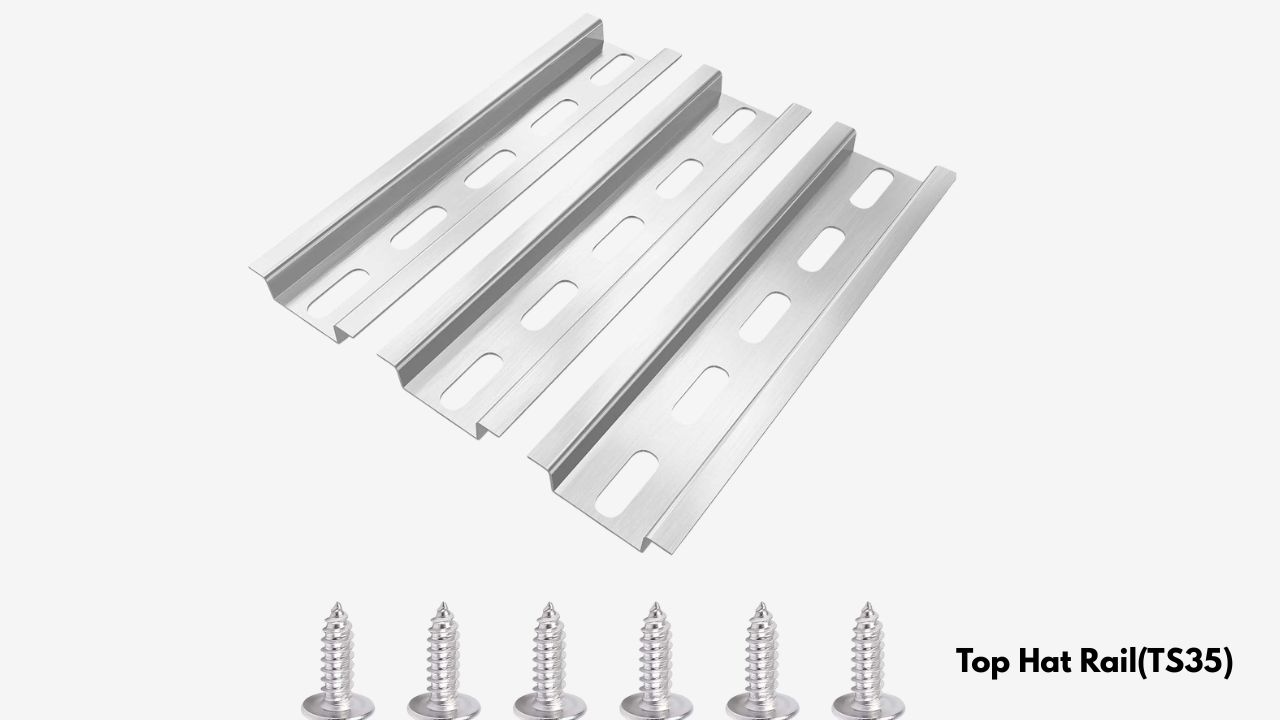
The top hat rail is the most widely used DIN rail in industry and commerce. It features a symmetrical hat-shaped cross-section and is designed for easy snap-on installation of components.
The top hat DIN rail has the most standard dimensions, with a width of 35mm, and standard depths of 7.5mm and 15mm.
It is compatible with DIN rail mounting equipment and is suitable for various loads. It is commonly found in industrial control panels, PLC systems, and distribution boards.
Miniature/TS15 Rail
Miniature rail is a compact version of the top hat rail. If your installation space is limited, the TS15 rail is your ideal choice. The TS15 DIN rail is similar to the hot tap rail, but it is smaller in size.
Its width is only 15 mm and its depth is 5.5 mm. Its load capacity is limited. It is mainly used for small control boxes, compact electronic systems and light-duty installations.
G Rail(TS32)
The G-type rail features an asymmetrical G-shaped profile that improves mechanical stability. Besides, this asymmetrical shape also prevents the reverse installation of your components.
The width of the G-type rail is 32 mm. Deeper channels have greater resistance to vibration and mechanical stress, allowing for better support of heavier components. It is more firmly mounted than symmetrical rails. It is mainly used in heavy electrical equipment, power supplies and transformers.
C Rails
The C-type DIN rail has a C-shaped cross-section and is an older type of DIN rail profile. Nowadays, the C rail is not commonly used, but it may still be applicable when installing heavy components or power supplies.
Its dimensions depend on different standards. Common widths include 20mm, 30mm, and 40mm. Its standardization level is lower than TS35. C rails are usually installed using clips or bolts instead of snap-on installation.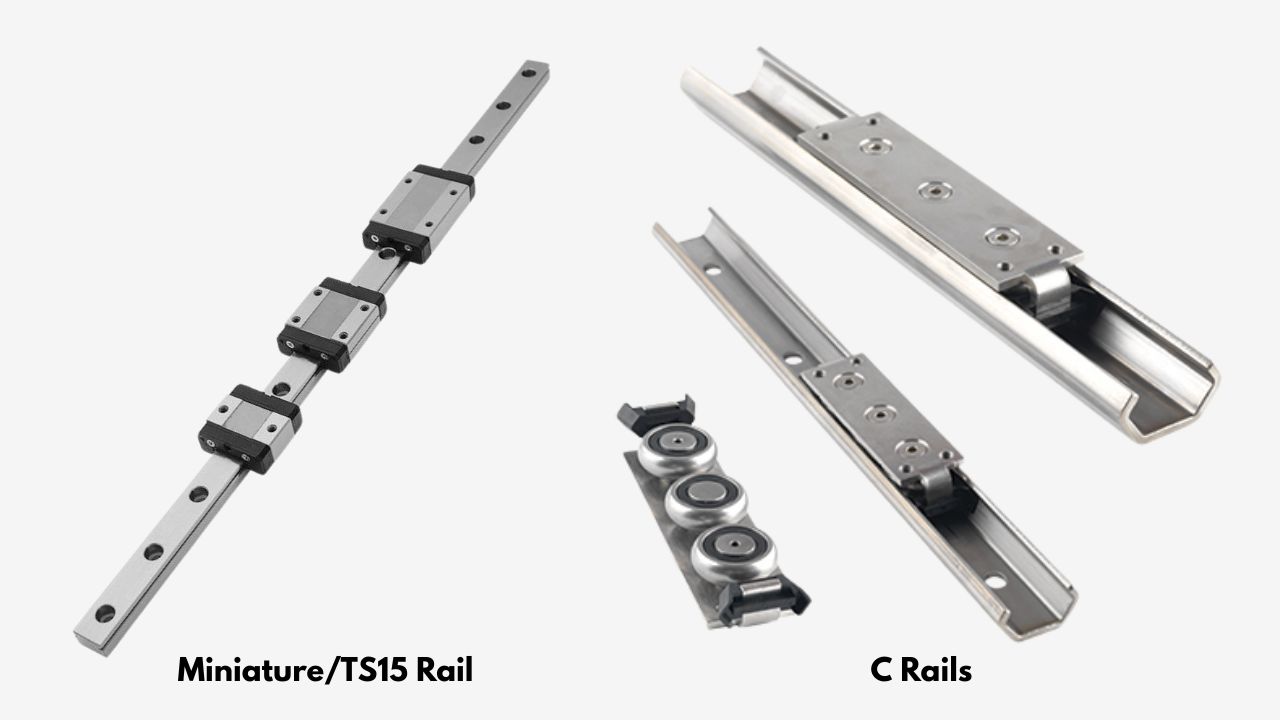
Comparison of DIN Rail Types
| DIN 레일 유형 | Top Hat/TS35 Rail | Miniature/TS15 Rail | G-Rail | C Rail |
| Dimension | Width:35 mm Depth: 7.5 mm, 15 mm
|
Width: 15 mm Depth: 5.5 mm | Width: 32 mm | Width: 32 mm |
| Profile Shape | Symmetrical hat-shape | Symmetrical mini hat-shape | Asymmetric G-shape | C-shape |
| Load Capacity | Medium to high | Low | High | 중간 |
| Mounting Method | snap-on | Snap-on | Snap-on | Clip or bolts |
| Typical Application | Control panels, PLC systems, power distribution | Compact control boxes, light-duty electronics | Heavy equipment, vibration environments | Old systems or custom installations |
| 장점 | Widely compatible, easy installation | Space-saving, lightweight | Strong support, high stability | Flexible mounting options |
DIN Rail Installation Tips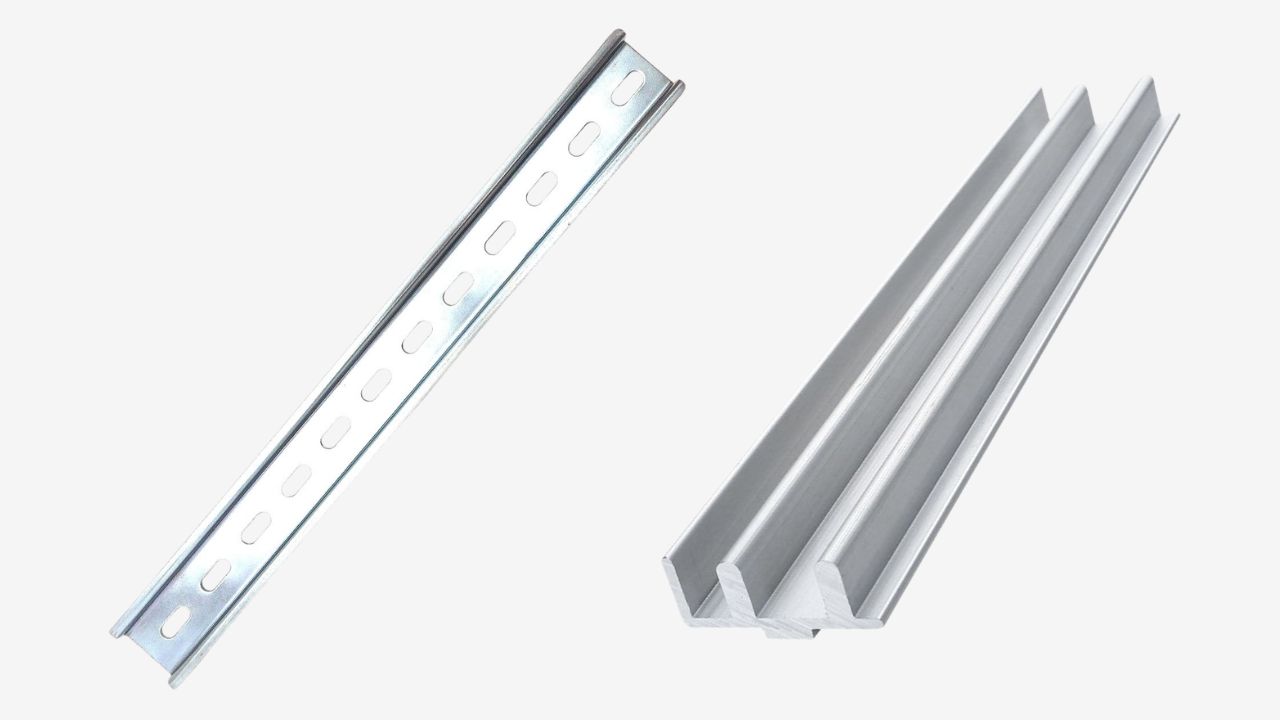
Select the Right Rail
You need to choose the right DIN rail first. The rail you select must match the type of mounting components and load requirements. It is best to choose DIN rails that match your electrical enclosures and panels to verify good compatibility and long-term performance. And then
Cut and Prepare Properly
At this stage, you will also need to use the appropriate tools to accurately measure and cut the DIN rail to the required length. After cutting, all sharp edges must be removed to guarantee operational safety. This can also prevent potential damage to the wires and components during installation. Besides, prepare the accessories for installing the DIN rail.
Secure and Align the Rail
Depending on your panel type, you can use fasteners such as screws, rivets and bolts to install the DIN rail on the panel firmly. If you use a 35 mm DIN rail, the spacing between fixation points is typically 200 mm or 250 mm.
Uniformly spaced fixed points can verify load stability and prevent deformation under long-term loading. Align the rails and adjust them to be perfectly horizontal to make sure that the components can be securely installed and operate normally.
Allow Space for Wiring and Heat Dissipation
You must make sure that there is sufficient spacing between the components. Especially for high-power applications, you also need to consider the thermal load. This is beneficial for wiring and airflow, preventing heat buildup from excessive DIN rail congestion. This makes installation and maintenance easier.
Check Grounding and Safety
If you use the DIN rail for grounding, you must make sure that the contact between the rail and the backplate is conductive or use the dedicated grounding 터미널 블록 attached to the rail. You should note that the DIN rail provides a grounding path but is not used to carry load current.
Regular Inspection and Maintenance
Your installation layout should be convenient for maintenance, replacement and future expansion. Guarantee that you can easily remove the components you have installed. What’s more, you need to regularly check for loose components and corrosion on the DIN rails to implement timely repairs and replacements.
How to Choose the Right DIN Rail for You?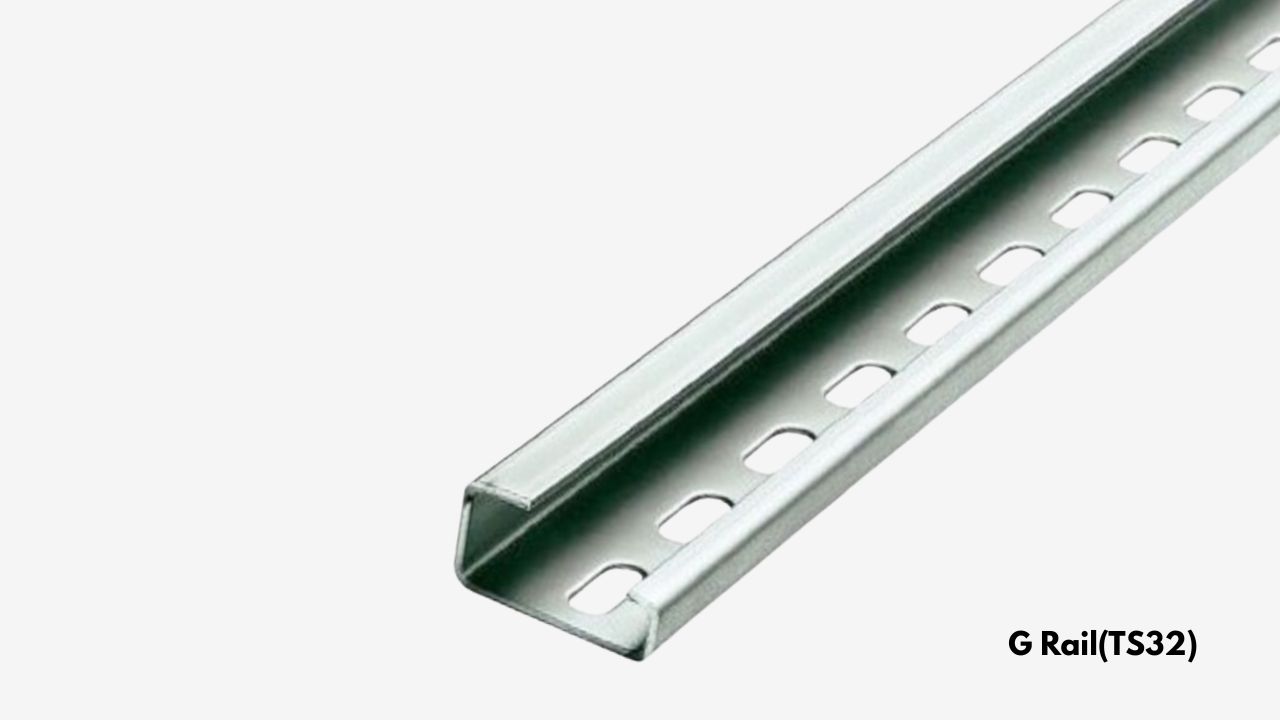
Consider Your Load Requirement
Considering the total weight of the components you need to install is the first step in choosing the appropriate DIN rail. If you are installing heavier equipment such as power supplies or transformers, you should select a DIN rail with high mechanical strength, such as the steel TS35 DIN rail or G rail. This guarantees stable operation and prevents deformation over time.
Evaluate the Installation Environment
For standard indoor applications, a zinc-plated steel DIN rail is sufficient for you. However, for wet, corrosive, or outdoor environments, you usually need to choose stainless steel or DIN rail with professional finishes to guarantee long-term durability and corrosion resistance.
Access Space and Panel Layout
Before choosing the DIN rail, you need to conduct a comprehensive assessment of the available space within your enclosure. The miniature DIN rail is suitable for compact systems. If your control panel is large, you can opt for the standard TS35 DIN rail. Proper planning can ensure that the space is sufficient for use without compromising accessibility and air circulation.
Compatibility with Components
The selected DIN rail must be compatible with the intended component installation design. Most modern devices can be compatible with the TS35 rail. However, some devices may require specific profiles and mounting orientations.
Besides, considering the installation method is also important. Snap-on is faster and simplifies troubleshooting and replacement. Most importantly, you should balance the cost of the DIN rails with their long-term performance, and then choose the most suitable DIN guide rails.
자주 묻는 질문
What Components Can be Mounted on a DIN Rail?
The DIN rail supports various modular electrical and control components commonly used in industrial and commercial systems. These include terminal blocks, 회로 차단기, relays, contactors, PLCs, power supplies, signal conditioners and interface modules. Accessories such as end clamps, markers and busbar connectors can also be installed to improve organization and functionality.
Can DIN Rails be Used Outdoors?
Yes. DIN rails can be applied outdoors if you choose the right material and protect it properly. Usually, stainless steel or specially coated DIN rail has better corrosion resistance. It is necessary to install the DIN rail in a weatherproof electrical enclosure to protect it from moisture, dust, and temperature extremes.
Are DIN Rails Interchangeable Between Manufacturers?
Yes. DIN rails can usually be interchanged between different manufacturers because they follow standardized dimensions (such as TS35 in the IEC standard). However, slight manufacturing tolerances can affect the fit of DIN rail kits. Therefore, compatibility still needs to be verified for critical applications.
What is the Difference Between Slotted and Solid DIN Rail?
Generally speaking, slotted DIN rails have pre-drilled holes, which enable faster and more convenient installation and reduce weight. Solid DIN rails do not have holes and can provide greater strength and rigidity, making them more suitable for heavier loads or high-vibration environments.
Final Thought
As a professional electrical enclosures manufacturer, 케이디엠 can provide you with DIN rail, brackets, and matching panels or electrical enclosures. What’s more, we also provide a one-stop customization service. We have many years of production experience and have obtained multiple certifications. If you have customized needs, please contact us.
 Korean
  English
  Arabic
  French
  Spanish
  Russian
  Japanese
  Portuguese
  Indonesian
  Chinese