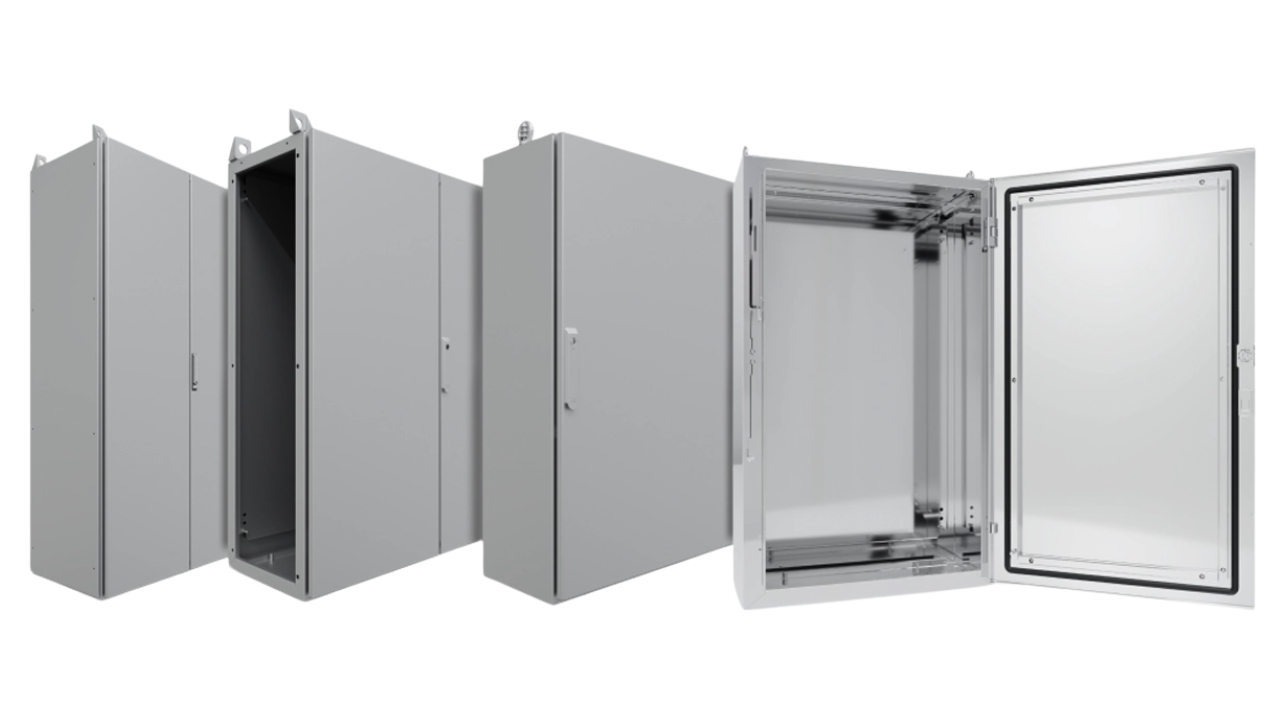
Energy-Efficient Electrical Enclosures: Complete Buyer Guide

Energy-Efficient Electrical Enclosures Complete Buyer Guide

Managing the flow of heat inside electrical enclosures is no longer just a matter of keeping them from breaking; it’s now a key operational cost. Choosing an energy-efficient enclosure is a direct way for engineers and procurement managers to cut down on cooling costs, increase the life of assets, and meet strict sustainability goals without lowering safety or dependability.

What Are Energy-Efficient Electrical Enclosures?

What Are Energy-Efficient Electrical Enclosures

These are special protective boxes made to keep the heat inside under control with little energy input. Instead of using power-hungry air conditioners like regular boxes do, these enclosures use better materials, smart insulation, and optimized geometry to keep sensitive electronics at safe working temperatures, which lowers the total cost of ownership by a large amount.

How Energy-Efficient Electrical Enclosures Work?

How Energy-Efficient Electrical Enclosures Work

Enclosure design that saves energy is achieved by balancing three different technical methods, each of which targets a different source of thermal gain.

Passive Cooling Mechanisms

Natural sciences are used in this method. By using aluminum and other materials with a high thermal conductivity and planning the surfaces in the right way, heat moves from the inside parts to the cooler air outside without any moving parts. You don’t have to do anything to keep this method running, and it works great for low to middling heat loads.

Active Cooling Optimization

Optimized active systems, like high-efficiency air conditioners or variable-speed fans, take over when passive ways aren’t enough. These days’ units have digital scroll compressors and EC (electronically commutated) fans that change speed based on the temperature demand in real time. This means that they use up to 70% less energy than older systems that had set speeds.

Thermal Load Management

Engineers must reduce the internal heat load as much as possible before choosing cooling gear. This is done by placing heat-generating parts (like VFDs) away from sensitive electronics, using internal baffles to stop hot spots, and picking parts with higher efficiency rates to lower the total BTUs that need to be pushed out.

Types of Energy-Efficient Electrical Enclosures

Types of Energy-Efficient Electrical Enclosures

Choosing the right form factor is important for getting the most out of airflow and room.

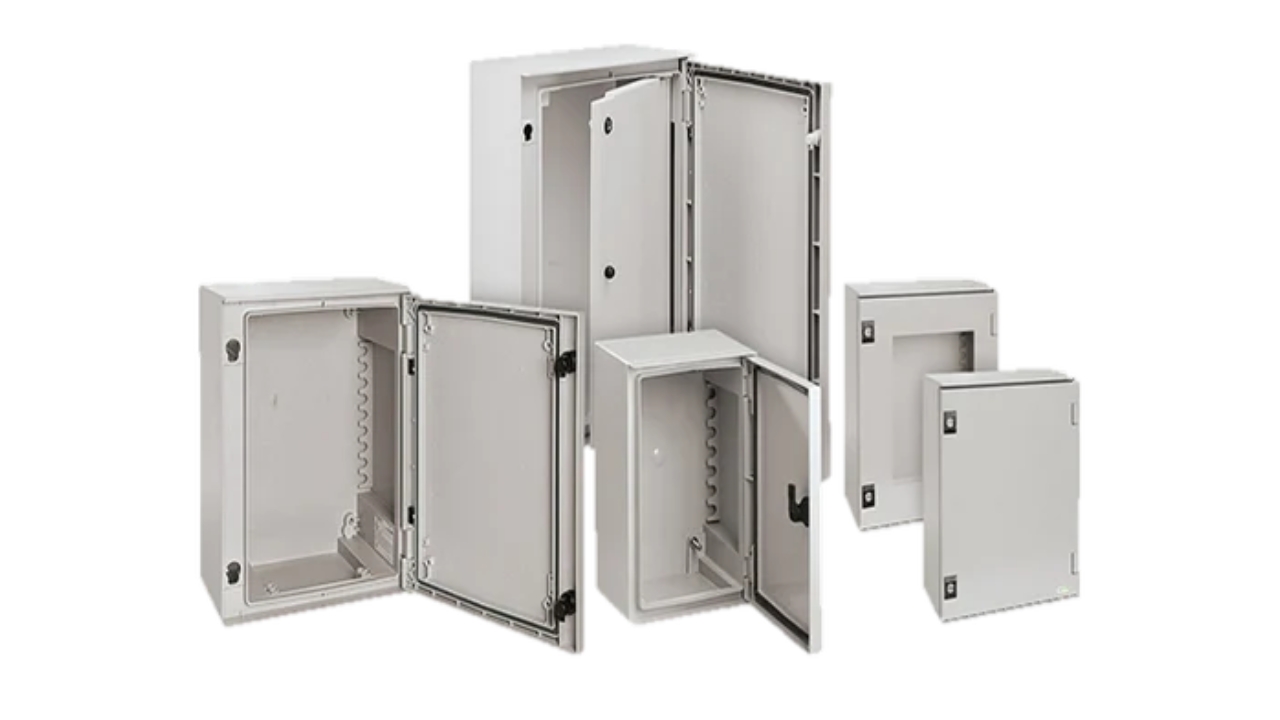
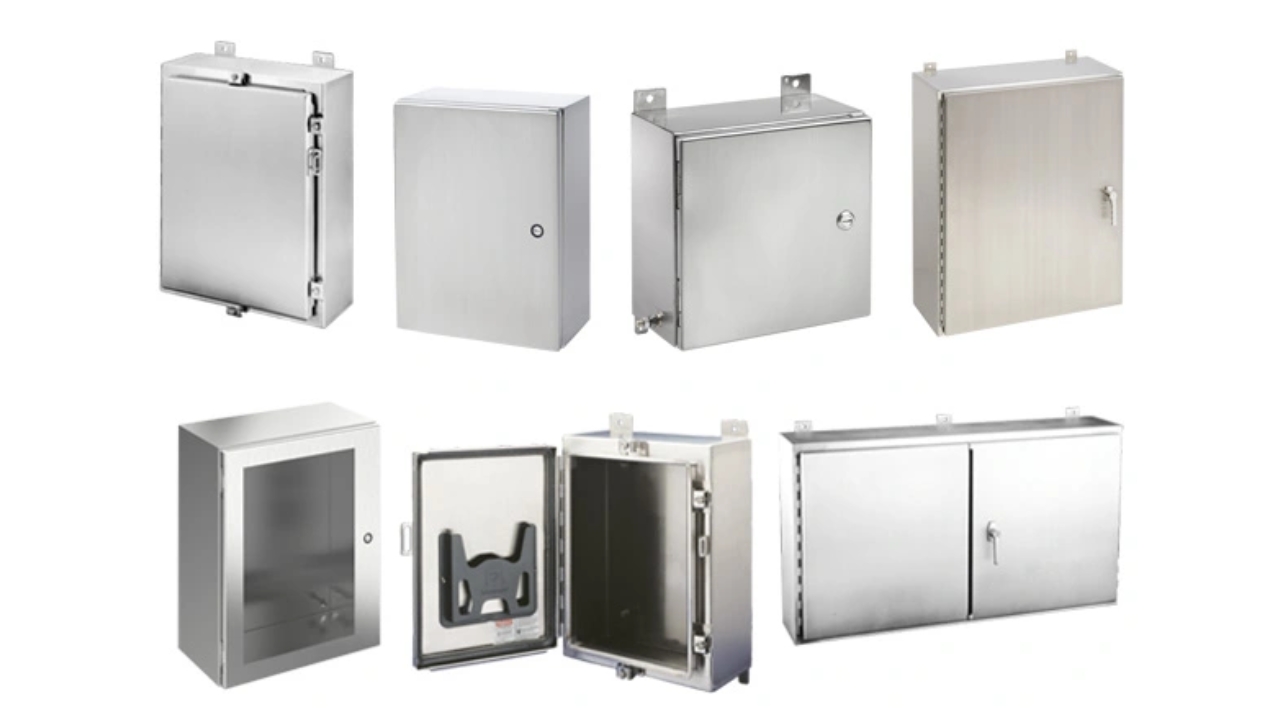
Wall-Mounted Enclosures

These small units mount directly to walls, keeping them away from contaminants on the floor, making them perfect for facilities that are short on space. Manufacturers often use double-walled construction or insulated panels in energy-efficient designs to separate the temperature inside from the temperature of the walls outside. This stops thermal bridging and lowers the cooling loads.

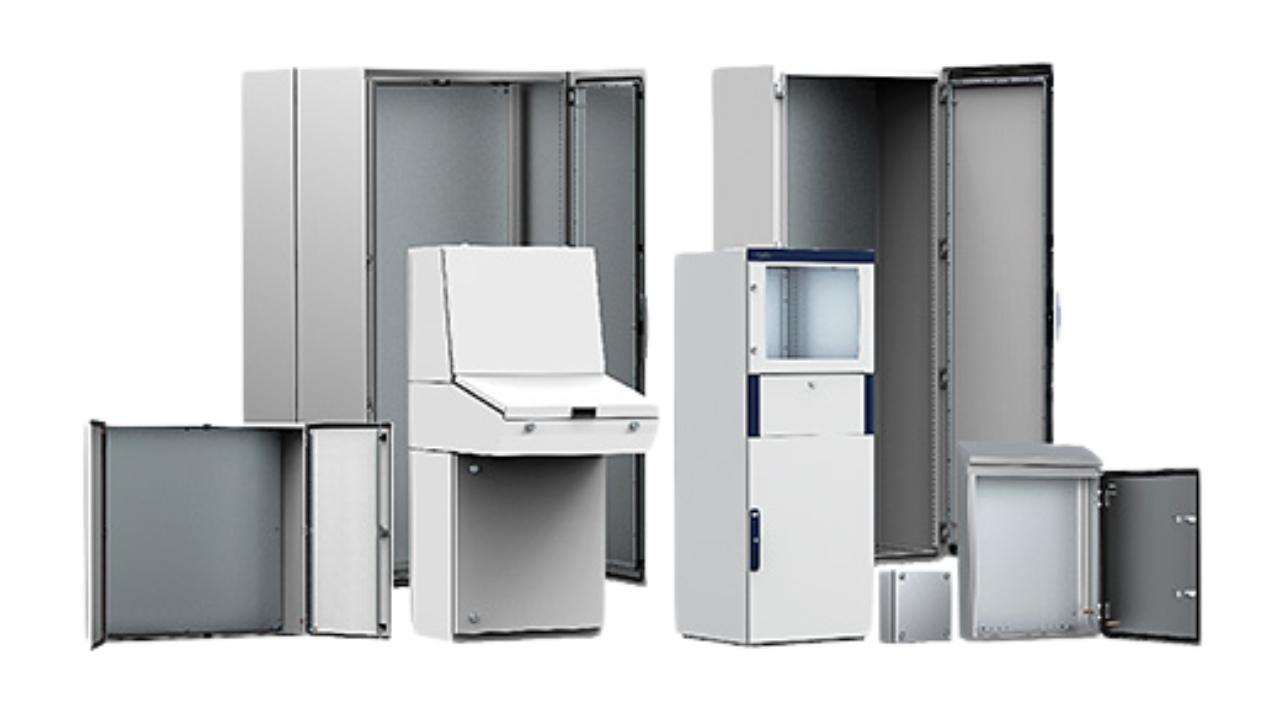
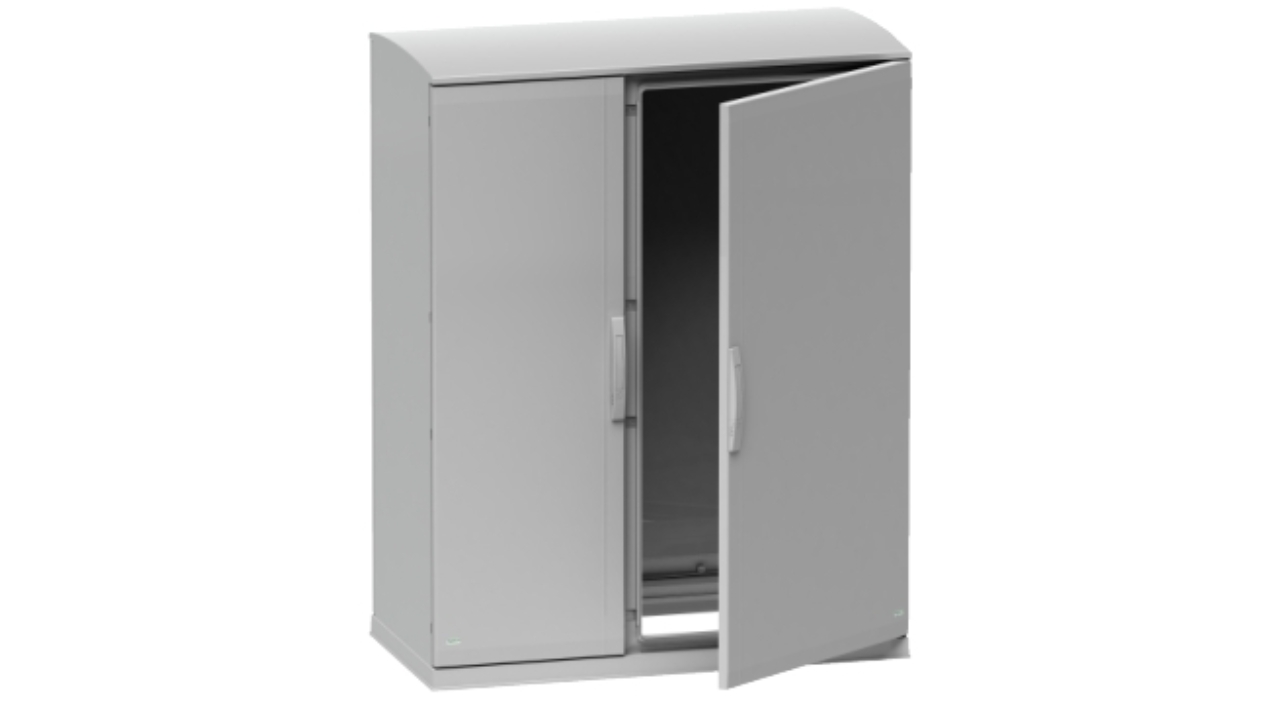
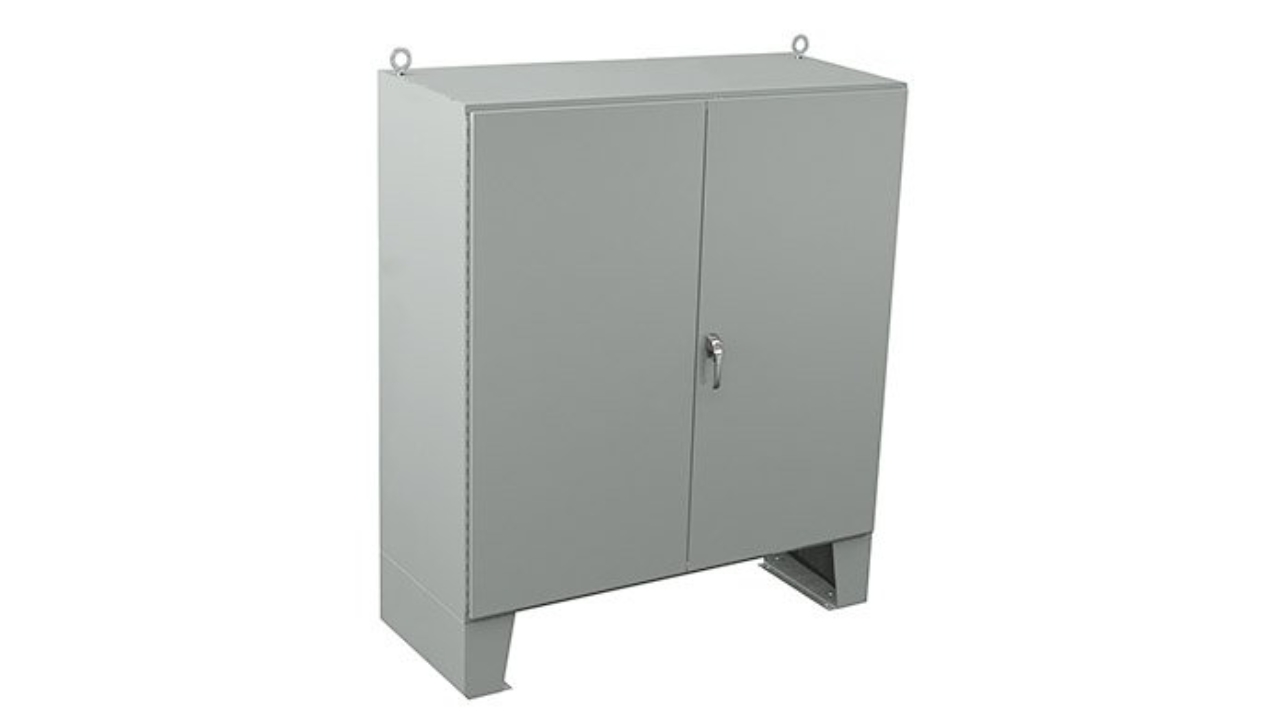
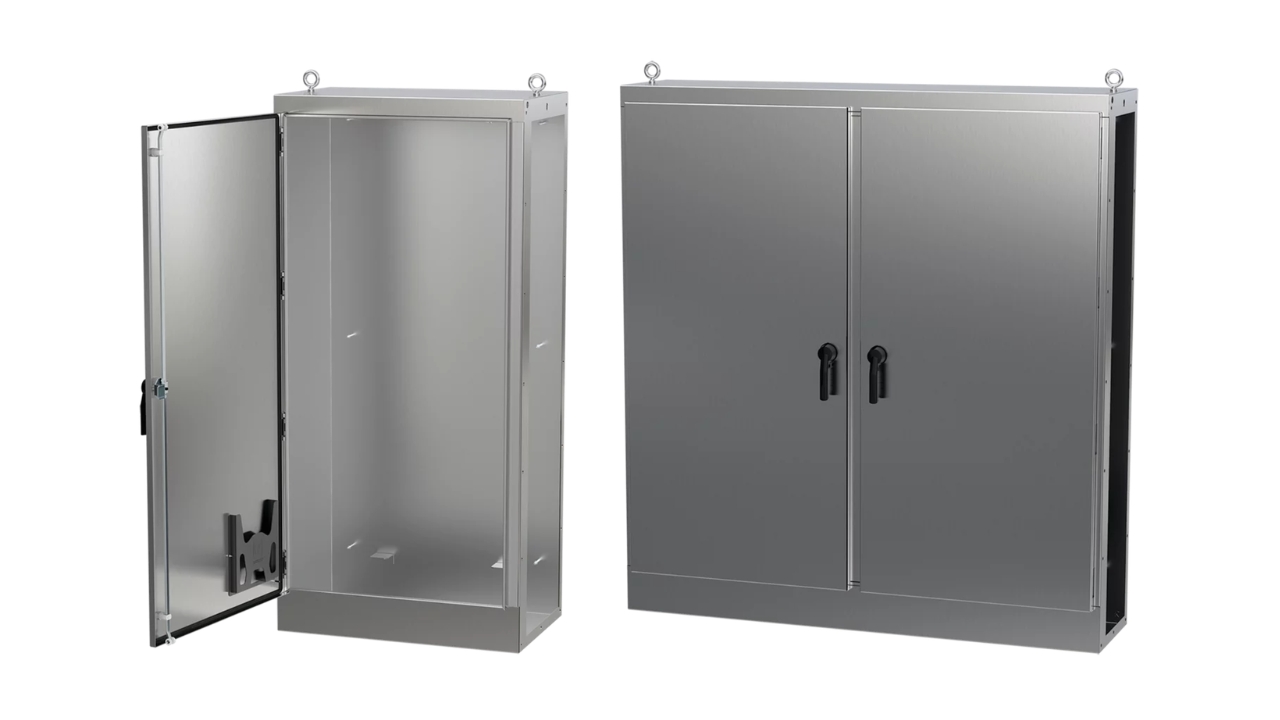
Freestanding / Floor-Mount Enclosures

These stand-alone cabinets are better at managing heat because they were made for large-scale industrial robotics or data center use. Because they are bigger, they can have more complicated airflow patterns inside, and they often have separate spaces for high-heat power parts and low-heat controls so that only the areas that need cooling are cooled and not the whole cabinet.

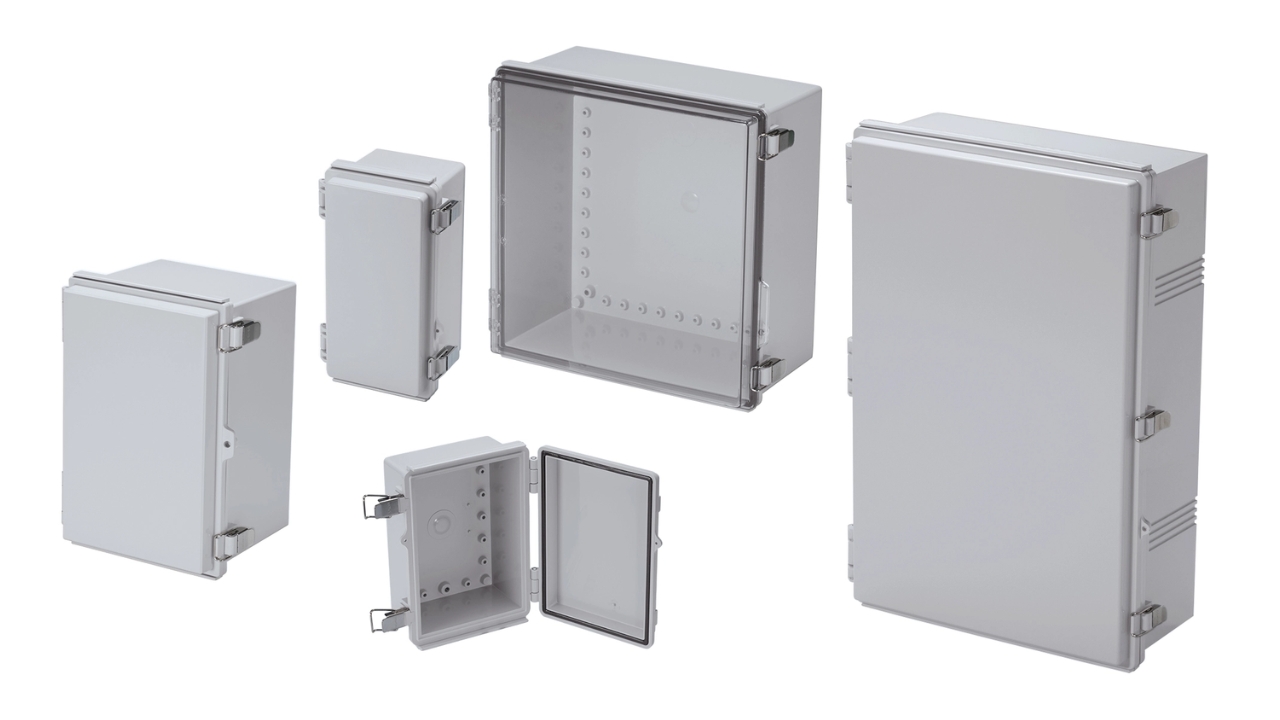
Outdoor Weatherproof Enclosures

These units are made to resist sun, rain, and snow, and they prioritize solar load rejection first. For this building to be energy efficient, the roof needs to have overhangs to block direct sunlight, coatings that reflect heat to keep it from absorbing, and walls with high R-value insulation to keep the inside temperature stable when the weather outside changes.

모듈형 인클로저

When it comes to changing infrastructure, modular solutions are the most flexible. By connecting several bays, you can make joint cooling zones that get rid of the need for separate cooling units on each cabinet. This method of “pooled cooling” cuts down on hardware costs and energy use by a lot, especially in factories that make a lot of things or fields that use renewable energy.

특징 Wall-Mounted 독립형 집 밖의 모듈식
Best Use Case Machinery control, remote I/O panels Main automation hubs, data centers Solar farms, telecom, remote sites Large-scale industrial lines
Cooling Strategy Passive venting, small A/C units Zoned cooling, large A/C systems Solar load rejection, high insulation Shared cooling zones, scalability
공간 효율성 High (utilizes wall space) Low (requires floor footprint) Medium (often pad-mounted) Medium (requires alignment)
Thermal Challenge Limited surface area for dissipation Managing vertical heat stratification Direct sunlight exposure Seamless integration between bays

Best Materials for Energy-Efficient Enclosures

Best Materials for Energy-Efficient Enclosures

The thermal efficiency starts with the material you pick. Each choice has its own trade-offs between letting heat escape, protecting against rust, and keeping the structure strong. The table below shows how the four main materials compare to the needs of running a business efficiently.

재료 열전도도 부식 저항성 Best Application Energy Efficiency Impact
Stainless Steel (316L) Low (~16 W/m·K) Excellent (ideal for coastal/salt fog) Harsh chemical environments, marine locations Poor thermal conductor; requires active cooling or oversized enclosures for high-heat applications
알류미늄 High (~205 W/m·K) Good (with proper coating) High-power systems, renewable energy, and general industrial Acts as a passive heatsink; dissipates heat 1000x more effectively than polymers; reduces or eliminates the need for active cooling
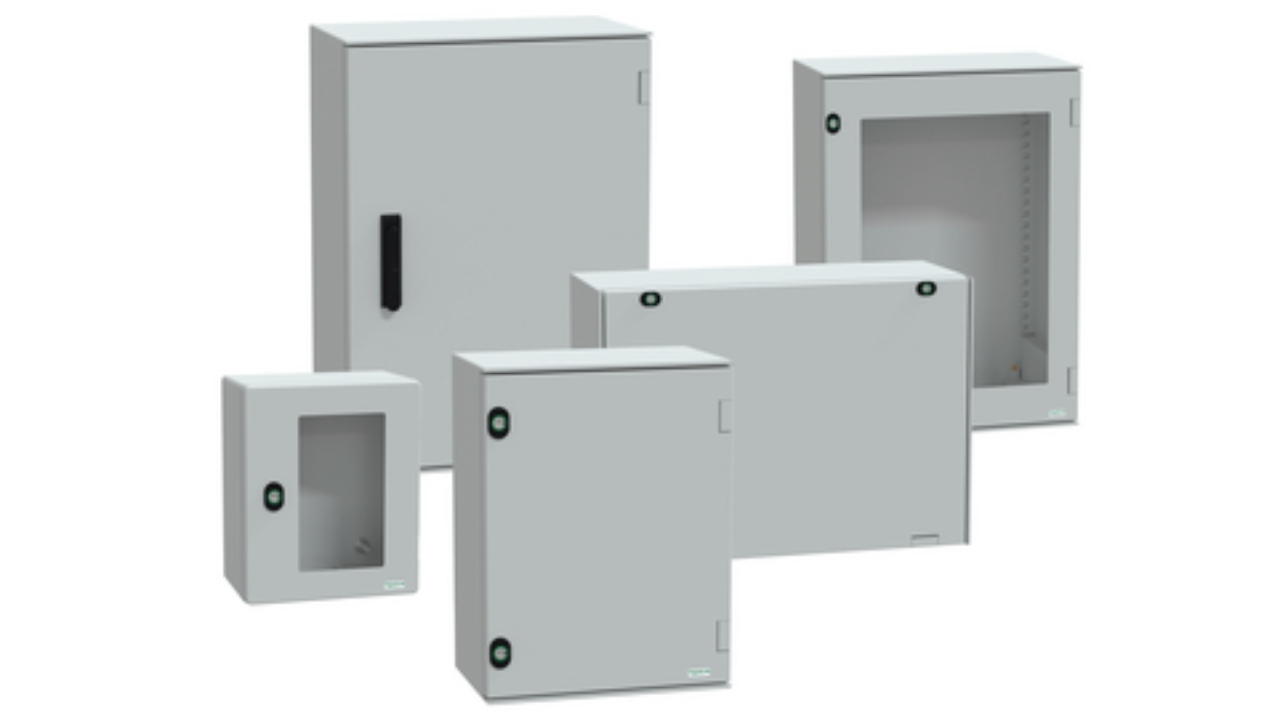
유리섬유 Very Low (insulator) Excellent (chemical-resistant) Wall-mount applications, corrosive industrial settings Non-conductive; relies entirely on ventilation or active cooling; lightweight but traps internal heat
폴리카보네이트 Very Low (~0.2 W/m·K) Good (UV-stabilized grades) Residential, light commercial, low-current applications Thermal insulator; suitable only for low heat loads (<120A total current) or with forced ventilation

Key Features of Energy-Efficient Electrical Enclosures

Key Features of Energy-Efficient Electrical Enclosures

High-performance cases are different from regular cabinets in certain ways. When you’re looking at your choices, pay attention to these five engineering details.

High Thermal Conductivity Materials

Aluminum frames naturally move heat away from parts inside and send it out through the walls. Aluminum is the best material for systems that need to run at a high current all the time because it passively dissipates energy, getting rid of any extra energy loads that come from cooling equipment.

Optimized Ventilation Design

Natural convection is used by placing vents so that cool air comes in through the bottom holes and hot air leaves through the top openings. Filtered ventilation systems with variable-speed fans change the flow of air based on real-time temperature data, so they only use as much energy as they need to.

Insulation & Sealing

The high R-value insulation and double walls keep the inside temperature from changing with the outside temperature. This is very important for outdoor cages because the sun and cold winters would make the cooling and heating systems work harder than they need to.

Reflective Coatings (Outdoor Use)

Solar reflective coatings, like 3M’s Scotch Kote Polytech RG700, can lower the temperature inside an area by blocking up to 15% of the sun’s heat gain. When put on roofs and other outside surfaces, these coatings reduce the amount of energy used by HVAC systems by about 20% in outdoor installs.

Smart Cooling Integration

Different sensors and automatic dampers in hybrid climate systems let them switch between sealed recycling and fresh-air ventilation based on the temperature and humidity outside. This dynamic method cuts down on the time needed to run the compressor and clean the filters while keeping the inside temperatures at the right level.

Benefits of Energy-Efficient Electrical Enclosures

Benefits of Energy-Efficient Electrical Enclosures

Thermal optimization is an investment that pays off in practical, financial, and reliability ways.

Reduced Energy Consumption

Energy-efficient enclosures cut down on the power needed for thermal management by reducing the need for air conditioners and compressors. Smart active systems use up to 70% less electricity than fixed-speed options, while passive designs use no energy for cooling.

Lower Operational Costs

Every watt saved on cooling helps the business make more money. Total cost of ownership goes down a lot when energy bills go down, and maintenance intervals get longer. This means that filters don’t need to be replaced as often, and cooling units don’t wear out as quickly.

Increased Equipment Lifespan

Heat is the worst thing that can happen to electronic parts. Keeping internal temperatures within certain ranges stops circuit breakers and fuses from losing their thermal rating. This lowers the stress on semiconductors and makes VFDs, controllers, and power supplies last longer.

Reduced Downtime

Consistent thermal management gets rid of trips that are annoying because of too much heat. This means that critical infrastructure like data centers and utility-scale solar farms will have more uptime and more stable performance, even during times of high demand.

Better Environmental Sustainability

Your building’s carbon footprint goes down directly when you use less energy. Energy-efficient enclosures are a big part of sustainability reporting and green building certifications for businesses that keep track of Scope 2 emissions.

Improved System Reliability

By maintaining a stable, clean environment, these enclosures protect sensitive electronics from dust, moisture, and thermal cycling. The result is a more robust system that performs predictably across seasonal extremes and varying load conditions.

How to Choose the Right Energy-Efficient Electrical Enclosure

How to Choose the Right Energy-Efficient Electrical Enclosure

There is a method to choosing an enclosure. By following these six steps, you can make sure that you get the best heat performance for the best price.

Step 1: Analyze Environmental Conditions

Find a place for the enclosure to live first. Solar radiation from the sun can add more than 1,200 W/m² to the heat load of outdoor systems. If the cage is used inside, it may be exposed to the heat from nearby machines. Keep track of the lowest and highest temperatures, humidity levels, and time spent in dust, wetness, or corrosive substances.

Step 2: Calculate Heat Load

Every component inside—VFDs, power sources, controllers—generates heat. Sum their dissipated wattage (usually stated in specifications) to determine your total internal thermal load. Remember the critical rule: for every 10°C rise in working temperature, equipment lifespan effectively halves. This calculation determines whether passive cooling suffices or active intervention is needed.

Step 3: Select Proper Material

Fit the material to the space and the temperature needs. Aluminum is better at transferring heat (about 205 W/m·K), which makes it perfect for passive heat transfer. 316L stainless steel is the best when it comes to resisting corrosion in harsh or coastal settings. Fiberglass composites do not carry electricity or chemicals, but they do hold heat, which makes them better for indoor uses that need to handle low temperatures or corrosion.

Step 4: Choose the Protection rating

NEMA ratings and IP (Ingress Protection) ratings talk about protection against the elements. With IP65, you can keep dust out and protect against water jets; with IP66, you can also protect against powerful water jets. Higher ratings generally mean tighter seals, which can make it harder for air to flow naturally. To avoid blocking airflow for no reason, choose the lowest grade that meets your outdoor exposure.

Step 5: Choose the cooling strategy

The first thing you should do is pass through cooling. For example, heat can move through metal walls, natural air vents, and surfaces that reflect light. These passive ways do not need any power. The temperature inside should be kept between 35°C and 40°C. Fans with thermostats, air-to-air heat exchanges, or closed-loop air conditioners should be added if it is higher than that. EC fans in smart systems change speed in real time based on demand. It takes less power to do this.

Step 6: Plan for Future Expansion

Industrial systems and microgrids don’t stay the same for long. Ask for cases with extra DIN 레일, extra knockouts, and space inside for extra parts. With modular cases, you can connect more than one bay and share cooling resources, so each cabinet doesn’t need its own cooling unit. Smaller sizes today save you a lot of money on alternatives tomorrow.

Get Your Customized Energy-Efficient Electrical Enclosures by KDM Steel

Get Your Customized Energy-Efficient Electrical Enclosures by KDM Steel

We at KDM스틸 design unique enclosures that balance how well they keep things cool with how well they work. Our engineers can help you choose the right materials, such as 304L stainless steel, and add features like polycarbonate windows, ventilation systems, and reflective finishes. With more than 50 design engineers and strict quality control, we can make solutions that fit your heat load and environmental needs. 문의하기 to get your quote today.

자주 묻는 질문

How do containers that use less energy lower the cost of cooling?

By using conductive materials and smart ventilation to get rid of as much passive heat as possible, they reduce the need for power-hungry air units and fans. This directly lowers the amount of energy used and the cost of repairs.

What is the best material for handling heat?

Because it conducts heat well, aluminum is the best material for getting rid of heat. Stainless steel is best for uses that need protection to corrosion over thermal performance.

Does a higher IP grade change how well energy is used?

Yes, the tighter seals needed for higher IP ratings can make it harder for air to flow naturally, which could make active cooling more important. Choose the IP rating that meets the needs of your surroundings.

In terms of cooling, passive or active, which is better?

Passive cooling is always better for saving energy because it doesn’t use any. Active cooling is only needed when passive means can’t keep the inside of a vehicle safe (usually above 35–40°C).

Is it worth it to have protected enclosures?

For outdoor setups that are exposed to extreme temperatures, double-walled or insulated enclosures are a good investment because they keep the inside stable and reduce the work that the HVAC system has to do.

How to figure out how much heat a box can hold?

Add up all the power that has been lost by all the internal parts. Then you need to think about things like sun radiation and the temperature of the surrounding area. Use this amount to figure out how much cooling power you need.

ko_KRKorean
위로 스크롤
x
오늘 문의를 보내세요
파일 업로드
x
오늘 문의를 보내세요
파일 업로드