


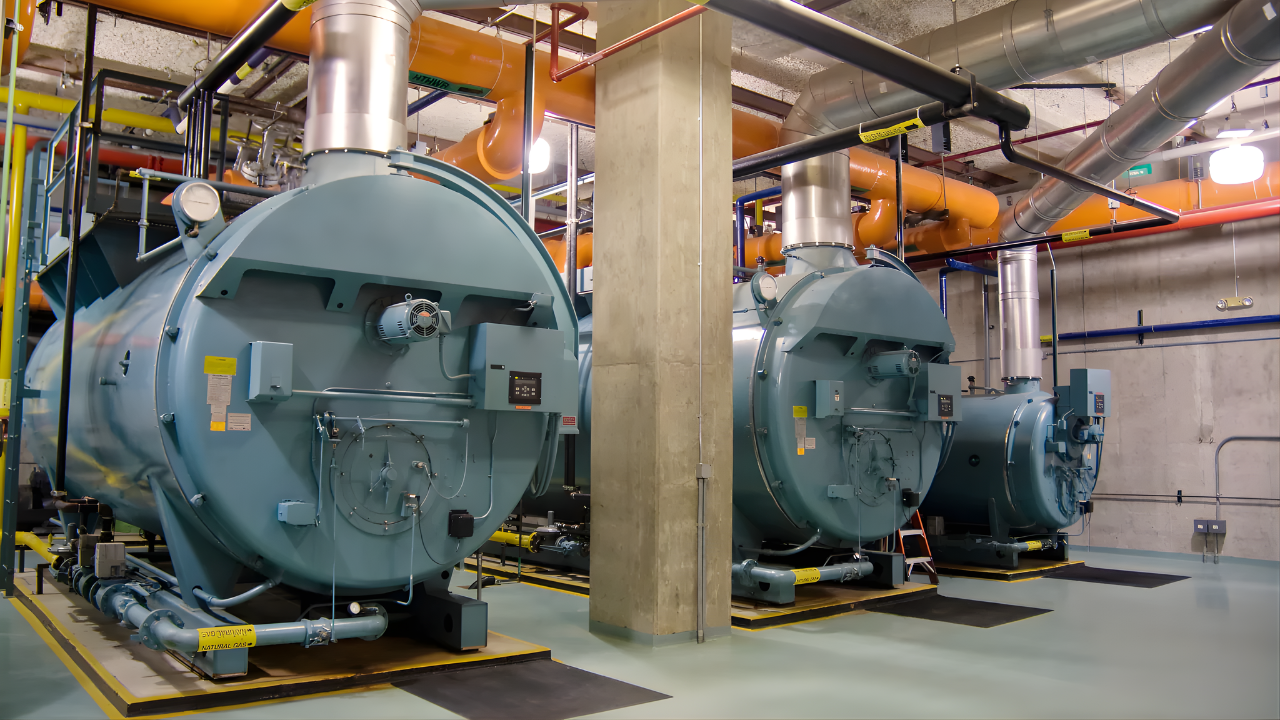
Steam boilers are used in important processes in manufacturing, food processing, and power generation and their efficiency directly influences the operating costs and compliance. To plant managers, engineers and industrial buyers, the choice of the appropriate type of steam boiler may be complicated and expensive to make a wrong decision. This guide will describe the kind of steam boilers and offer useful purchasing advice to help in making sound investment choices.
What Is a Steam Boiler?
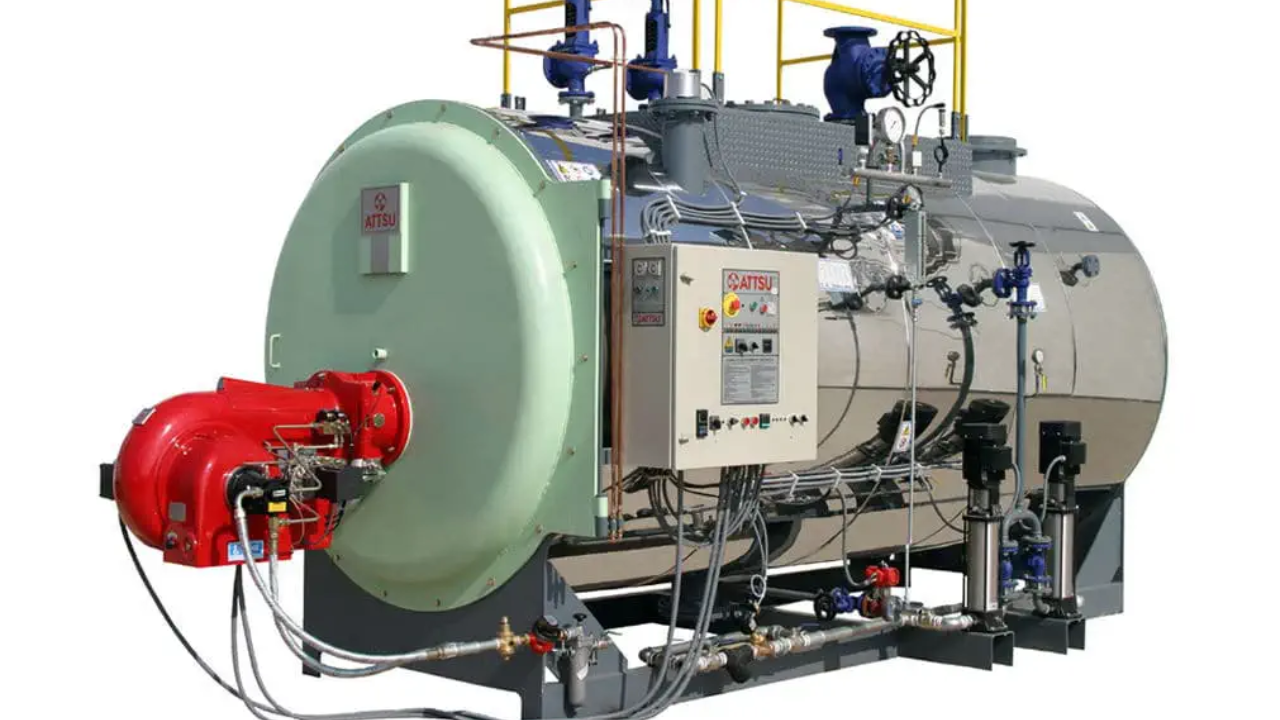
あ steam boiler is a closed pressure vessel that transforms water into steam by transferring fuel combustion or electrical energy into heat. It is run under controlled temperature and pressure to produce saturated or superheated steam to be used in industrial heating, power generation, and in mechanical processes.
Steam Boiler Classifications (Core Types)
· Fire‑Tube Boilers
- How they work
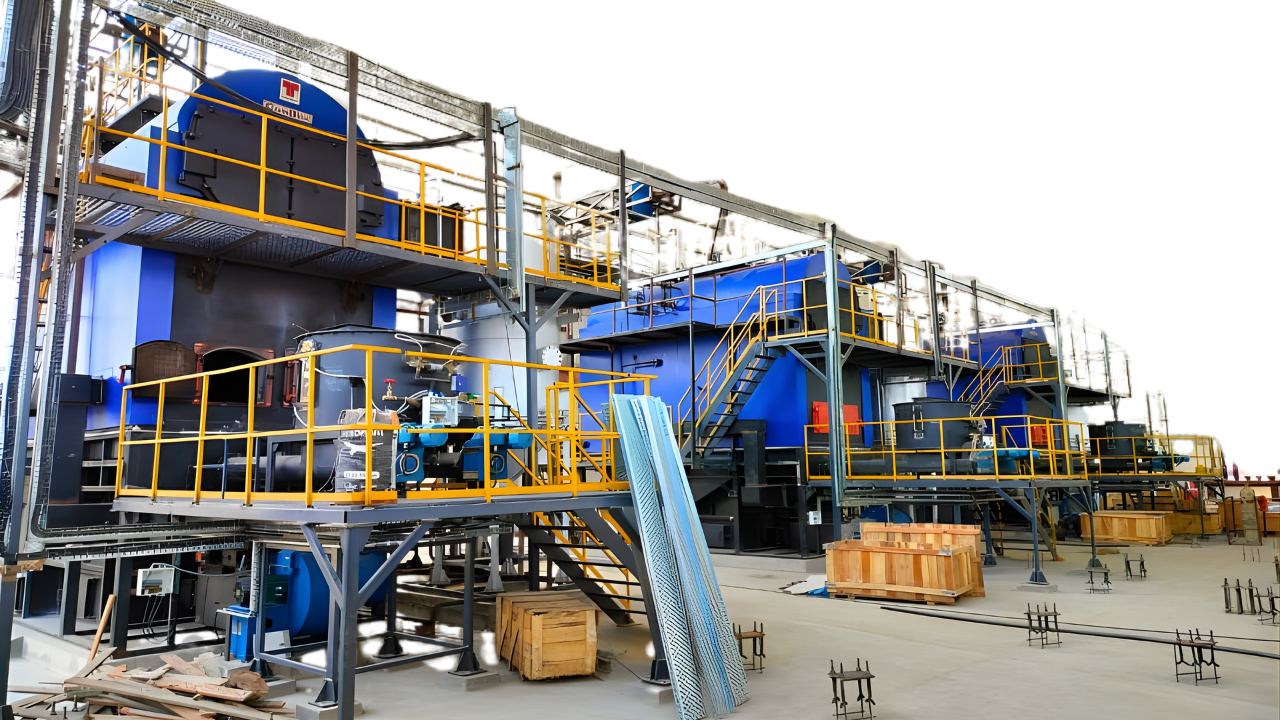
Fire-tube boilers are boilers that have hot combustion gases that are circulated in tubes that are enclosed by water in a pressure shell. The furnace moves the heat to the tube walls by convection and radiation. The steam is created in the upper part of the shell and is released via a steam outlet nozzle. Common working pressures are 6 to 25 bar, and capacities are 25 TPH.
- Typical Industries & Applications
Food processing, textile plants, chemical units, and small power generation facilities.
- Pros & Cons
Advantage: Light design, reduced capital expenditure, simple maintenance, and constant operation when there is a change in the load.
デメリット: Fixture has a smaller range of pressure, slower response to steam, and a higher chance of a greater volume of water.
- Best Use Cases (low/mid‑pressure steam)
Low- to medium-pressure steam use in constant load situations.
· Water‑Tube Boilers
- How they work
Boilers that use water circulate the water in tubes that are heated by external combustion gases. The furnace is enclosed by water tubes attached to steam and mud drums. The high surface area and forced circulation result in rapid heat transfer. These boilers are used at pressures of 30 bar to more than 250 bar and high steam output rates of more than 100 TPH.
- Typical Industries & Applications
Power plants, petrochemical plants, refineries, and heavy manufacturing plants.
- Pros & Cons
Advantage: High-pressure capability, rapid steam generation, and enhanced high-load safety.
Disadvantages: It requires expensive capital, complicated design, and professional maintenance.
- Best Use Cases (low/mid‑pressure steam)
Fluctuating load demand medium- to high-pressure steam systems.
· Electric Steam Boilers
- How they work
Electric steam boilers produce steam with the help of resistance heating elements or electrode systems in water. Direct conversion of electrical energy into thermal energy is more than 98 percent efficient. The unit does not have combustion chambers or flue systems. Common operating pressures are between 3 and 20 bar with capacities of up to 5 TPH, depending on power input.
- Typical Industries & Applications
Pharmaceutical plants, laboratories, food processing units, and cleanroom facilities need to manufacture steam that is free of emissions.
- Pros & Cons
Advantage: Zero site emissions, small footprint, fine temperature regulation, and low-cost maintenance.
デメリット: Expensive power, small-scale capacity, and reliance on the stability of the power supply.
- Best Use Cases (low/mid‑pressure steam)
The requirement of low to middle pressure steam in indoor or emission-restricted settings.
Specialized and Advanced Boiler Types
· Package Boilers
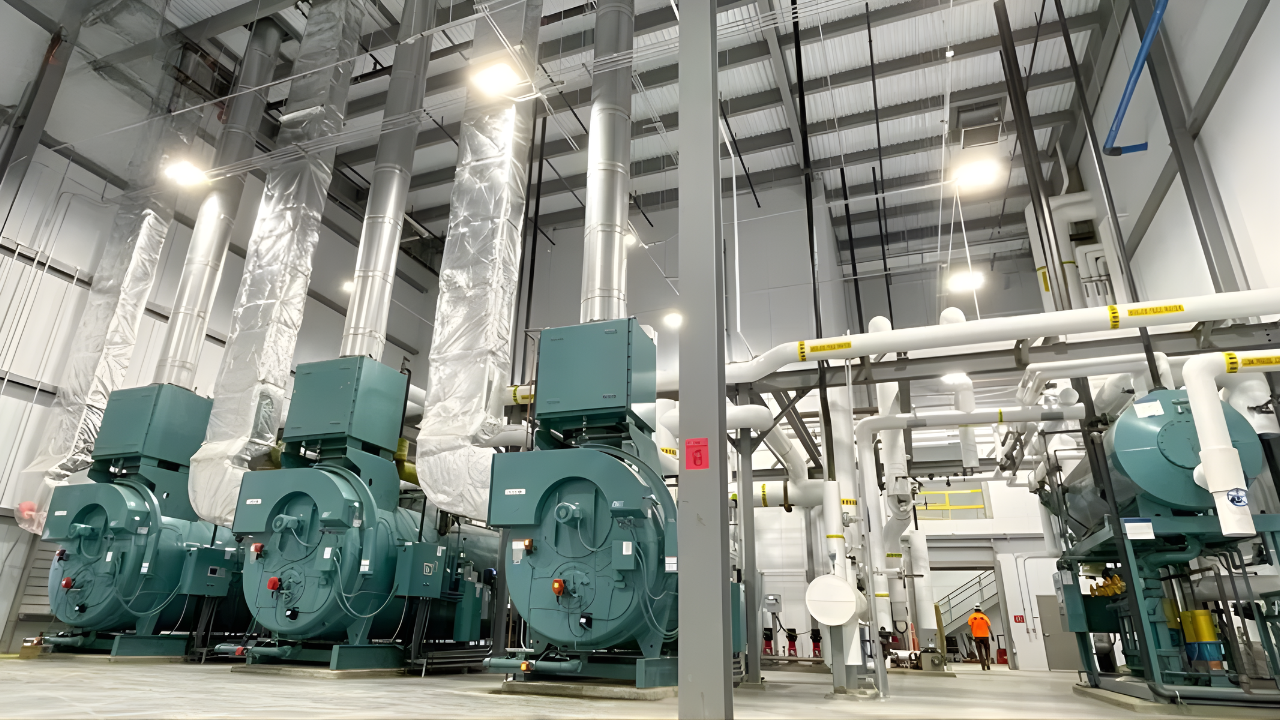
The package boilers are assembled as water-tube or fire-tube boilers in factories and supplied as skid-mounted boilers, which have a built-in burner, control, pumps, and safety valves. They are used at a normal pressure of 10 to 25 bar and have a capacity of up to 30 TPH. Automatic combustion controls and forced draft fans guarantee even and consistent steam output and a low installation footprint.
· O‑Type, D‑Type, A‑Type Boilers
These are water tube boiler configurations that are defined by drum and tube geometry. O-type uses symmetrical tube banks with the central furnace to achieve symmetric heat flux. D-type has one steam drum that is high-pressure served with water wall tubes. A-type includes the use of two drums to enhance the circulation.
· Field‑Tube & Thimble Tube Boilers
Field-tube boilers have short internally fed water tubes, which enable high heat transfer and easy replacement. The thimble tube boilers use tapered tubes that are placed into the headers to enhance circulation and minimize concentrated stress. Both designs allow compact designs, quick steam raising, and medium-pressure operation in both marine and industrial designs.
Classification Based on Fuel Source
· Gas‑Fired Steam Boilers
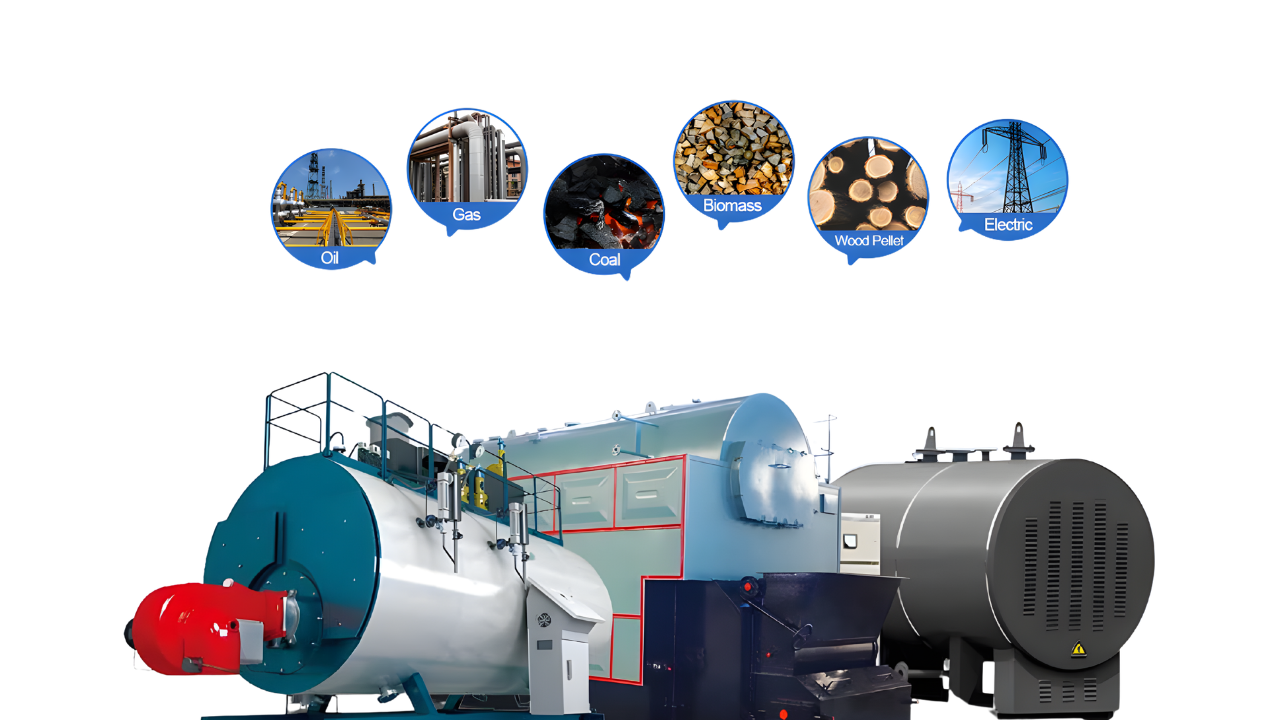
Steam boilers are gas-fired boilers that are equipped with modulating combustion control burners that can use natural gas or LPG. Their low NOx premix or staged burner attains thermal efficiencies of 92 percent. Industrial steam is usually operated at 6 to 40 bar.
· Oil‑Fired Steam Boilers
The steam boilers are oil-fired with the use of pressure-atomized or rotary-cup burners to mix the fuel and the air efficiently. They work at a pressure of 10-45 bar, having stable flame properties. The control of fuel viscosity and preheating systems provides control of atomization and uniform combustion efficiency.
· Biomass and Alternative Fuel Boilers
Biomass boilers are used to burn wood chips, pellets, agricultural residues, or RDF, either by moving-grate or fluidized-bed boilers. They include fuel feeding conveyors and ash handling units. Operating pressure is between 30 and 60 bar,r and heat-recovery systems are used to enhance the efficiency of the plant.
· Coal Steam Boilers
The coal-fired steam-boilers make use of the pulverized coal burners or fluidized-bed burning to obtain the high heat-release rates. In utility-scale plants, they have operating pressures of above 60 bar. The processes of combustion are regulated by the use of electrostatic precipitators and scrubbers, which regulate the emissions of particulate and sulfur.
| Boiler Type | Fuel Type | Operating Pressure | Combustion System | Efficiency / Emission Control |
| Gas-Fired | Natural gas / LPG | 6–40 bar | Modulating premix or staged burner | Up to 92% efficiency, low NOx |
| Oil-Fired | Furnace oil / Diesel | 10–45 bar | Pressure-atomized or rotary cup burner | Stable flame, viscosity control |
| Biomass | Wood, pellets, RDF | 30–60 bar | Moving grate / Fluidized bed | Heat recovery, ash handling |
| Coal-Fired | Pulverized coal | >60 bar | Pulverized or fluidized bed | ESP and scrubber emission control |
How to Choose the Right Steam Boiler
· Application & Capacity Requirements
Identify the necessary steam pressure, temperature, and mass flow rate in kg /h. Check peak load, turndown ratio, and expansion margin in the future. Adjust the boiler output capacity to the process heat demand profiles.
· Fuel Availability & Cost
Determine the consistency of local fuel supply, calorific value, and price volatility. Compare the efficiency of combustion of gas, oil, biomass, and coal. Divide the fuel consumption in tons of steam by the rate of generation of steam.
· Efficiency Ratings & Environmental Standards
Check the thermal efficiency of the boiler with full- and part-load. Check the level of compliance with the emission limits of NOx, SOx, and particulates. Take into consideration condensing economizers and waste heat recovery systems.
· Installation, Maintenance & Serviceability
Assess footprint, foundation loading, and utility connections. Determine the access to tube cleaning, burner servicing, and inspection. Make sure that there are spare parts and trained technical help.
· Lifecycle Costs & ROI
Examine capital expenditure, fuel cost per ton of steam, maintenance periods, and downtime risk. Determine the payback period by the efficiency of the operations and lower emission penalties.
よくある質問
· What is the most efficient type of steam boiler?
Boilers with economizers and condensing heat recovery that are of the water-tube type are most effective when operated at high pressure.
· Which steam boiler type is best for industrial use?
Boilers that are water-tube are appropriate in the heavy industry because of their high-pressure capacity and quick production of steam.
· How to choose the right boiler capacity?
Divide peak process load by hour using process load and future expansion margin.
· Can steam boilers run on different fuels?
はい。 There are numerous designs that are in favor of gas, oil, biomass, or dual fuel burner designs.
· Are all Steam boilers to be operated by a licensed operator?
Depending on jurisdiction and pressure rating, the regulations differ. The high-pressure systems usually need certified operators.
· Can steam boilers be automated or remotely monitored?
はい。 New boilers are equipped with PLC controls, SCADA, and IoT.
· Is it possible to retrofit the steam boilers with heat recovery systems?
はい。 Thermal efficiency is enhanced by the use of economizers and condensate recovery units.
· Which is superior, fire tube or water tube?
The water-tube is of high pressure. Fire-tube suits low-pressure, steady loads.
· Electric steam boilers vs fuel‑based boilers?
Electric does not have any on-site emissions. Fuel-based offers more capacity and low-cost energy.
Customized Steel Boiler by KDM Steel
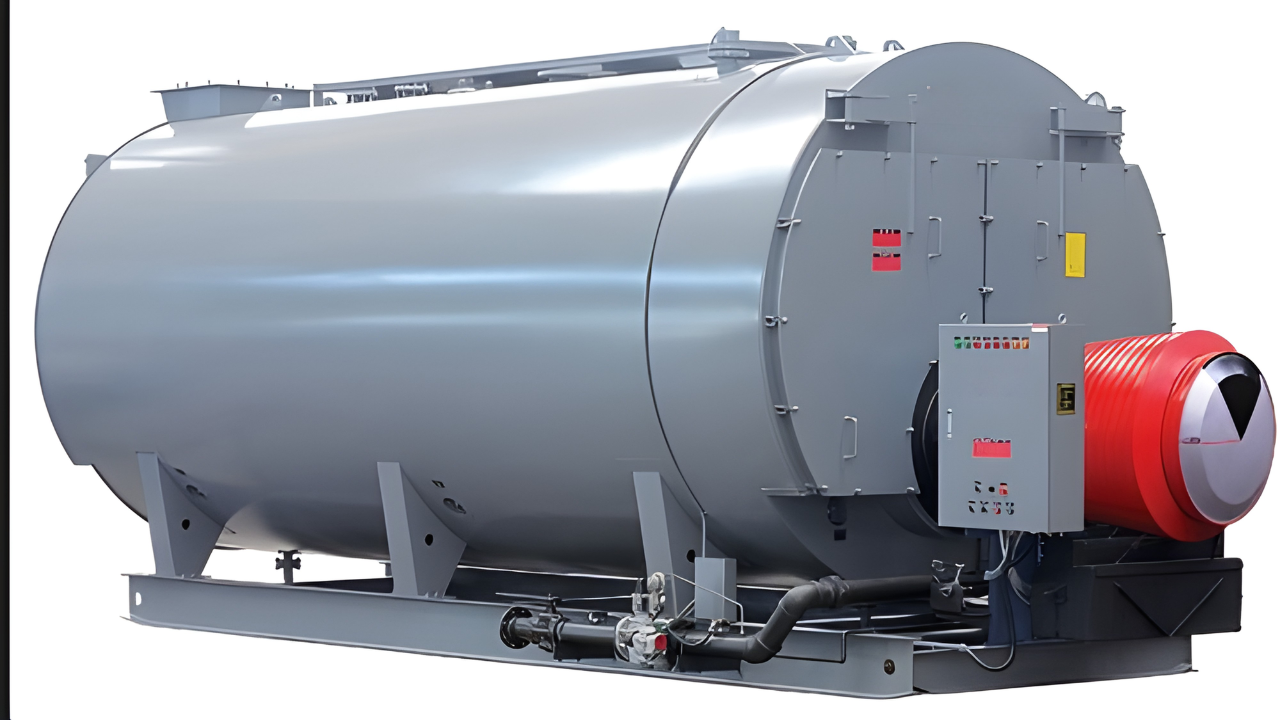
KDMスチール is a designer and producer of customized steel boilers that are designed to be highly efficient, have a long life, and have a specific performance in the use of steam. The expertise in fabrication has guaranteed us high-pressure vessels, good heat transfer and industrial standards. 今すぐお問い合わせください to develop custom boiler systems to suit your needs and to realize the maximum extended reliability.
 Japanese
  English
  Arabic
  French
  Spanish
  Russian
  Korean
  Portuguese
  Indonesian
  Chinese