


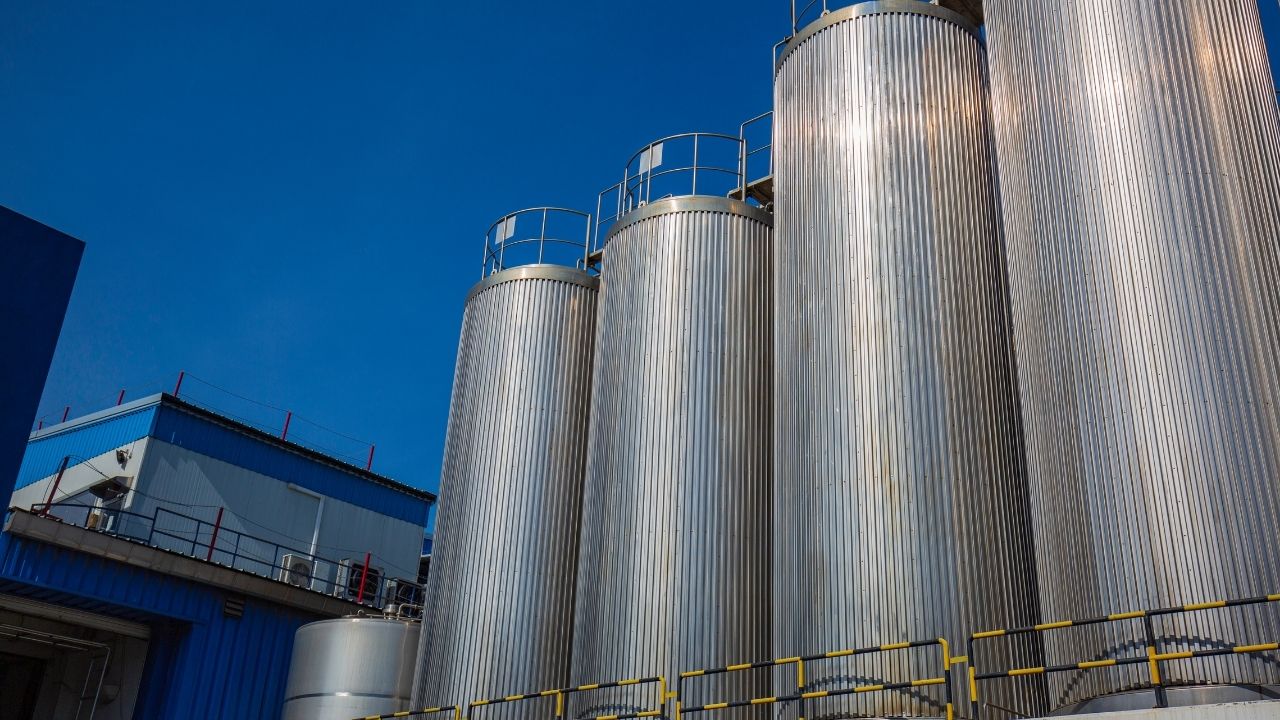
If you choose the wrong storage tank, it could fail catastrophically and cause expensive downtime. Whether you need to store dangerous drugs or keep food clean, the choice between stainless steel and glass-lined containers is very important. This guide gives you a technical comparison that will help you make a smart, cost-effective investment in industry.
What is a Glass-Lined Tank?
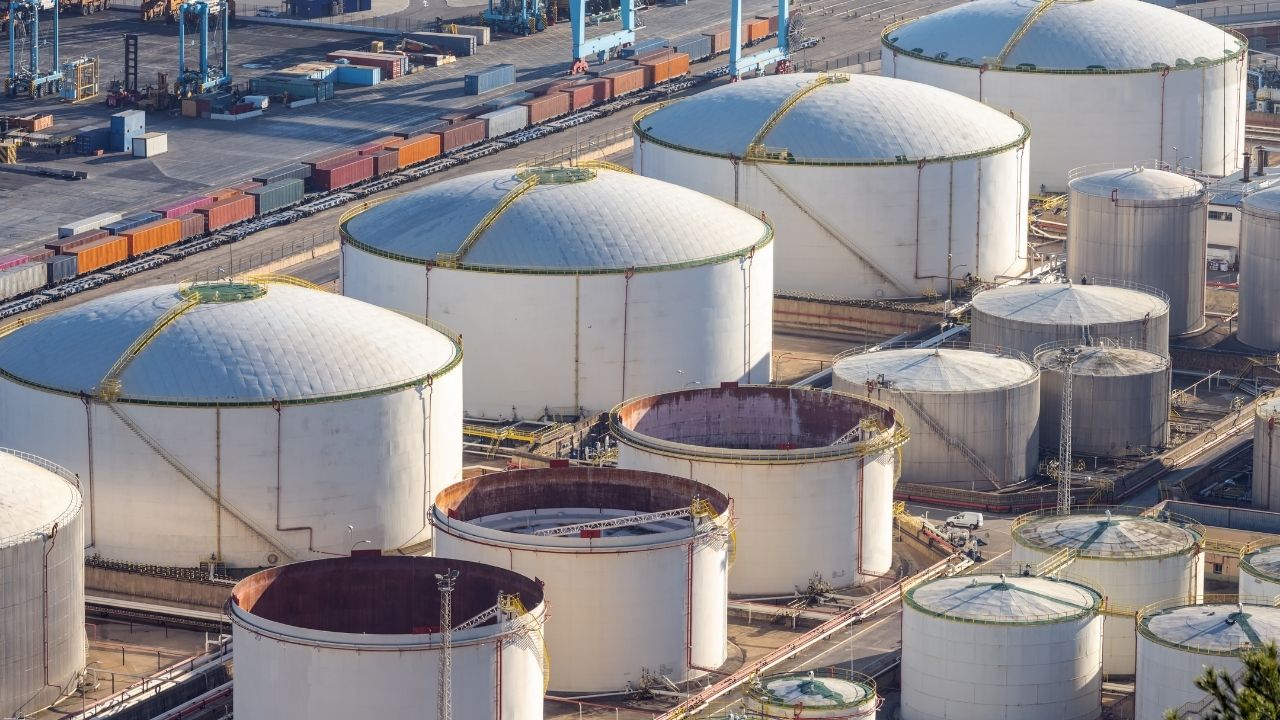
A steel cylinder with a layer of vitreous glass paint on the outside is called a glass-lined tank or a glass-fused-to-steel tank. Extremely high temperatures fuse this covering to the steel, creating a barrier that is tough, doesn’t react with anything, and doesn’t rust. This material is great for tough environments because it is strong like steel and doesn’t react with chemicals like glass does.
What is a Stainless Steel Tank?
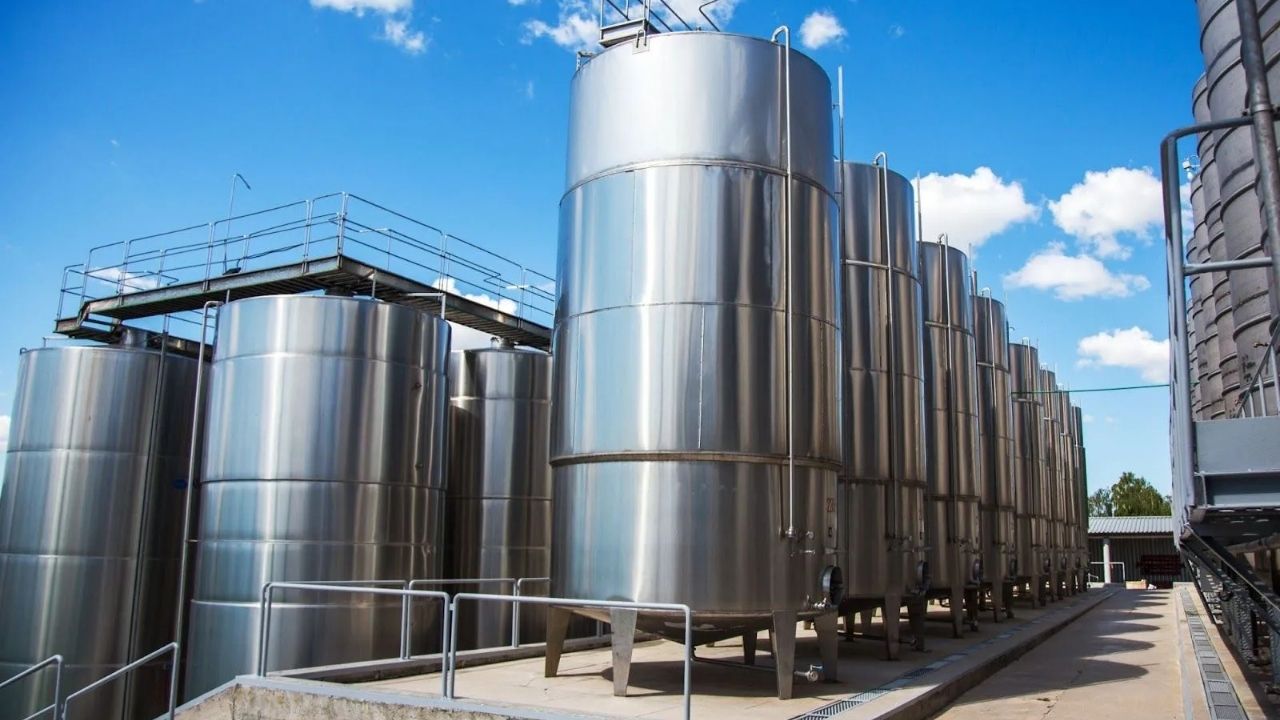
あ stainless steel tank is made of several metals, including chromium. Over time, this metal’s oxide layer fixes itself. Without an outside covering, this simply doesn’t rust. Quality levels of these tanks include 304 and 316. People value them for being strong, long-lasting, and good at keeping things clean.
Top 10 Key Differences between Glass-Lined Tank and Stainless Steel Tank
1. Material Composition and Structure
Glass-Lined Tanks
The bases of these tanks are powerful as they are 炭素鋼. The enamel glass porcelain is applied to the steel at 800 to 900 degrees Celsius and steamed on it. This is the important part. It forms an amalgamation building, the steel provides it with strength, and the glass renders the top inert.
ステンレスタンク
The tanks are produced using the same material, mostly an alloy of iron with a minimum of 10.5 percent chromium. Safety is available in various grades, such as 304 (L) (food and water-safe) and 316 L (greater chemical and marine safety due to molybdenum). The fact that the material does not rust is not only on the top, but also on its width.
2. Resistance to Corrosion
Glass-Lined Tanks
You can place most of the known acids and bases that destroy metal in a tank lined with glass since it is chemically neutral. The lining prevents direct contact of the chemicals contained on the steel shell. This prevents chemical reactions as long as hot phosphoric or hydrofluoric acids are not present.
ステンレスタンク
The stainless steel tanks are protected by the passive coating of chromium oxide, which prevents rusting, and in case the coating is destroyed, it can regenerate itself. The shielding can become weaker in Grade 304 by the chlorides and by a few reducing acids, however. Grade 316, on the other hand, does not get holes and cracks.
3. Durability and Strength
Glass-Lined Tanks
On the bottom of these tanks, there is a coating of tough carbon steel, and over that is a coating of sharp glass that is a thin layer. It is very resistant to pressure, and the lining inside can still be easily broken by hard blows, sudden changes of temperature, and mechanical shock. This might lead to cracks or damage to the surface.
ステンレスタンク
Stainless steel tanks are highly strong and are capable of withstanding bending. The coating is not easily ripped off by changes in pressure, shaking, and physical hitches, which is very crucial because the structure needs to be flexible enough. This implies that the building will be significant in harsh industrial environments and will not be easily broken or damaged.
4. Coating Under corrosion vs Natural Resistance.
Glass-Lined Tanks
These tanks are covered with a layer that ensures that they do not rust. Any break or cracks in carbon steel allow very strong localized rust to enter, which accelerates the breakdown process. The open substrate areas should be checked and maintained to ensure that they do not fail fast.
ステンレスタンク
Tanks that are made of stainless steel do not rust regardless of their size. Scratches or dents do not show weak layers since the protection is already present. Although there is a slightly scratched surface, the structure remains the same since the chromium oxide film becomes permanent.
5. Application Limits and Temperature Limits
Glass-Lined Tanks
Tanks coated with glass cannot retain as much heat as steel can because the two metals do not expand in size. Rapid change of temperatures may result in cracks or flaking. They are also able to work in lower temperatures, hence they are not so effective in processes where high temperatures are required or where temperature changes abruptly.
ステンレスタンク
Stainless Steel tanks have the capacity to withstand a large scale of temperatures and temperature fluctuations that occur within a short period. Their design is both cold and heat-resistant. This implies that they can be used to maintain the working conditions in difficult industrial processes requiring constant temperature.
6. Installation and Fabrication
Glass-Lined Tanks
The majority of glass-lined tanks consist of separate and connected components that can be transported and assembled onsite with a lot of ease. Ready-assembled big tanks cannot be transported efficiently and safely within a short period of time; This makes them ideal for remote locations or sites with limited space.
ステンレスタンク
Stainless steel tanks are normally custom-made by applying fine welding methods. During the construction of the fields, it requires skill and strict attention to quality control to ensure that the same corrosion protection is maintained at every joint and seam. Two methods of assuring this are passivation and weld finishing.
7. Maintenance and Repair
Glass-Lined Tanks
Glass-lined tanks, thus broken, can be mended in a certain manner. Some small chips can be repaired, and large problems typically require them to be returned to the factory to be re-fired. To ensure that things take long, they require an anode checking tool and a coating checking tool.
ステンレスタンク
It is possible to weld, grind, or alter the shape of steel tanks to facilitate their installation on the job site. The corrosion resistance can be corrected through pickling and passivation when alterations have already been made in the manufacturing. This flexibility in repair reduces the downtime, and regular maintenance is easily undertaken over time.
8. Lifespan and Longevity
Glass-Lined Tanks
Glass-lined tanks have the potential of lasting decades, provided that the cover remains in good condition. However, it is very important to take good care of it in order to make it live as long as possible. This involves replacing the sacrificial anode and searching for cracks or holes that may render the rust protection less efficient.
ステンレスタンク
Tanks that are made of stainless steel are long-lasting as long as appropriate alloys are employed. The coating does not wear out, so it requires virtually no maintenance and always serves a long life of more than twenty years in well-managed businesses.
9. Cost Considerations
Glass-lined Tanks
Glass-lined tanks are considered to be cheaper in the initial stages as compared to high-end stainless steel systems. They are, nevertheless, a good value provided that the strict maintenance rules are observed to ensure that the finish does not deteriorate too quickly to allow the structure to collapse.
ステンレスタンク
These tanks are more expensive initially due to their materials and the manner in which their production is done. Conversely, the total cost of ownership tends to decrease as time passes since things tend to last longer and require less maintenance.
10. Applicability to Particular Industries
Glass-Lined Tanks
Glass-lined tanks are used extensively by the chemical and drug firms as they have to preserve their product in a very pure form and have to keep it free of any acid that can corrode their product. This is because their surface is neutral and therefore it is less likely to be dirty when being handled or stored.
ステンレスタンク
Stainless steel tanks are used extensively in industries such as food, beverage, dairy, and science due to their cleanliness, ability to keep away germs, and their capability to undergo harsh clean-in-place procedures, which require the ability to remain corrosion-free and clean.
Summary Table: Glass-Lined Tank vs Stainless Steel Tank
| 特徴 | Glass Lined Tank | Stainless Steel Tank |
| Material Base | Carbon Steel + Glass Coating | Homogeneous Alloy (e.g., 304, 316 stainless steel) |
| 耐腐食性 | Excellent (against most chemicals); inert surface | Excellent (depends on grade); self-healing |
| Primary Failure Mode | Chipping, cracking, or spalling of the lining | Pitting, stress corrosion cracking (if wrong grade) |
| Thermal Shock Resistance | Poor – susceptible to cracking | Excellent – handles rapid temp changes |
| Repairability | Difficult; often requires patching or factory return | High; can be welded and re-passivated on-site |
| メンテナンス | Requires anode rod inspection/replacement | Low; primarily inspection of welds and surface |
| Hygienic Standards | Good, but cracks can harbor bacteria | Excellent; smooth, non-porous, easy to sterilize |
| Typical Applications | Highly corrosive chemicals, Pharma intermediates | Food, Beverage, Pharma water, ステンレススチール製電気筐体 in Biotech, Brewing |
| Relative Cost | Lower initial cost | Higher initial cost, lower TCO |
Glass Lined Tank vs Stainless Steel – Which One Is Best?
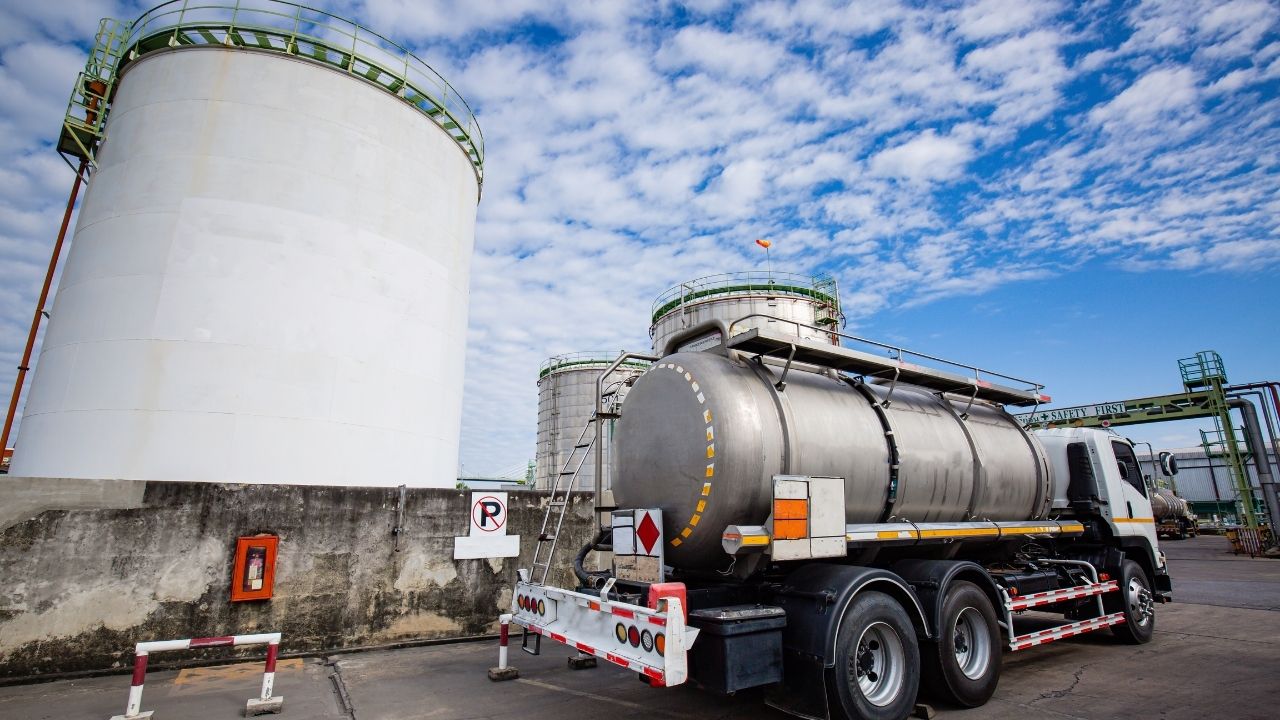
One cannot say which solution is best; one can only say the best solution for the method. In case you deal with chemicals that are extremely corrosive, such as strong acids, then the stainless steel may not be in a position to handle them, so use a glass-lined tank. In this manner, you will have the chance to maintain the routine maintenance of anodes and impact protection.
Select a stainless steel tank in case it does matter to you that it is clean, inexpensive to maintain, and is physically and thermally shock resistant. It is also a good option in the case that you require a long-lasting, durable solution to a variety of tasks, such as food processing, beer brewing, or water storage.
よくある質問
Can you paint steel and put glass inside it?
No, glass is not something that can be applied as paint, as it is welded to the steel at a very high temperature. In painting, the surface is merely covered, and no chemical bond is formed.
Do glass-lined tanks require extra spare anode rods, but stainless steel-made tanks do not?
Yes, glass-lined tanks require anode rods in order to ensure that the exposed steel is not corroded. Tanks made of stainless steel do not require anodes since the material is not easy to corrupt.
Which one is superior in sudden changes in temperature?
Stainless steel responds better to the changes in temperature quickly. Different expansion rates between glass and steel may cause the tanks to crack when they are lined with glass.
What is superior between stainless steel and glass-lined as to vacuum service?
Vacuum service is normally better done with stainless steel. It is less rigorous and prone to cracking when subjected to vacuum pressure.
What is easier to clean and health-wise unsanitary?
Stainless steel is more hygienic and cleaner. It has a smooth surface, allowing it to be cleaned effectively by the CIP tank, and it does not support bacteria.
What types of inspection are performed on the glass-lined tanks as compared to the stainless steel tanks to detect damage?
High-voltage spark testing is used to test glass-lined tanks to identify cracks. The stainless steel tanks are tested through visual, dye penetrant, or ultrasonic testing.
What is the comparison of welded stainless steel tanks established in the field and the modular bolted steel tanks with glass lines?
Modular glass-lined tanks can be transported and assembled in remote locations without much difficulty. Tanks made of welded stainless steel are seamless, and they are not dependent on gaskets.
Get Your Customized Glass-Lined and Stainless Steel Tank by KDM Steel
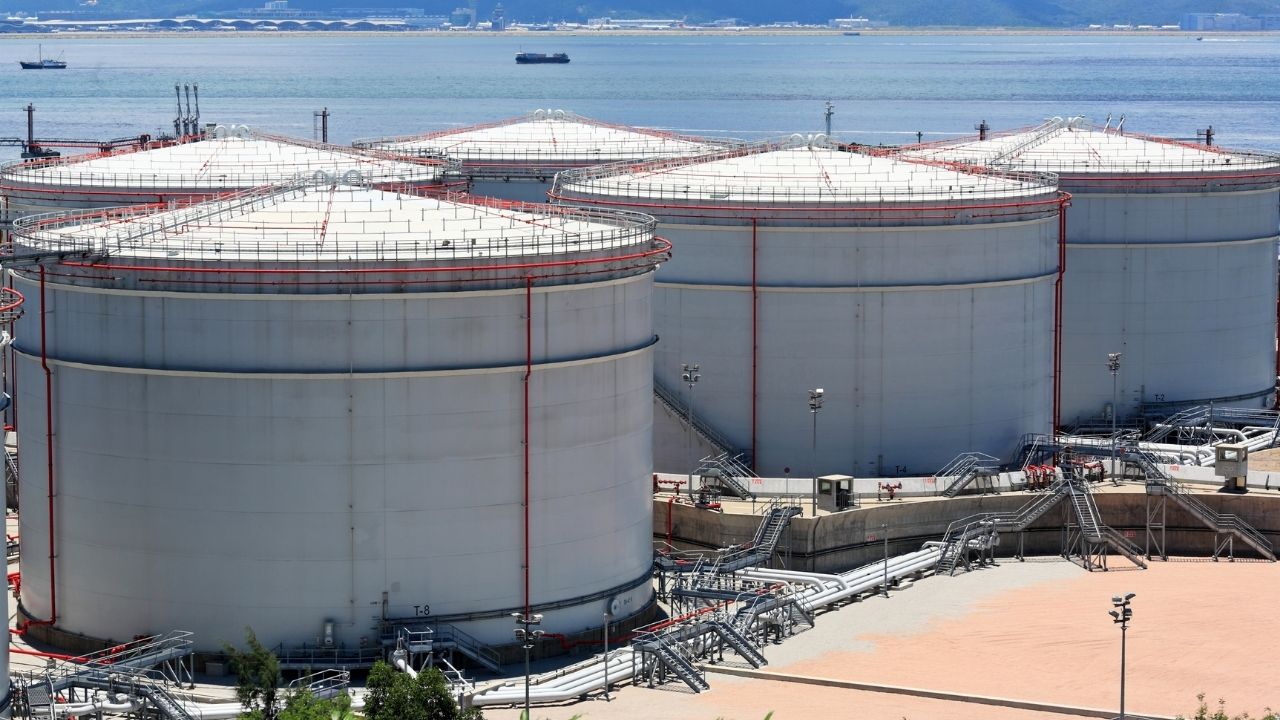
で KDM steel we design and manufacture tanks that are exactly what you desire. Our team is willing to offer a durable, compliant solution, be it a glass-lined box that will not react with chemicals or a stainless steel tank that will not get contaminated over time. お問い合わせ immediately and get your customized pricing today.
 Japanese
  English
  Arabic
  French
  Spanish
  Russian
  Korean
  Portuguese
  Indonesian
  Chinese