Terminal Block vs Terminal Strip: What’s the Difference Between Them?

Terminal Block vs Terminal Strip

Confusing a terminal strip and a terminal block can lead to increased maintenance costs and limited system scalability. This article describes the differences in structure, flexibility, and security between terminal blocks and terminal strips to help electrical engineers and industrial automation integrators make the right choice.

What is a Terminal Block?

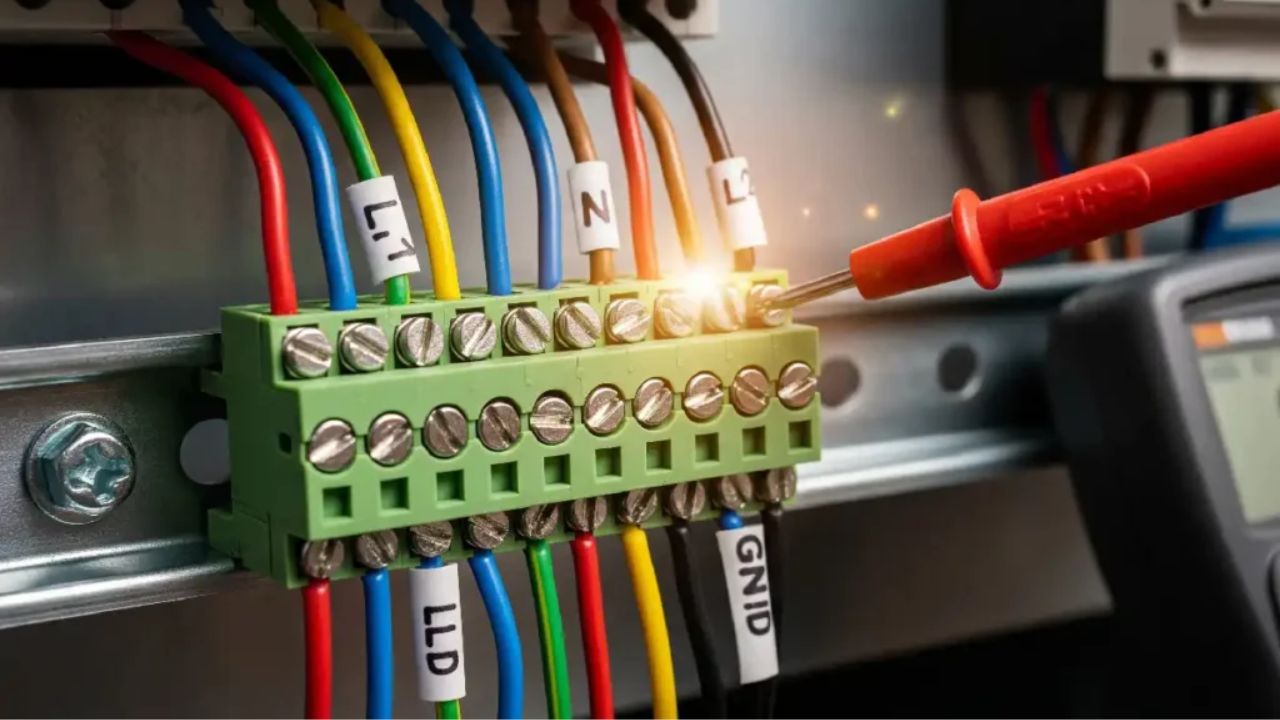
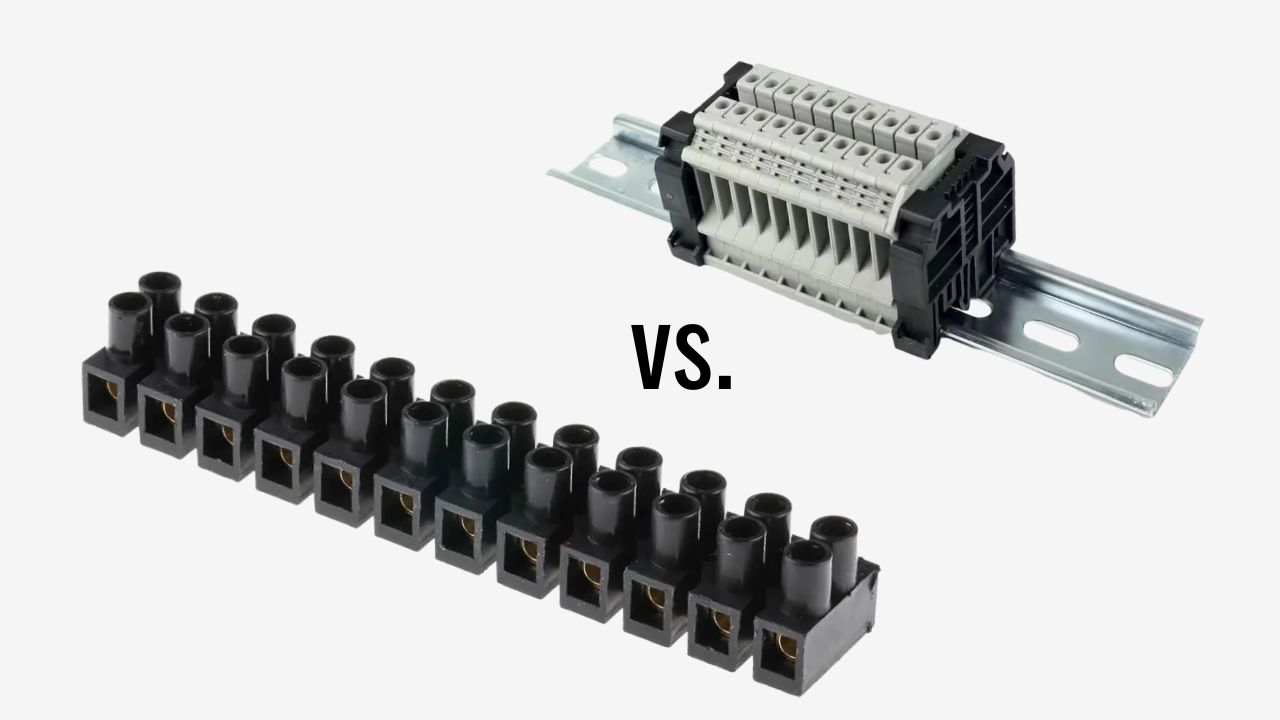
As a modular connector, the terminal block can fix two or more wires within an insulating housing. The terminal block has multiple independent modules, which can be installed on DIN rails or other surfaces, making its maintenance and installation easier.

The terminals conduct electricity through metal and use screw clips, spring clips, and barrier connections to fix the wire. Common types of terminal blocks include DIN rail terminal blocks, barrier terminal blocks, PCB terminal blocks, and free-through terminal blocks.

What is a Terminal Strip?

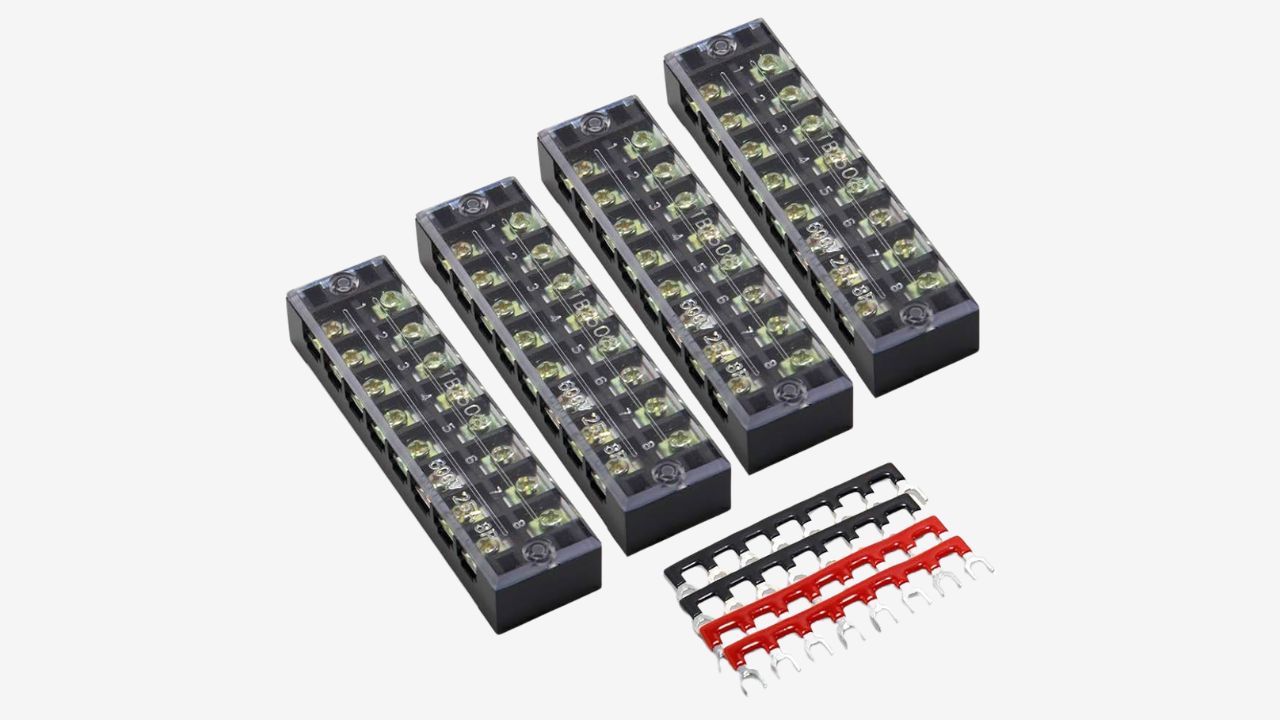
A terminal strip, also known as a terminal bar, is a row of fixed screw strips used for safely and orderly connecting wires. It is usually made of plastic or ceramic, and the screws at the top of the terminal section are used to fix the wires. Unlike terminal blocks, a terminal strip does not need to be installed on a DIN rail.

Terminal Block vs Terminal Strip: Knowing the Key Differences Between ThemTerminal Block vs Terminal Strip

Mounting Method

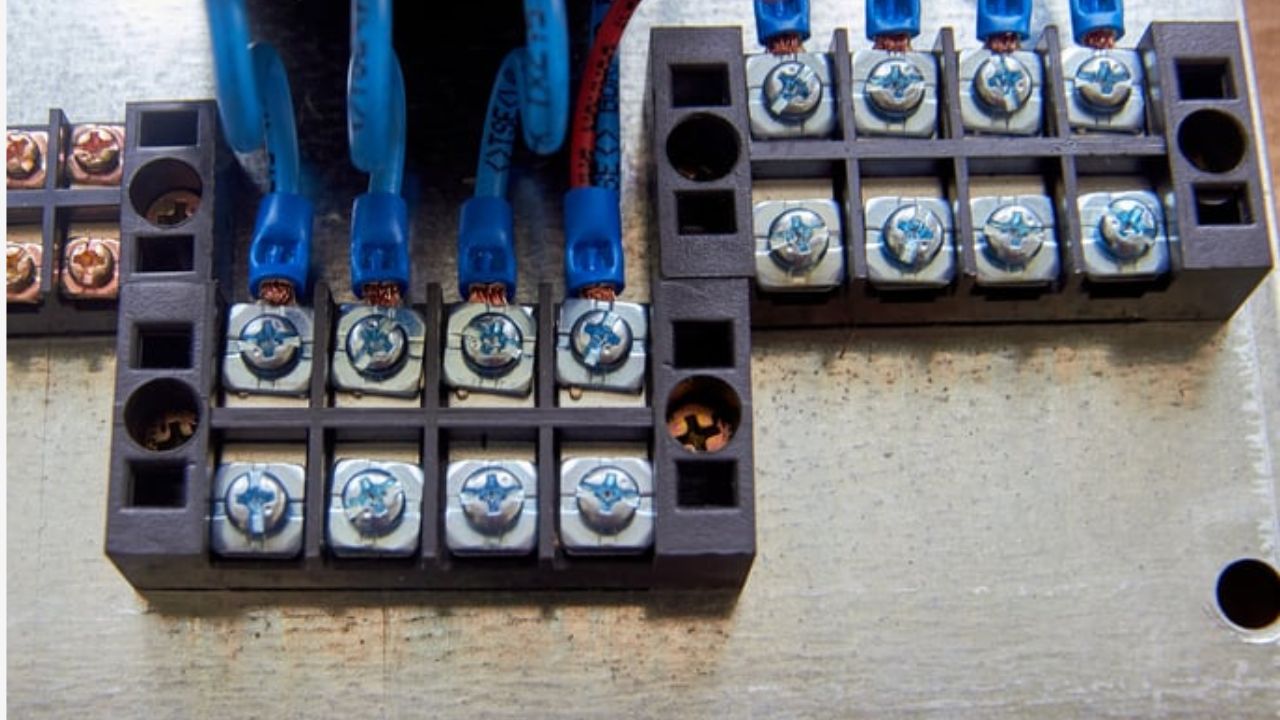
Usually, you need to install the terminal strip on the panel. After drilling, you need to secure it using bolts or screws. There is no standardized installation system for the terminal strip.

The terminal blocks usually require you to install them using a spring-loaded mechanism on the DINレール. Terminals can be installed quickly, arranged flexibly, and do not require drilling.

Modularity and Structure

The terminal strip is a fixed, single-piece structure. The terminals are arranged in a straight line on one base, with limited flexibility and modularity. That is also the constraint of the terminal strip.

On the contrary, the terminal blocks are modular, individual blocks that can be combined. That is the major advantage of terminal blocks. You can choose various configurations, such as single-level, multi-level, and fused types. The terminal blocks have extremely high flexibility.

Wiring Flexibility

The terminal blocks installed on DIN rails allow for sliding and flexible layout. This also means that you can combine different types of wiring terminals. You can also use labels, color coding, and grouping. This high flexibility is one of the main reasons why you need wiring terminals as your needs change over time.

On the contrary, the terminal strips remain in a single strip, used for point-to-point connections. Once you install it, it is difficult to change the layout. In complex systems, this linear layout can make the cables messy. Therefore, the terminal strip is more suitable for achieving quick and simple wiring.

Electrical Conduction

The current conducted between the wires in the terminal block relies on metal conductors. After you tighten the clamping(spring, screw, or insulation displacement) mechanism, a tight connection can be formed.

The terminal strip is fixed to the terminals using screw-type connections. It is simple and direct, suitable for the current transmission in basic circuits.

Safety and Insulation

The terminal blocks separate each connection point and are used for insulation. The interior of the terminal connectors includes a finger-safety construction and a built-in fuse. This enhanced safety design can prevent accidental contact, improve the electrical system’s safety, and reduce the risk of short circuits in the distribution panel.

On the contrary, although an insulating isolation layer is used between the terminal strips to prevent short circuits between adjacent strips, the way they are fixed determines that terminal strips expose more metal connection areas. Therefore, you need to install carefully to avoid direct contact between the wires.Terminal Strip

Scalability and Expansion

The terminal block is more flexible and easier to expand than the terminal strip. You can easily add, remove or reconfigure individual modules. However, the scalability of the terminal strip is limited. If you need to expand, you may need to replace or add the entire strip.

料金

Compared to terminal blocks, the terminal strip’s advantages are its simple structure and cost-effectiveness. If your budget is limited, the terminal strip is a good choice for you. Although the terminal block has a higher cost, the high efficiency and reliability of the terminal block have greater long-term value.

Typical Use

Terminal blocks are typically found in locations where a structured layout is required and future expansion space is needed. Therefore, you can apply it to the installation of industrial control panels, distribution cabinets, automation systems, complex machinery or DIN rail layouts.

The point-to-point direct connection terminal strip is more suitable for simple fixed connections. Its common applications include small panels, old equipment, basic junction boxes and low-complexity applications.

How to Choose the Right Option Between Terminal Block and Terminal Strip?Terminal Block VS Bus Bar (3)

To select the appropriate components, you not only need to understand the differences between a terminal block and a terminal strip, but also make the choice based on your application, environment, and long-term operation requirements. The following are the factors you need to consider:

Evaluate System Complexity

Choosing a terminal strip is sufficient if you have simple wiring systems, which have few connections and changes are minimal.

Choosing a terminal block is the better choice if you have complex systems, which usually have multiple circuits, control logic, and PLCs.

If your wiring needs structure and future flexibility, you should choose the terminal block undoubtedly.

Consider Future Expansion

Think about your future expansion plan. If you don’t have the expansion plan, the terminal strip can work as a fixed solution.

If you plan to upgrade or scale, the terminal block is your better choice, which allows easy additions and reconfiguration. Besides, the growing system should also use terminal blocks, which can save your time and redesign costs.

Assess Installation Environment

You can apply the terminal strip in a stable environment with low vibration and controllable conditions. The terminal block is more suitable for harsh environments, such as temperature variations and industrial applications. For vibration environments, the spring clamp terminal blocks are more reliable.

Analyse Your Maintenance Needs

In a low-maintenance system, a terminal strip is sufficient for you. If you need to frequently check or troubleshoot, a terminal block is easier to identify and enables faster fault isolation and more convenient access. This can reduce your downtime and minimize your losses.

Apart from the factors you need to analyze and evaluate mentioned above, you also need to check your space limitations. Terminal strips are suitable for ample panel space, while terminal blocks are more space-efficient. It is also very important to review the safety compliance requirements of the product (such as IEC, UL) and compare the final costs.

よくある質問

How Do Labeling and Identification Differ Between Them?

Typically, terminal blocks have more advanced and standardized label options, usually including built-in label slots, printable or prefabricated labels, and a clear numbering system for each connection point. You can identify more quickly and reduce system wiring errors. In contrast, terminal strips typically use manual labels and external labels, resulting in less structural identification.

How do Terminal Block and Terminal Strip Impact Panel Space Optimization?

A terminal block saves more space than a terminal strip. This is because the terminal block adopts a modular and stackable design, allowing for dense and organized wiring in a compact panel. In contrast, the terminal strip follows a fixed linear layout and requires more space. If you increase the number of connections, the efficiency of this layout will also be greatly reduced.

Terminal Strip vs Terminal Block: Which Is Better for High-Vibration Environments?

In a high-vibration environment, a terminal block is better than a terminal strip. The spring clamp type terminal block can keep a constant pressure on the wire, preventing loosening caused by long-term vibration. It can withstand mechanical shocks and long-term vibrations and will not lose contact integrity.

The terminal strip is mainly connected using screws. Due to prolonged vibration, the screws are prone to loosening, so you need to re-tighten them regularly.

Terminal Strip vs Terminal Block: Which Is Better for Industrial Panels?

For industrial panels, the terminal block is superior to the terminal strip. The terminal block is specifically designed for organized and high-density panel wiring, supporting modular layout. Moreover, it provides better safety, insulation, and professional labeling. This is extremely important in complex control systems. Terminal blocks can easily expand, service, and troubleshoot. These advantages are common requirements in industrial environments.Terminal Block (4)

Final Thought

ケム is a professional electrical enclosures manufacturer and can provide you with the terminal block. Besides, we offer electrical enclosures with insulation protection and panels for mounting blocks. If you have customized enclosure needs, we also provide one-stop customization services. Contact us now, and we will reply promptly.

jaJapanese
上へスクロール
x
今すぐお問い合わせをお送りください
ファイルをアップロード
x
今すぐお問い合わせをお送りください
ファイルをアップロード